Spiega documentation
- Knowledge sharing
- Portfolio
Triangulation
Why quality?

Quotation from Deming
Knowledge of variation : the range and causes of variation in quality, and use of statistical sampling in measurements;
Improve constantly and forever the system of production and service, to improve quality and productivity, and thus constantly decrease costs.
Break down barriers between departments. People in research, design, sales, and production must work as a team, to foresee problems of production and usage that may be encountered with the product or service.
In god we trust, everybody else bring data
Cell coverage
We take one location
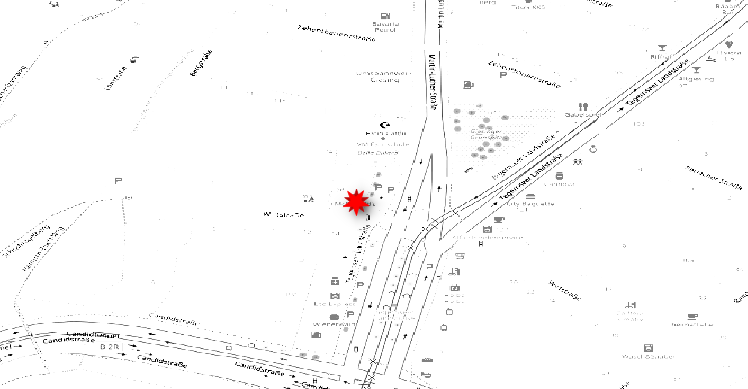
example of a location
We download the local street network
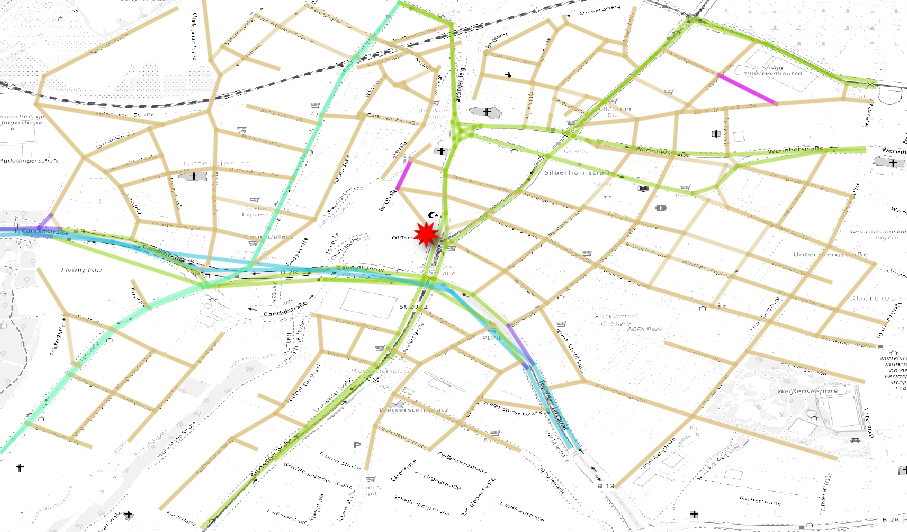
local network
We download the cell coverage in the network area
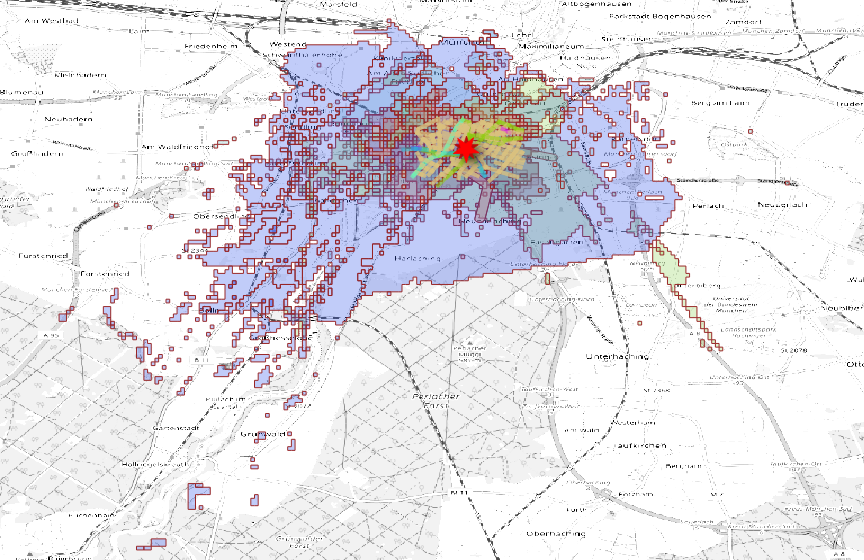
cell coverage around the location
We classify the cells by radius and we plot the coverage centroid
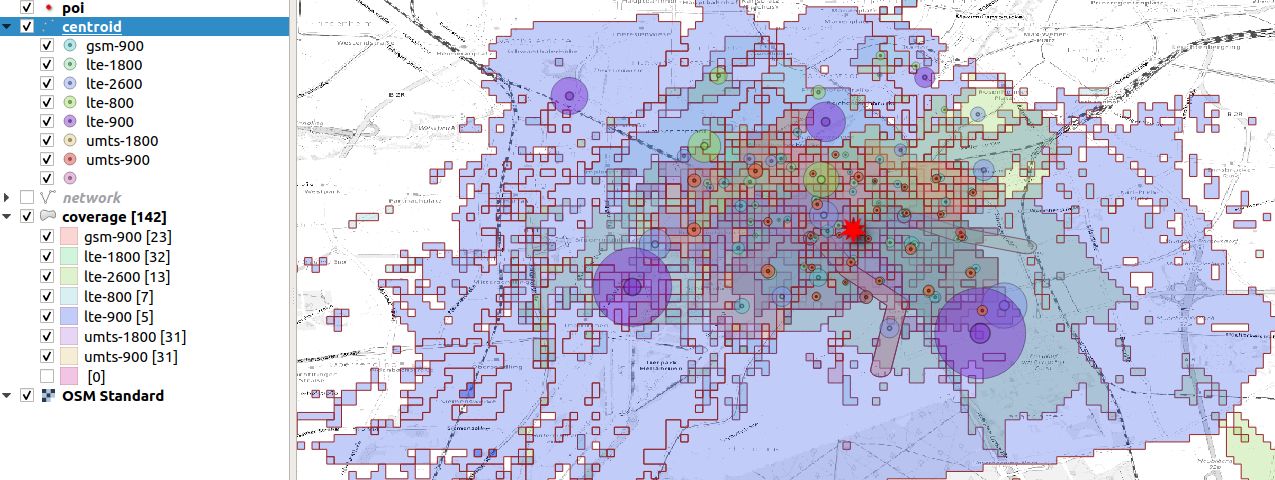
display cells by technology wich influences the area
We select the most precise cells, some of them happen to be subway cells
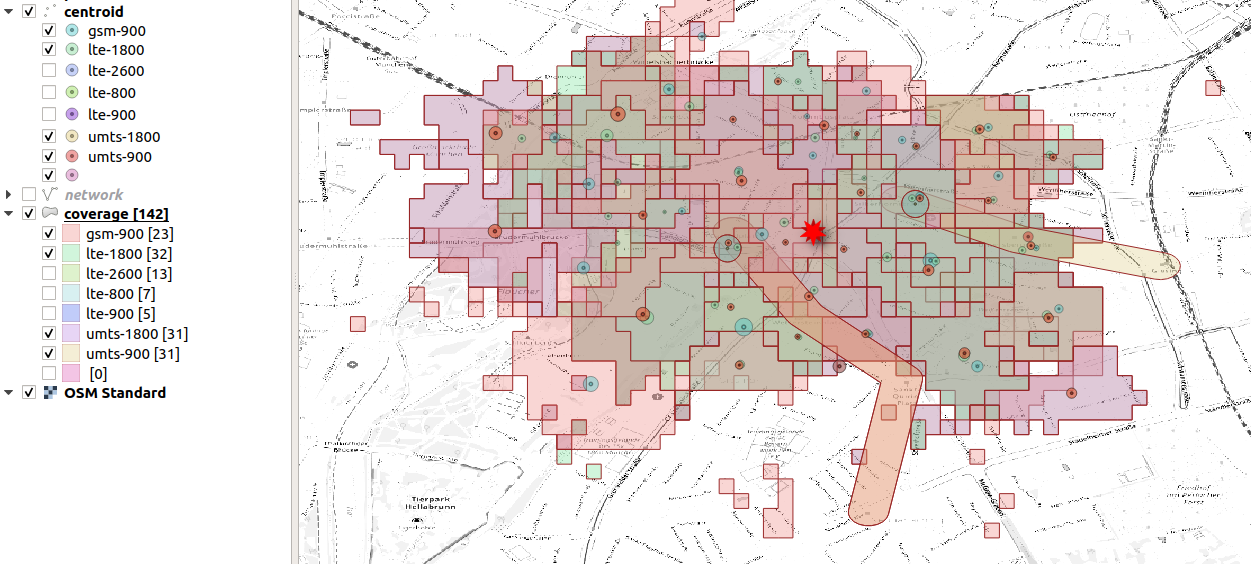
selection of the techologies with good spatial resolution
We can simplify the geometries taking only the closest and most precise cells centroids
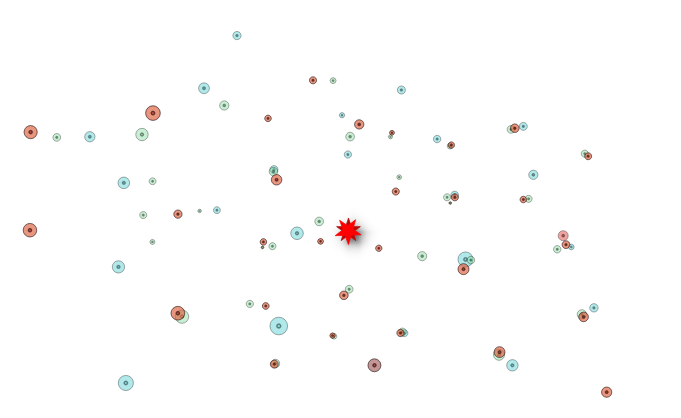
neighboring cells represented by centroid and radius
and than we try to sum up a portion of activities into some geometries
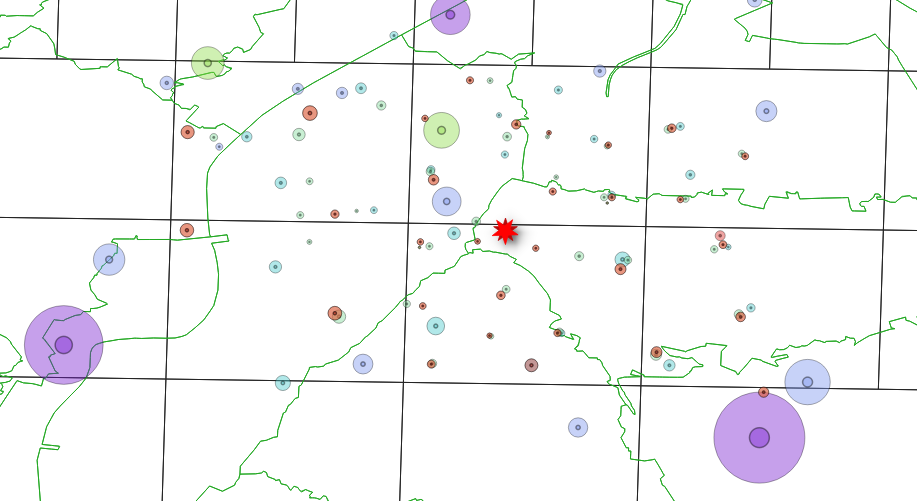
we map the location into a geometry (mtc, zip5)
But for some technology we have centroids outside the coverage area
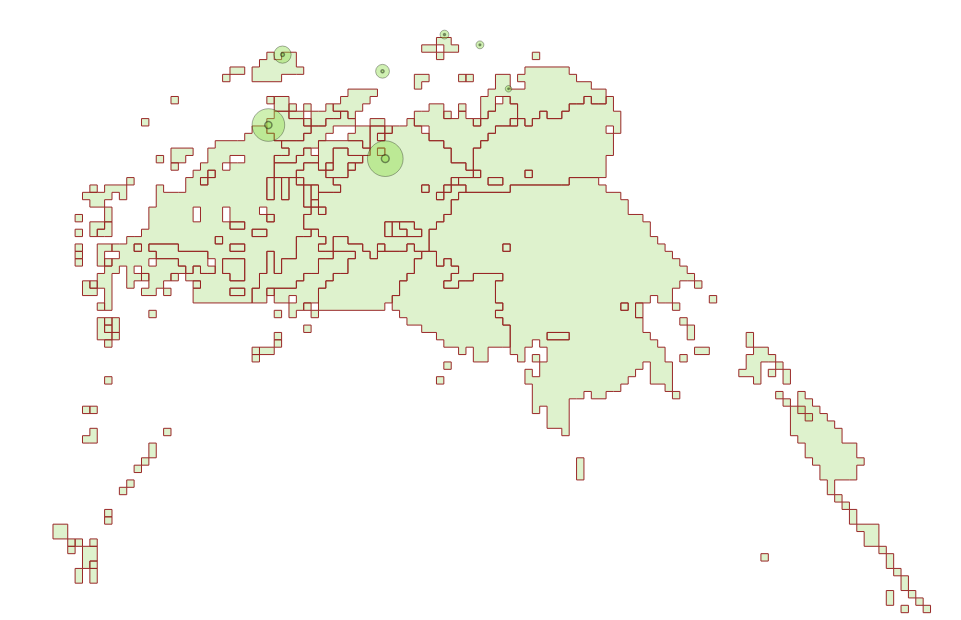
some centroids are not contained in any area
Stability comparison
We want to evaluate count stability using the dominant cell method.
The first test is done moving the center of the overlapping mapping by a displacement (in meters)
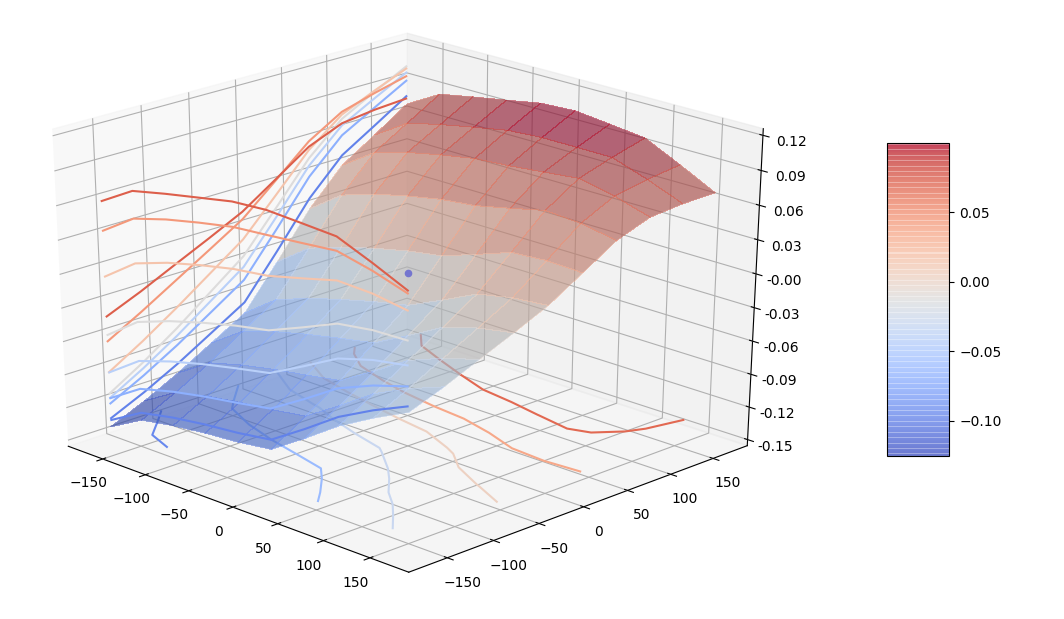
stability of counts after displacement
We than check the stability of counts by area
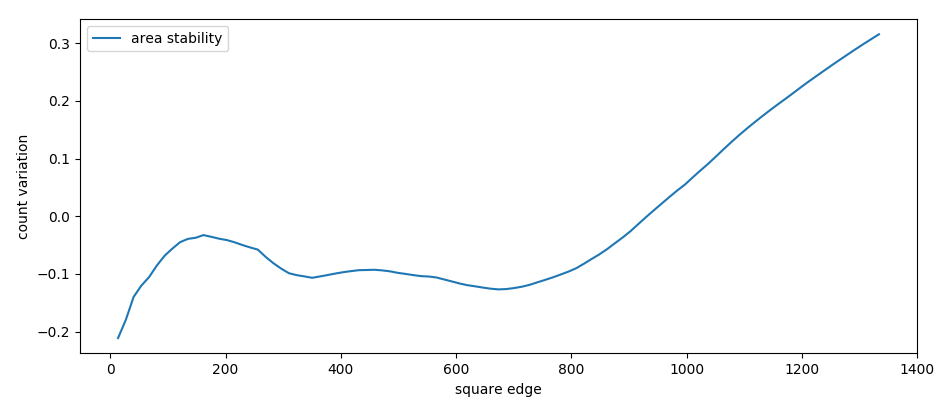
stability of counts after area increase (edge in meters)
Number of counts strongly increase with mapping area (until 50%).
definition
An
activity
is made of many
events
. Currently we define the
dominant cell
as the cell where most of the events took place.
For every cell we assign a position which is the centroid of the
BSE
(Best Server Estimation), an estimation of the area where the cell has the best ground coverage without intersection of other cells with the same technology.
Hence, each activity position is located at the centroid of each dominant cell.
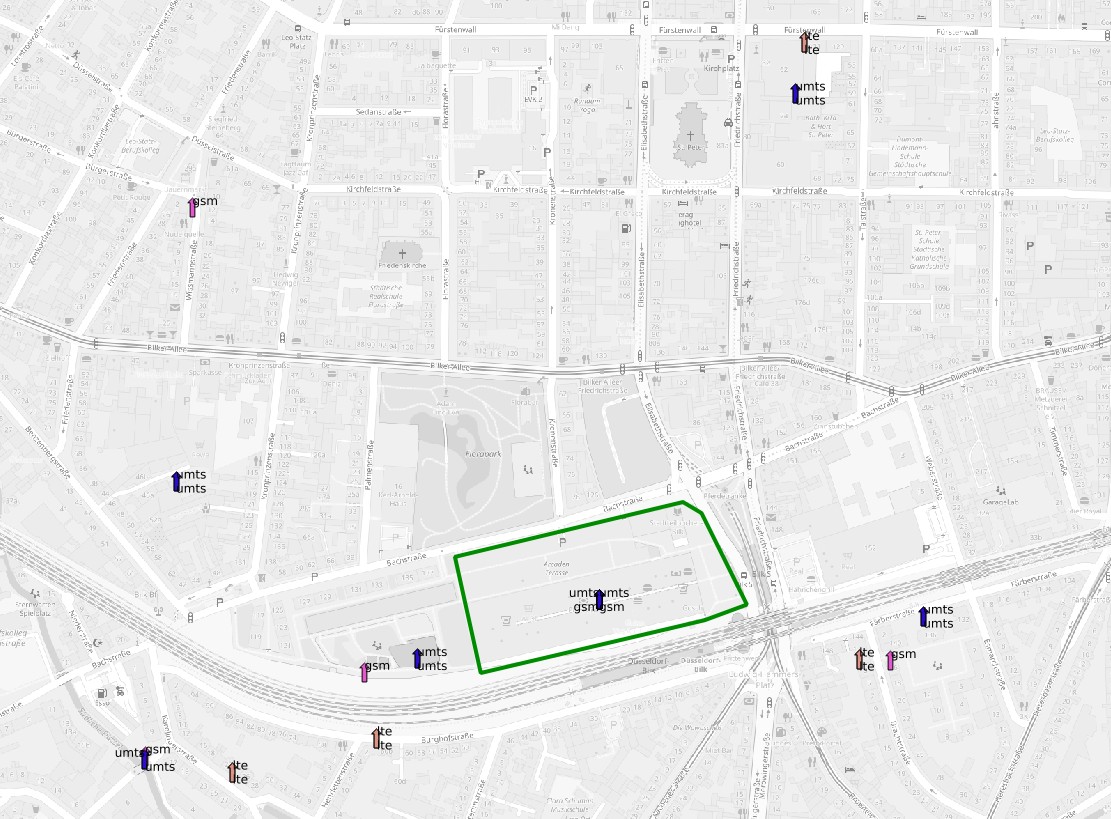
The polygon shows the location we want to isolate, the arrows the neighbouring cell centroids
The density profile of the activities is then centered around the centroid position.
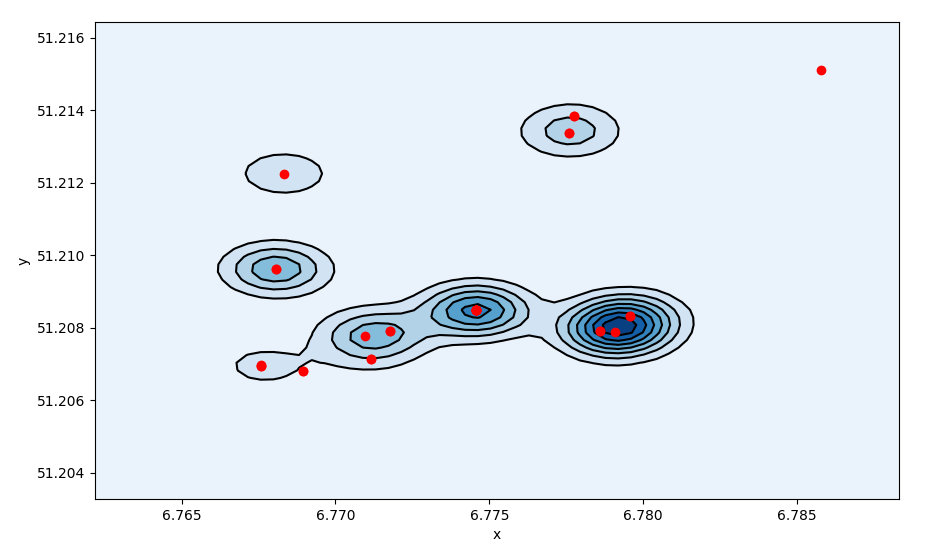
We can divide the space where each cell centroid sits at the vertex of a Delaunay triangle.
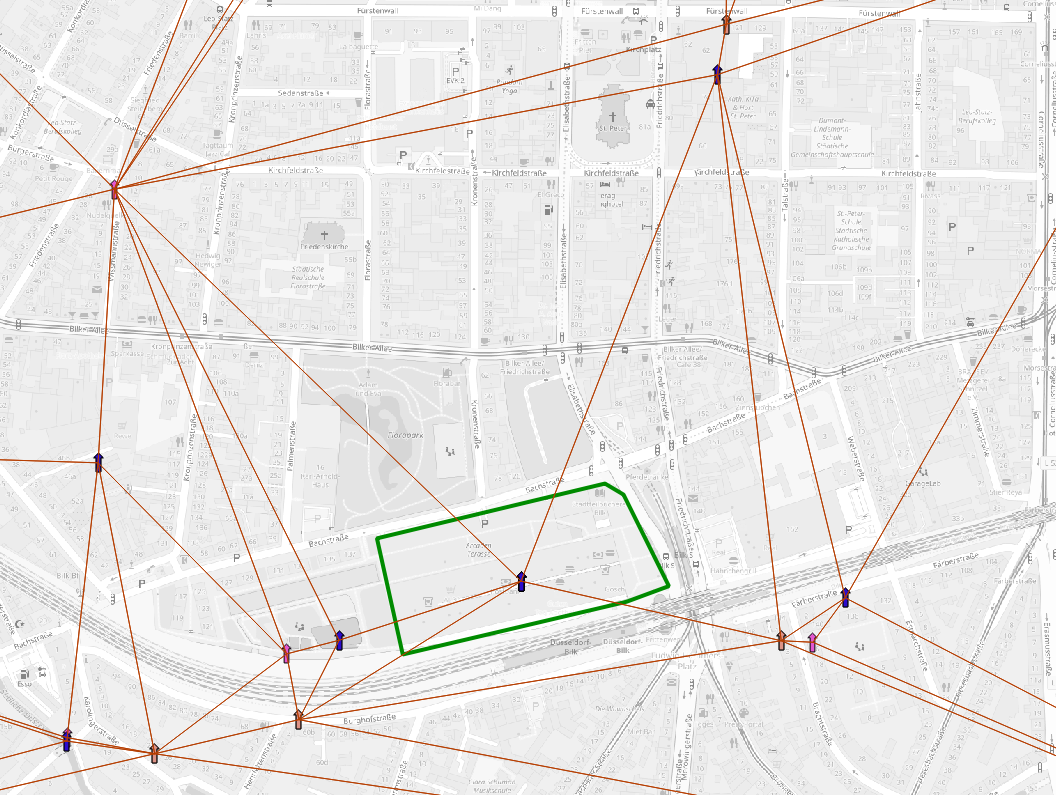
Delaunay triangulation on cell centroids
Triangulation
If we average over all vertex positions we have a more sparse activity distribution. We can even define a standard error for each activity
filter_activities.py
.
$$ s_x = \sqrt{\frac{ \sum_i (\hat x - x_i)^2 }{N-2}} \qquad s_r = \sqrt{s_x^2 + s_y^2} $$
The standard error define the uncertanty on the activity position.
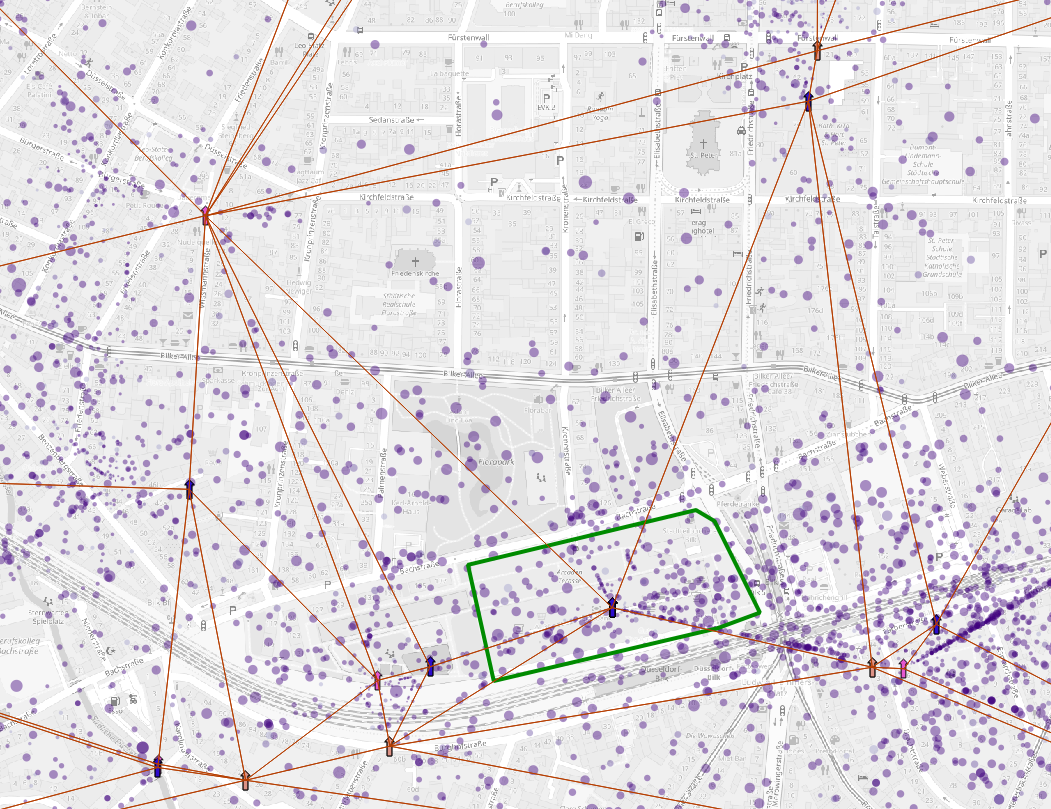
The dots represent the average activity position, the dot size represent the standard error of the position
Which translate in a broader density profile.
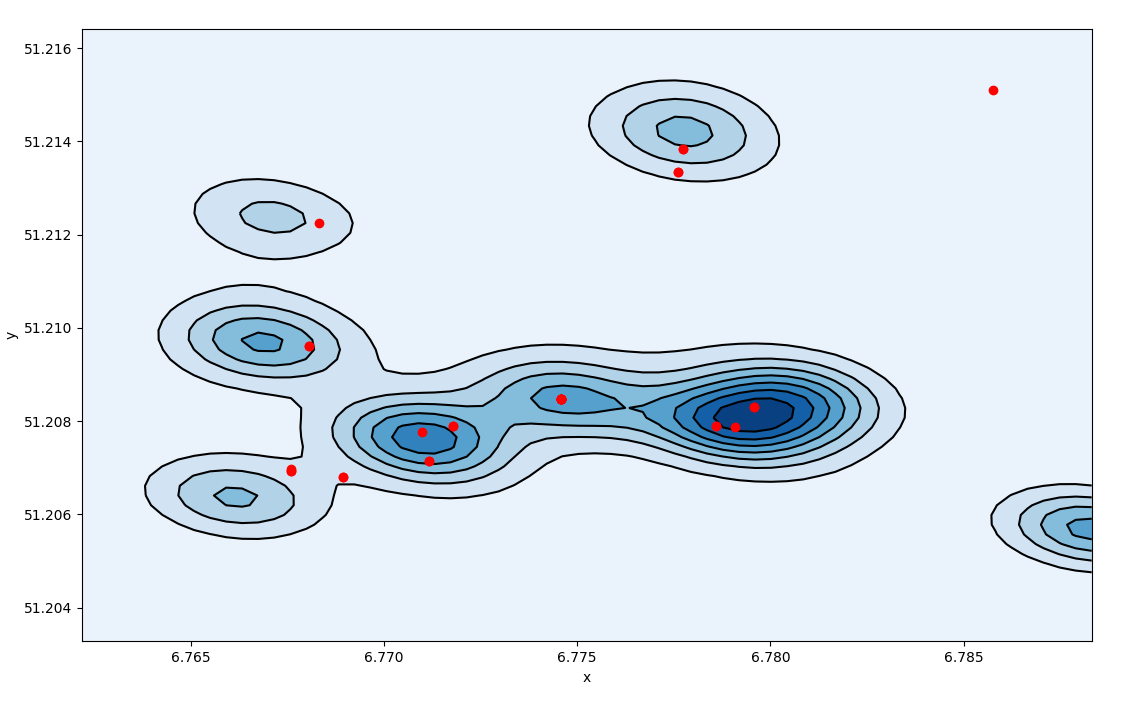
Density profile of triangulated activities, density spreads over the space
For each polygon we take the distribution of standard error of the positions inside the polygon.
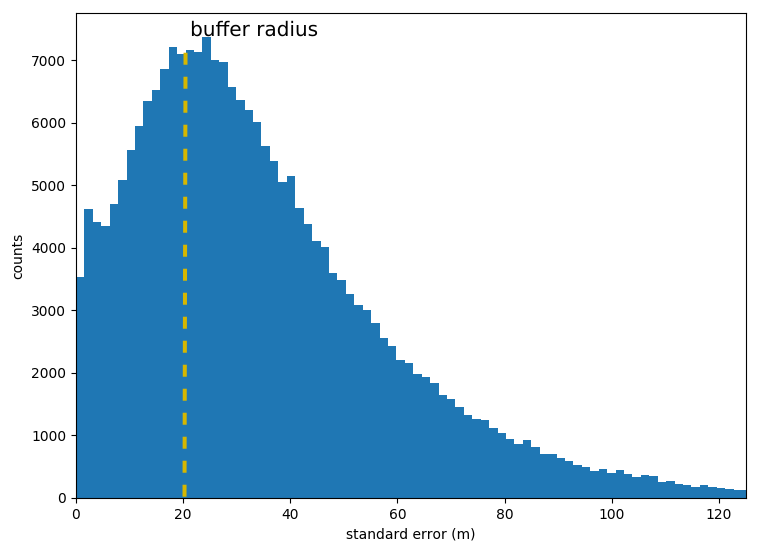
distribution of the standard errors all over the activities
The median of the standard error distribution defines a buffer radius
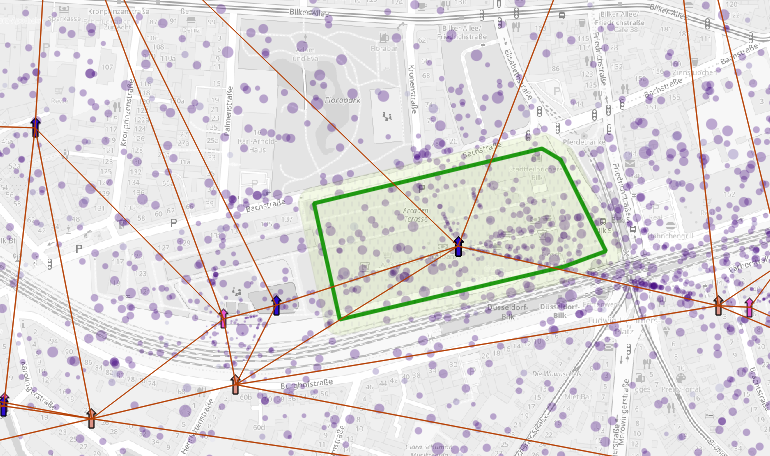
The buffer radius (in green) circulates around the polygon defining the precision of activity positions per location
Octree binning
To overcome anonymization problems we transform coordinates in geohash .
Geohash is a indexed short string which contains information about the position and the bounding box of a square. The number of digits sets the precision (i.e. the size of the bounding box) using a octree . Neighbouring boxes have similar indices.
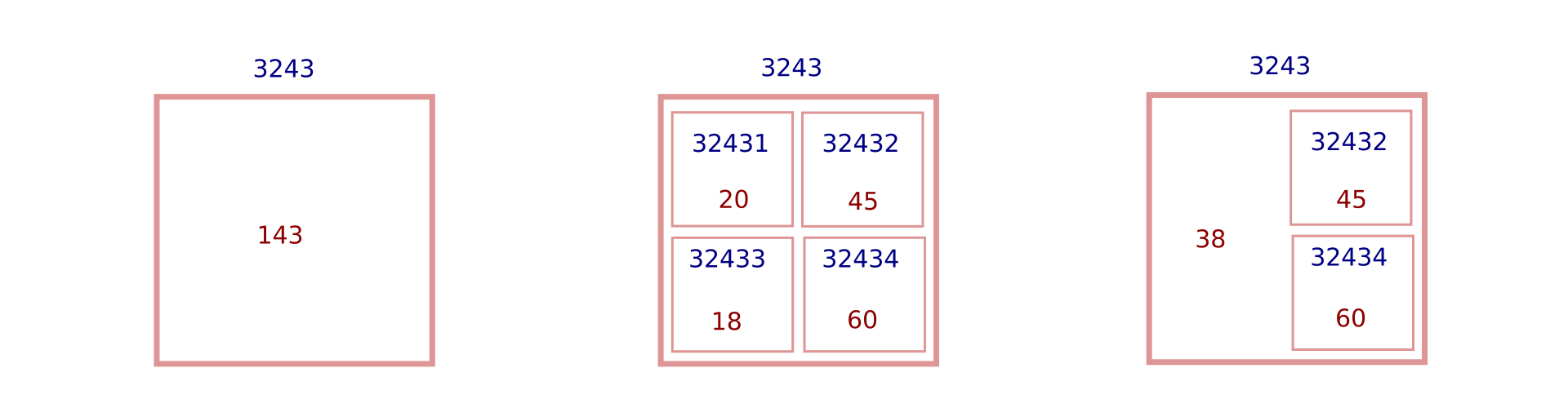
2d representation of an octree
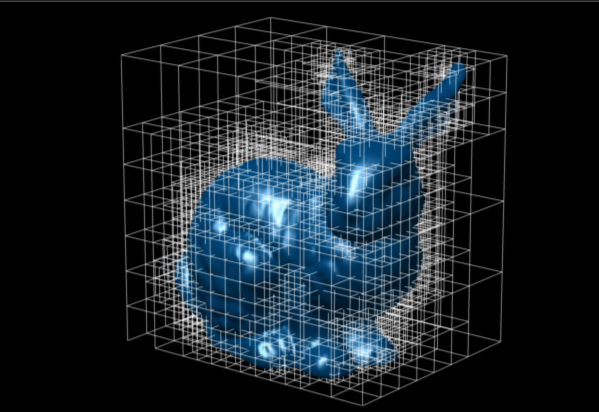
3d usage of an octree
To anonymize the data we loop until we find the minimum number of digits for each geohash string: fenics_finite.py .
vact.loc[:,"geohash"] = vact[['x_n','y_n']].apply(lambda x: geohash.encode(x[0],x[1],precision=8),axis=1)
def clampF(x):
    return pd.Series({"n":sum(x['n']),"sr":np.mean(x['sr'])})
lact = vact.groupby('geohash').apply(clampF).reset_index()
for i in range(3):
    setL = lact['n'] < 30.
    lact.loc[:,"geohash2"] = lact['geohash']
    lact.loc[setL,"geohash"] = lact.loc[setL,'geohash2'].apply(lambda x: x[:(8-i-1)])
    lact = lact.groupby('geohash').apply(clampF).reset_index()
At the end we produce a table similar to this one:
| geohash | count | deviation |
|---|---|---|
| t1hqt | 34 | 0.1 |
| t1hqt3 | 42 | 0.4 |
| t1hqt3zm | 84 | 0.8 |
| t1hqt6 | 44 | 0.6 |
| t1hqt8 | 78 | 0.8 |
| t1hqt9 | 125 | 0.6 |
| t1hqt96 | 73 | 0.3 |
| t1hqt97 | 38 | 0.5 |
| t1hqt99 | 46 | 0.4 |
In post processing we can then reconstruct the geometry:
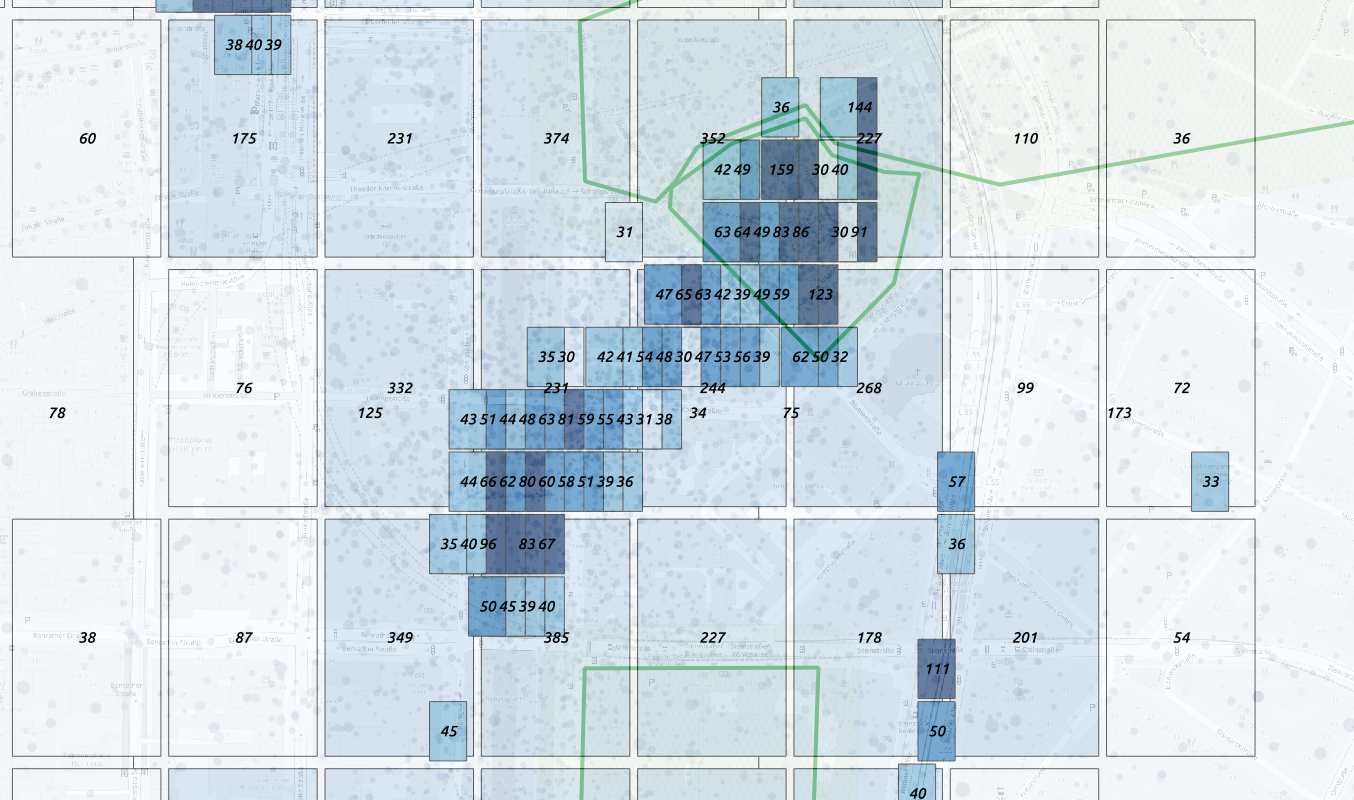
Overcome the anonimization problem using geohash binning
This allows us to have the larger precision allowded without count loss.
For each box we can estimate the precision
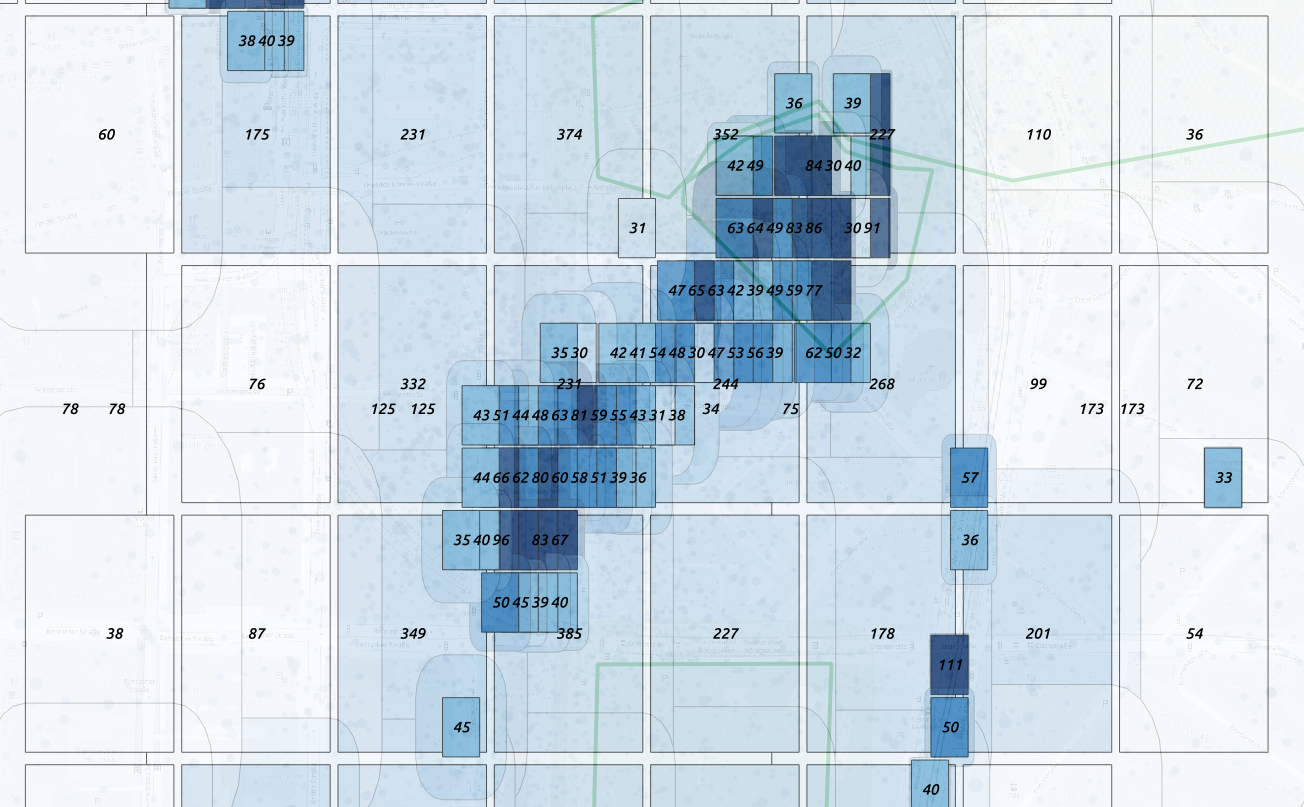
Overcome the anonimization problem using geohash binning
Alternatively we can apply a double binary octree
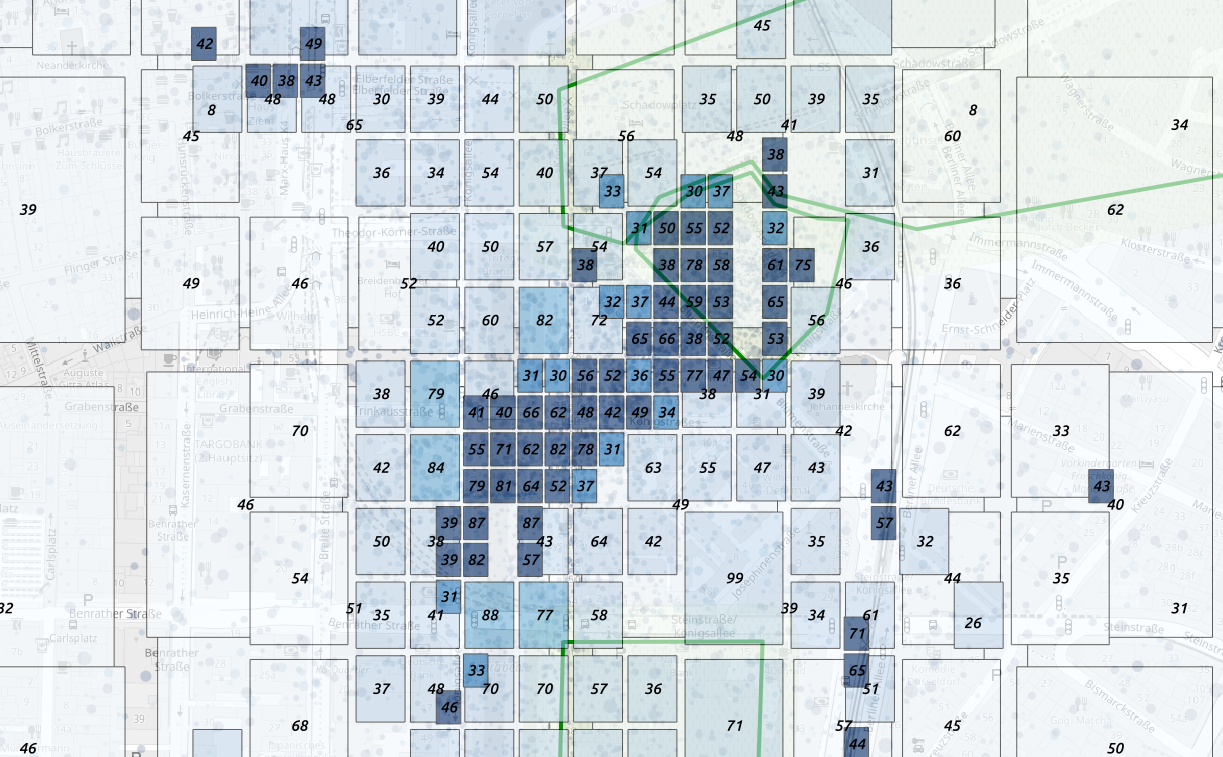
counts on a octree binning
Advantages
* no mapping
* no BSE
* no data loss
* custom geometries (postprocessing - no deploy)
* no double counting
* highest allowed resolution
Cons
* no unique counts per polygon
* postprocessing always required
* land use mapping might have more accuracy
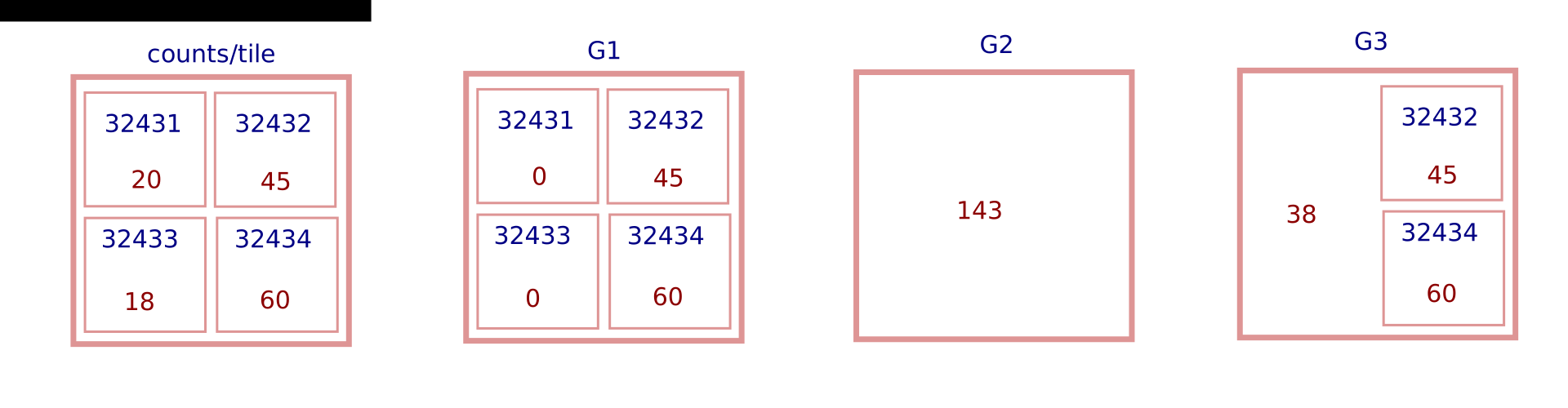
evolution of mappings
Which was calculated by a simple halfing of each edge:
   BBox = [5.866,47.2704,15.0377,55.0574]
    spaceId = ''
    for i in range(precision):
        marginW = marginH = 0b00
        dH = (BBox[3] - BBox[1])*.5
        dW = (BBox[2] - BBox[0])*.5
        if x < (BBox[0] + dW):
            BBox[2] = BBox[2] - dW
        else:
            marginW = 0b01
            BBox[0] = BBox[0] + dW
        if y < (BBox[1] + dH):
            BBox[3] = BBox[3] - dH
        else:
            marginH = 0b10
            BBox[1] = BBox[1] + dH
        spaceId = spaceId + str(marginW + marginH)
In post processing we can reconstruct the geometry and interpolate the missing boxes.
Space deformation
The spatial resolution is given by the distribution of cells which modifies the definition of space around. We represent each cell centroid as a trapezoid whose center corresponds to the cell centroid and the area to a portion of the BSE area
fenics_finite.py
.
We define an
Helfrich Hamiltonian
on a manifold: $z = z(x,y)$ to define the curvature of space caused by the cell position:
$$ F(z) = \frac{1}{2} \int d x d y (k_{ben}(\nabla^2 z)^2 + k_{stif} (\nabla z)^2 ) $$
Where the bending and stiffness parameters are controlled by the parameters $k_{ben}$ and $k_{stif}$.
To solve the equation we chose a square mesh and we apply
finite differences
method on the lattice representing the space.
The solution of the equation is done numerically applying a
Jacobi iteration
on a 5x5 square matrix to convolve with the square lattice representing the space. $k_{ben}$ and $k_{stif}$ represent the
weights for the Laplacian
$\Delta$ and the square Laplacian term $\Delta^2$.
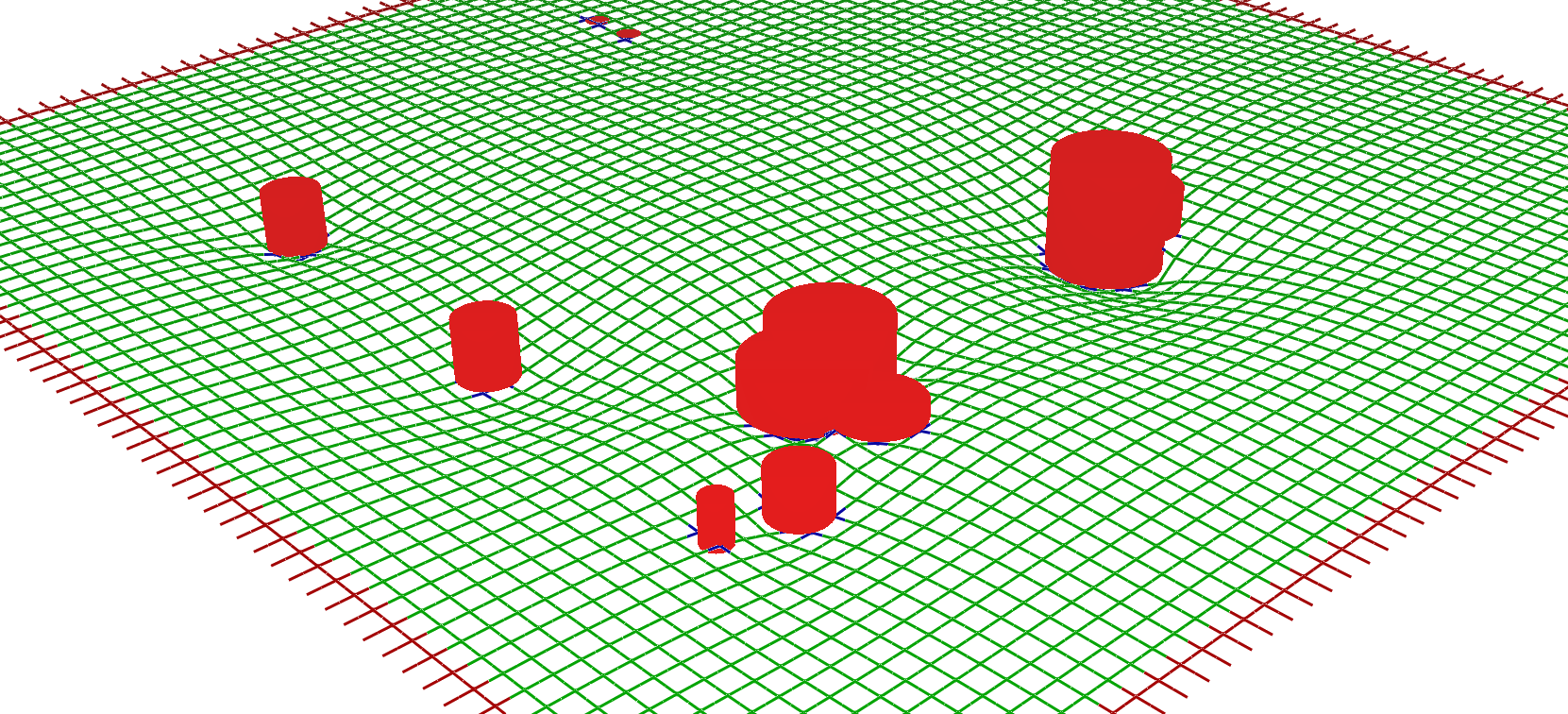
Solution of the Helfrich Hamiltonian on a square lattice, the cylinders represent the cell centroids
The boundary conditions and the constraints are given by the red and blue beads which are not moved during the iterations.
We can increase the resolution interpolating the lattice points.
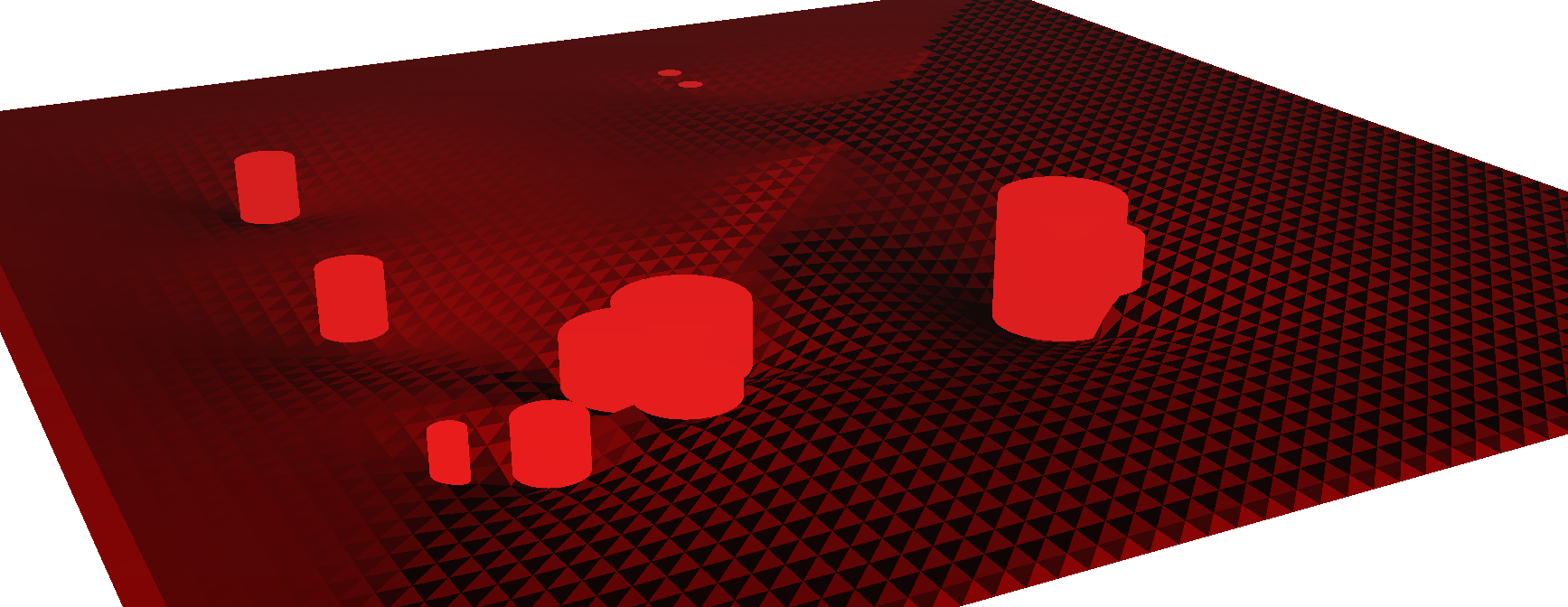
discretization of the lattice solution
To normalize the effect of the space curvature on the activity positions we move each activity by the gradient of the space deformation
$$ \nabla z = \frac{\partial z}{\partial x} \hat x+ \frac{\partial z}{\partial y} \hat y $$
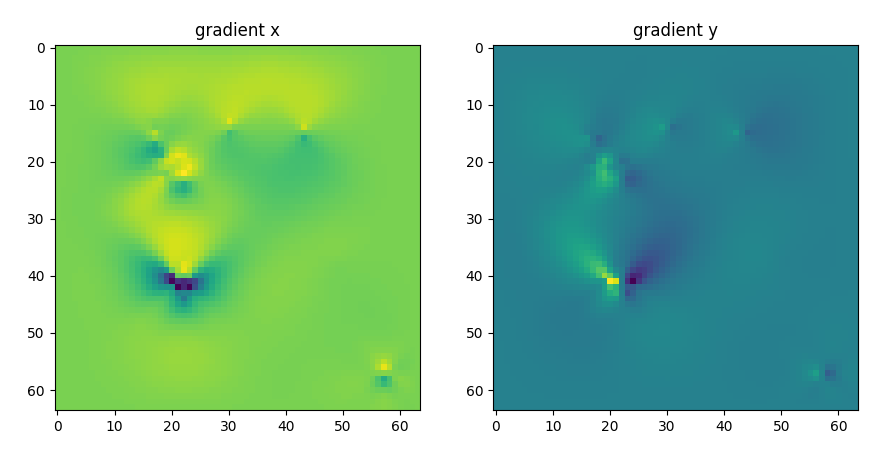
gradient of the space deformation on the x and y directions
If we invert the gradiant we obtain the displacement induced by the cell geography
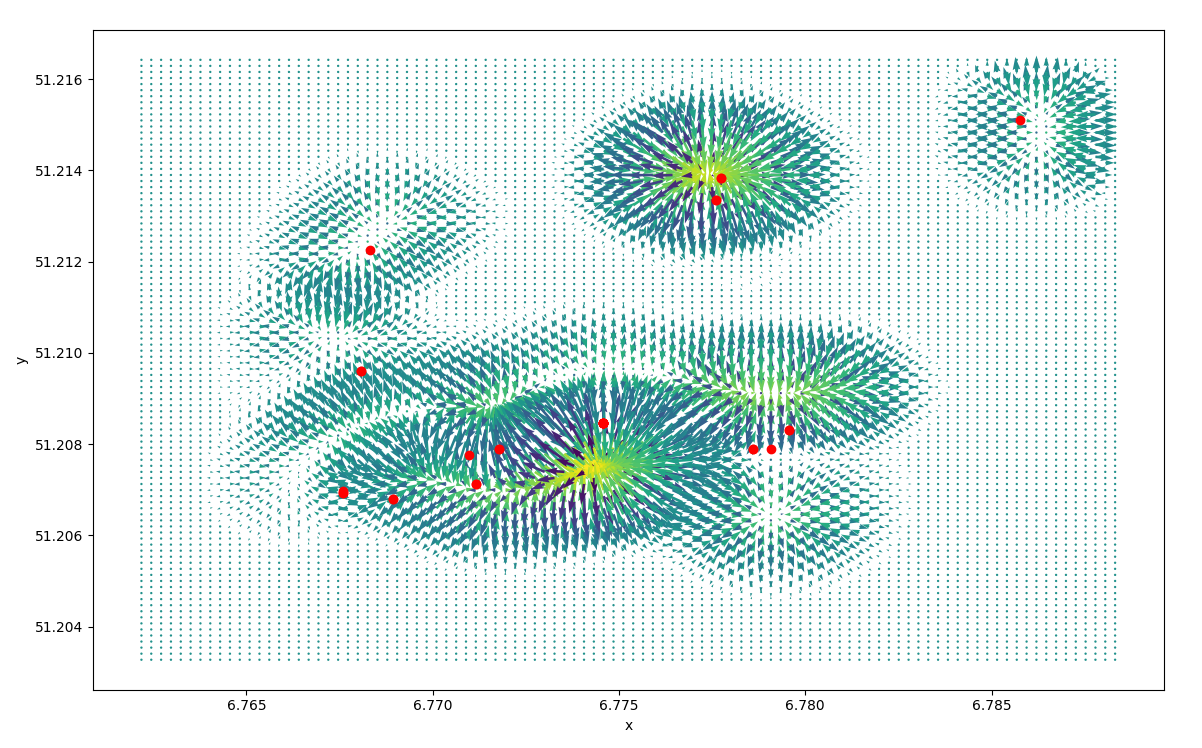
vector field of the displacement and centroids
We can see how the single activities have moved.
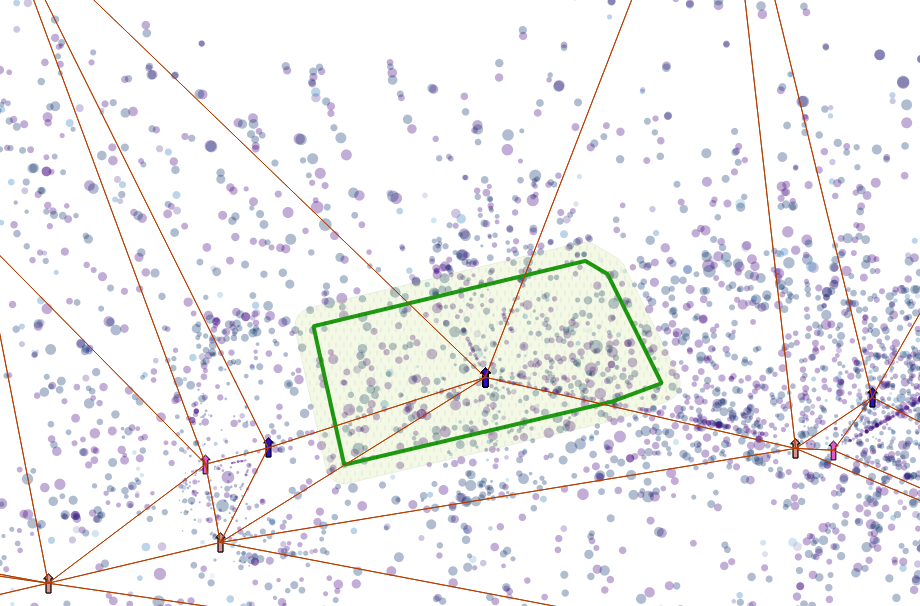
shift of activities, purple to blue
We then recalculate the density plot based on the new positions.
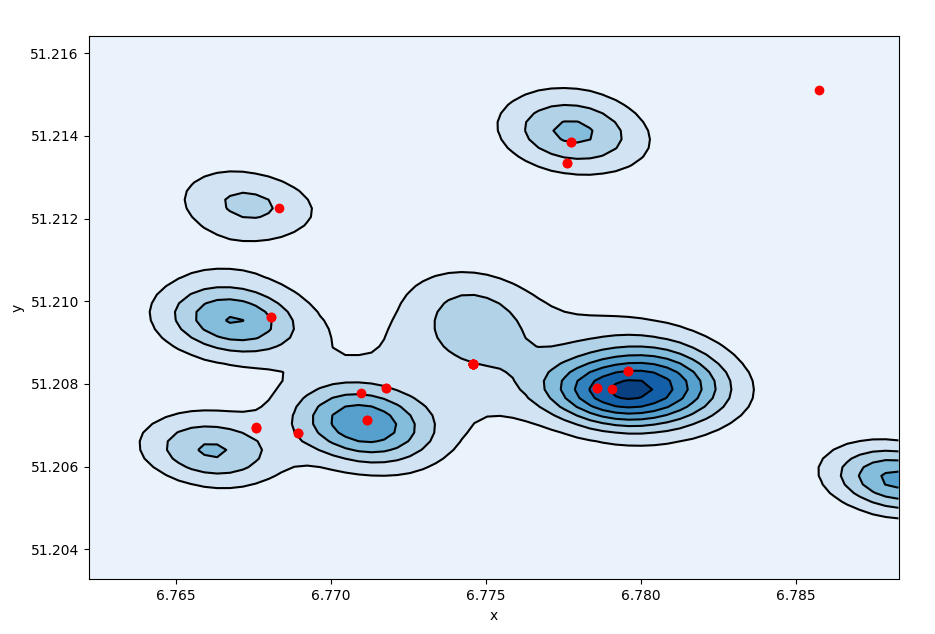
density plot after displacement
We move the single activities according to the gradient.
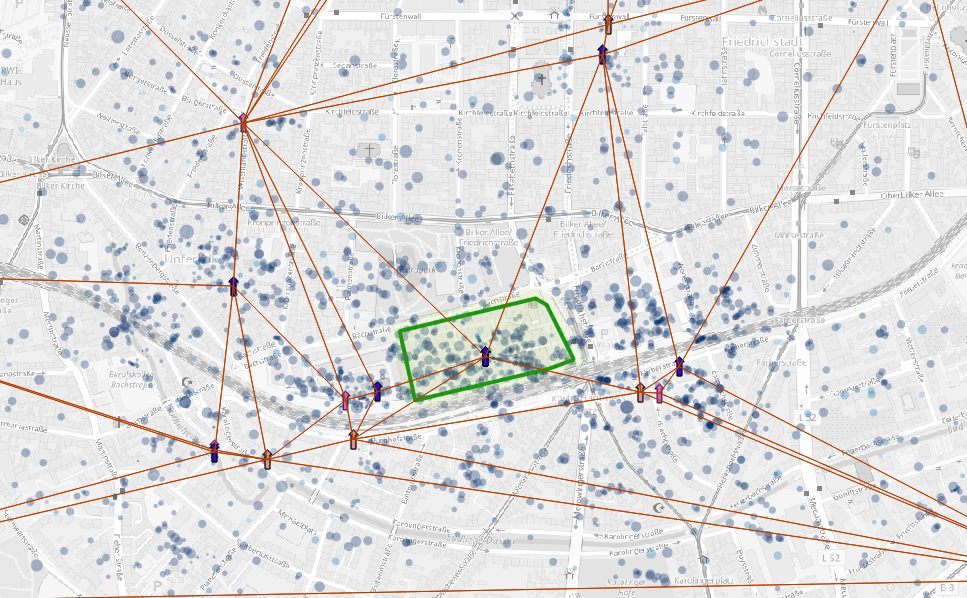
new activity position after displacement
On top of the cell space distortion we apply the underlying network
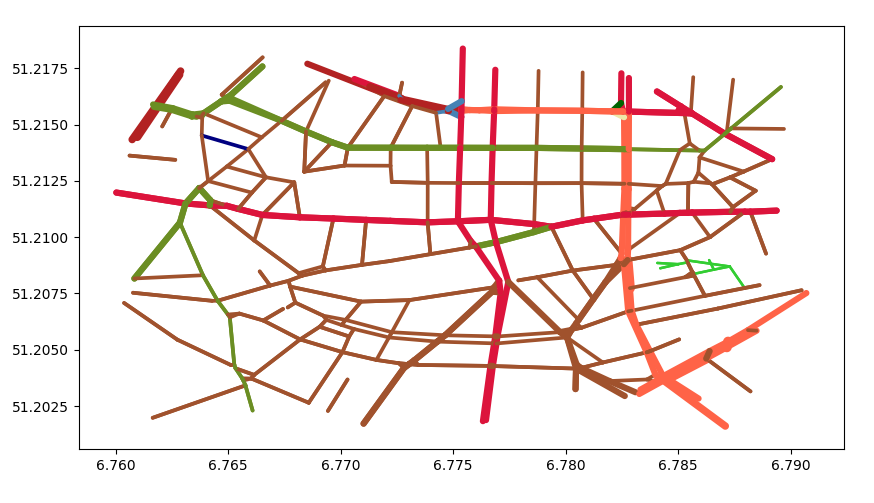
underlying netwok, each street class has a different color
We discretize the network, apply a width depending on the street speed and apply a smooting filter.
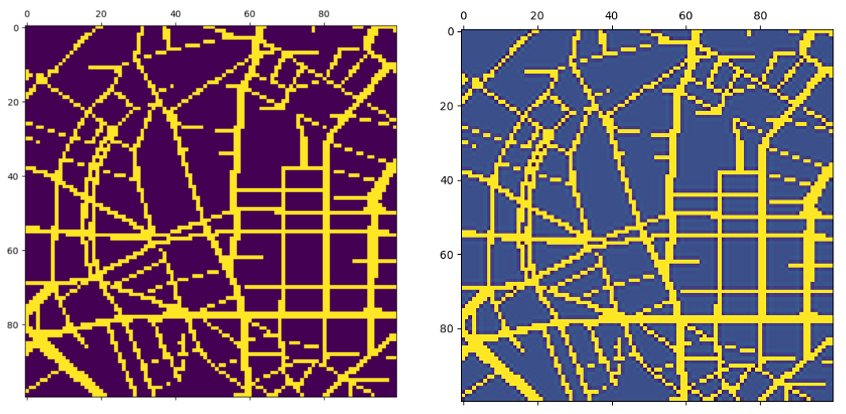
smoothed filter on network
Similarly we can create a displacement map based on the street network.
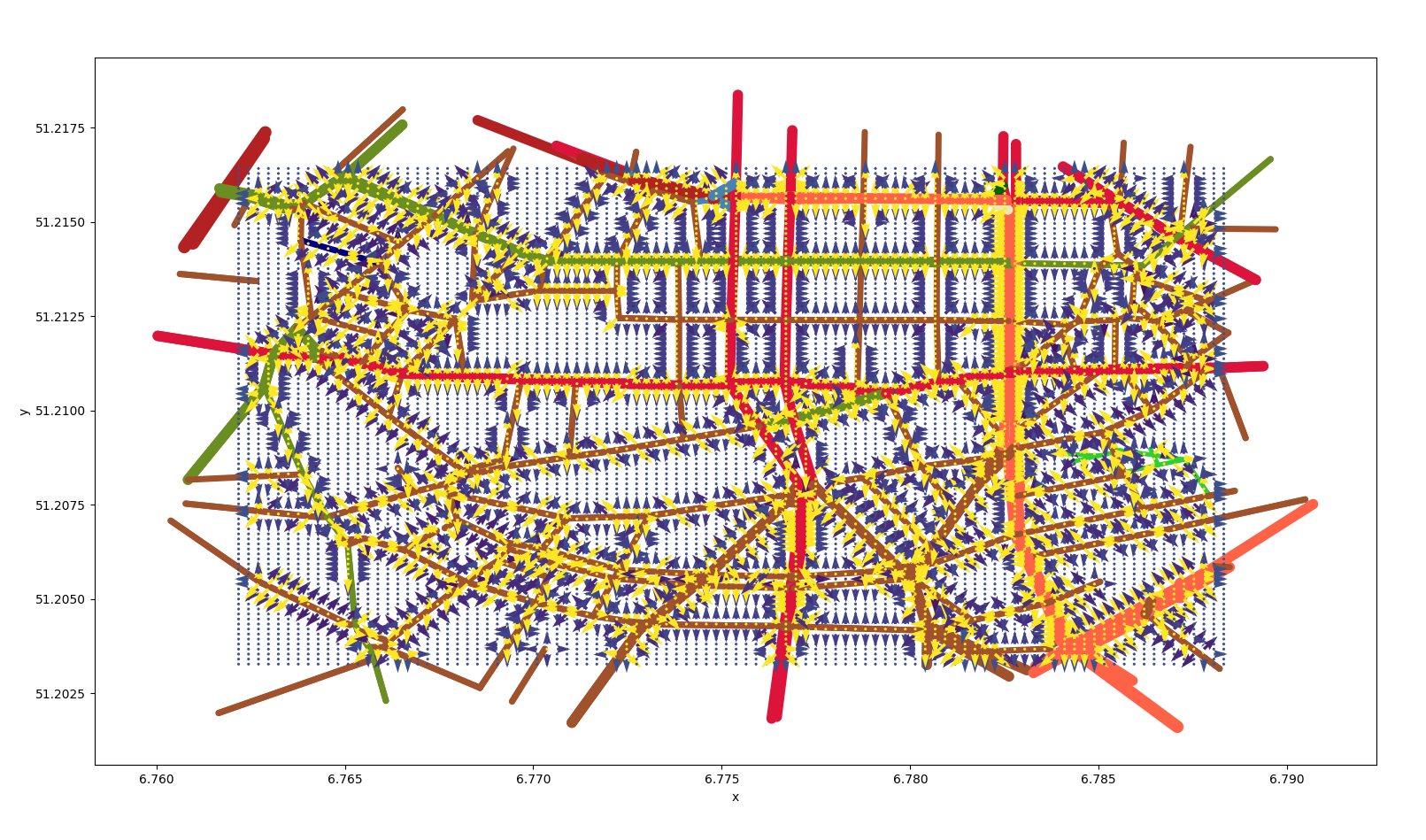
displacement due to the street network
To summarise the whole scheme of the procedure is described in this scheme:
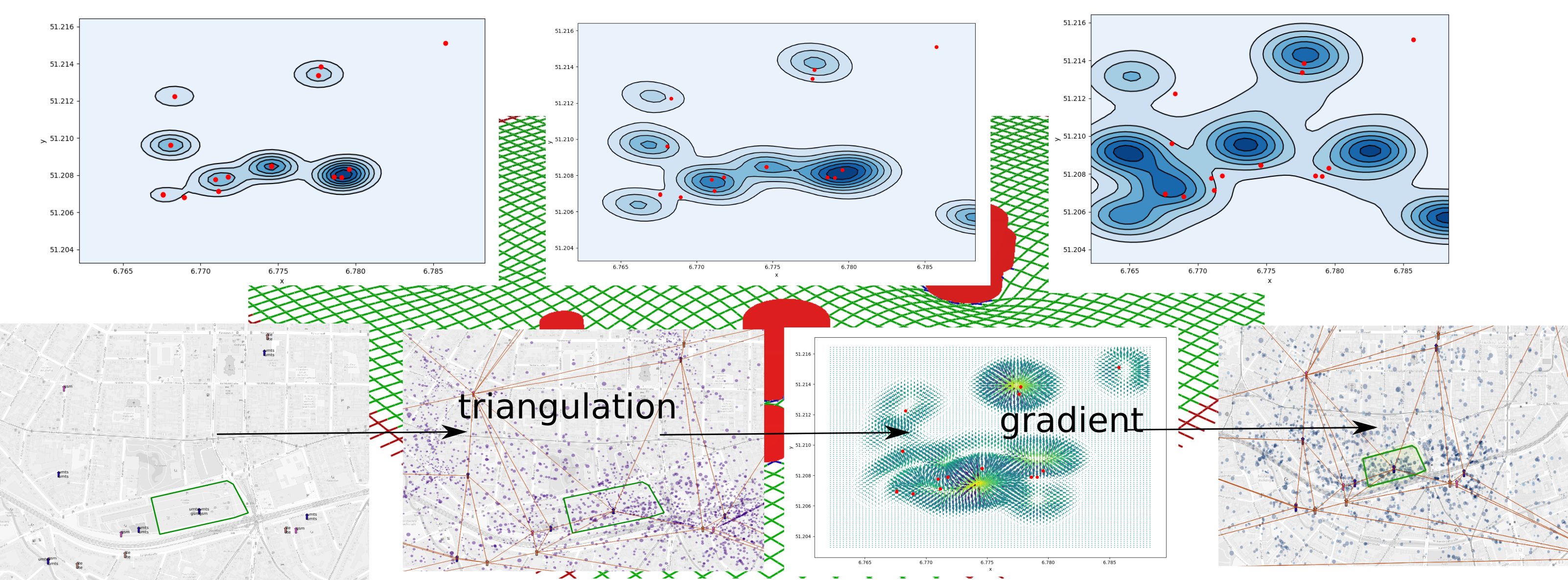
density plot after each operation and overview on the procedure
The procedure show how to create a more realistic density plots. Further tuning is necessary.
Finally we update the mapping etl_roda.py .