telemetry quality
camera latency
Camera and control latencies are a crucial problem for teledriving, we need to understand which features are good predictors for understanding what causes latencies.
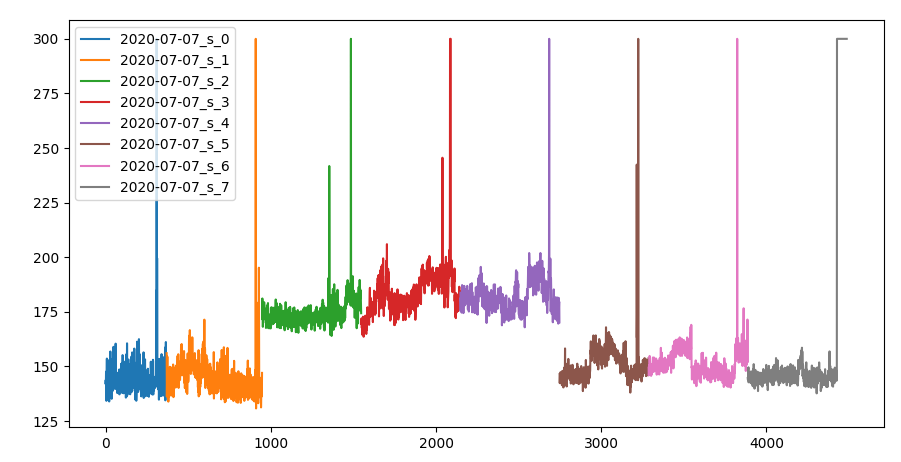
camera latency spike events
In this report we analyse:
- which features are important for latency prediction
- which features are important for spike prediction
- how early can we reliably forecast a spike event
previous analysis
We start from this previous analysis where 19 features were used to predict
e2e_latency
.
Data were collected
upsampling
all features up to a second, defining the spike as a
latency
lager than 400ms, filtering out the warehouses and
extracting the features
.
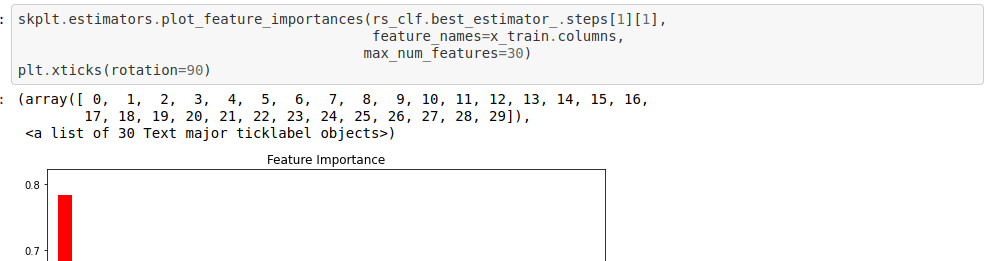
notebooks of the previous analysis
Features are
resampled
every 4 seconds,
plotted
, and a
xgboost
classifier is applied on the data.
The prediction is on 4 seconds bins where the maximum of
e2e_latency
is above 400ms is classified as
label:1
.
data quality
Report on the data quality, ingestion, stream, plausibility
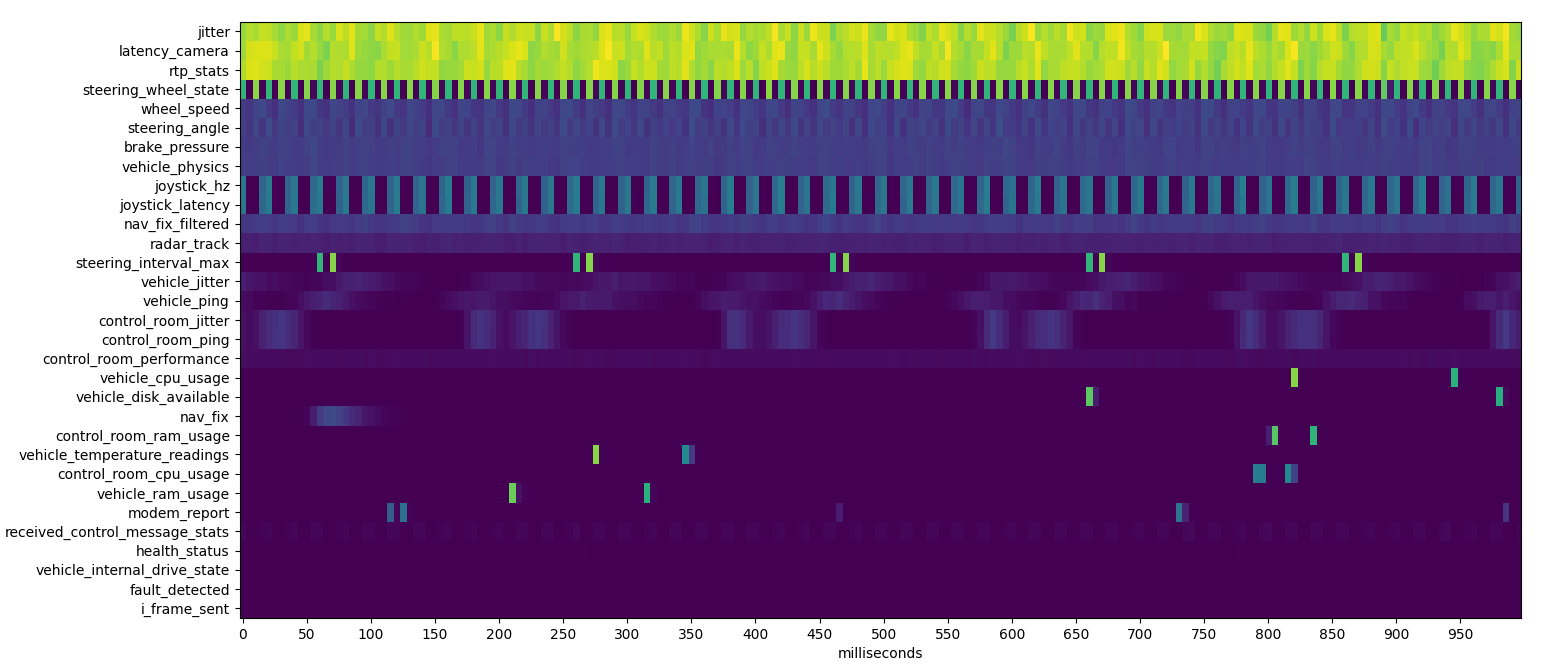
firing behaviour for telemetry features
Every sensor has a topic which fires to the backend at a rate from 1Hz to 50Hz.
networking
information comes every second while
computing
and
vehicle_dynamics
more frequently.
We spot which features are redundant and we check obvious dependecies with
camera_latency
data sets
Preparation of the datasets for the training, feature selection and denoising
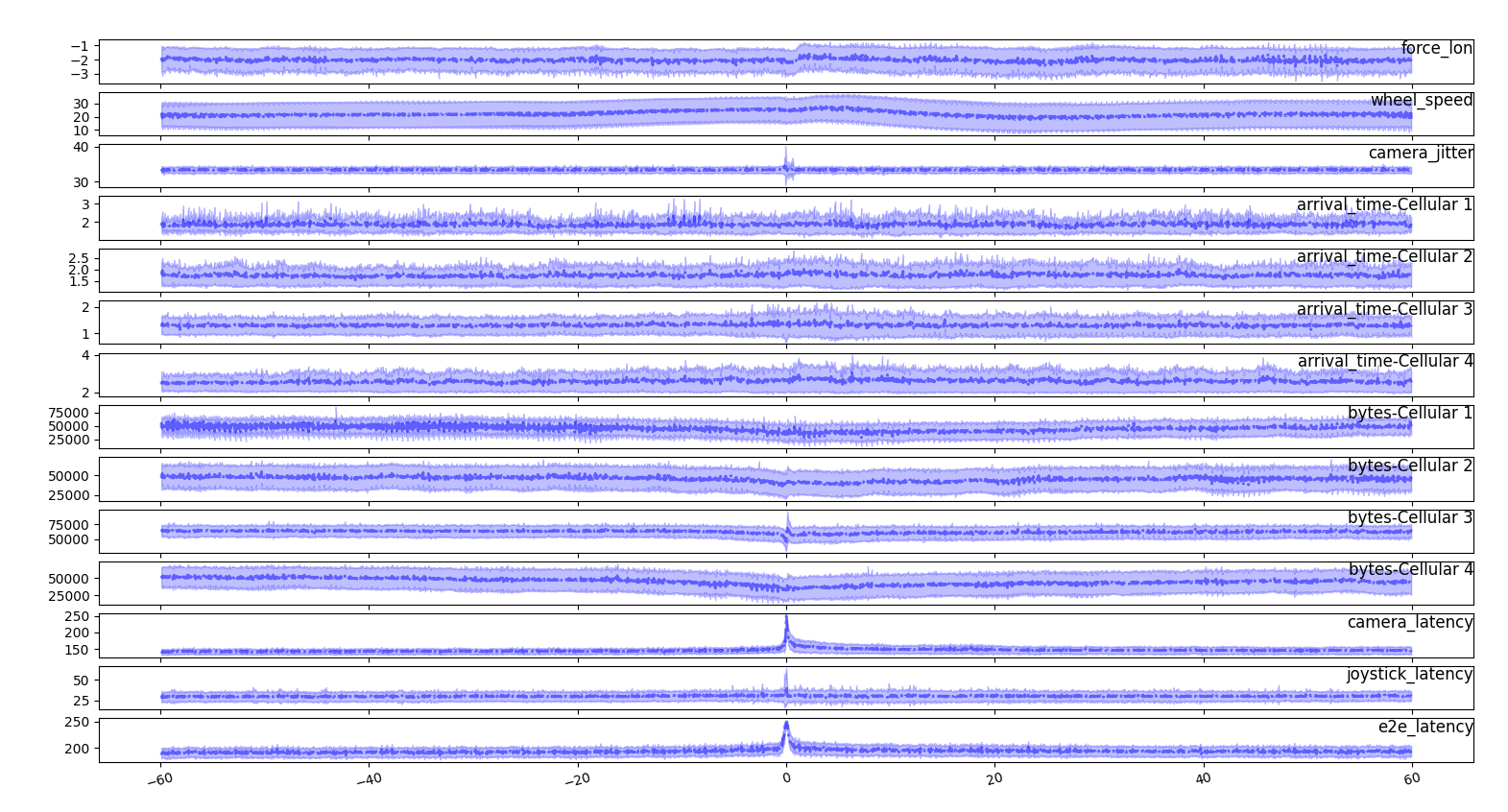
time series on deci seconds
We prepare different data sets:
- telemetry data, one second sampling
- telemetry data, one deci second sampling
- network_log data, one deci second sampling
For each we create a series of spike events (+/- 60 seconds from spike) and created a denoised average of all series
time ordering of events
Investigation on time ordering of events, investigating causal dependecy

time series on deci seconds
We define a method to calculate the time persistance and the time shift between features.
Persistance shows more interesting results than correlation and really points out when two features have a causal relationship.
Time shift is a delicate measurement since doesn't always lead to consistent results. We show that networking features are mostly preceeding spikes and we compute the time shift for every single series to classify networking related spikes from computing related.
prediction
Prediction of
camera_latency
to spot the most relevant features for training the model.
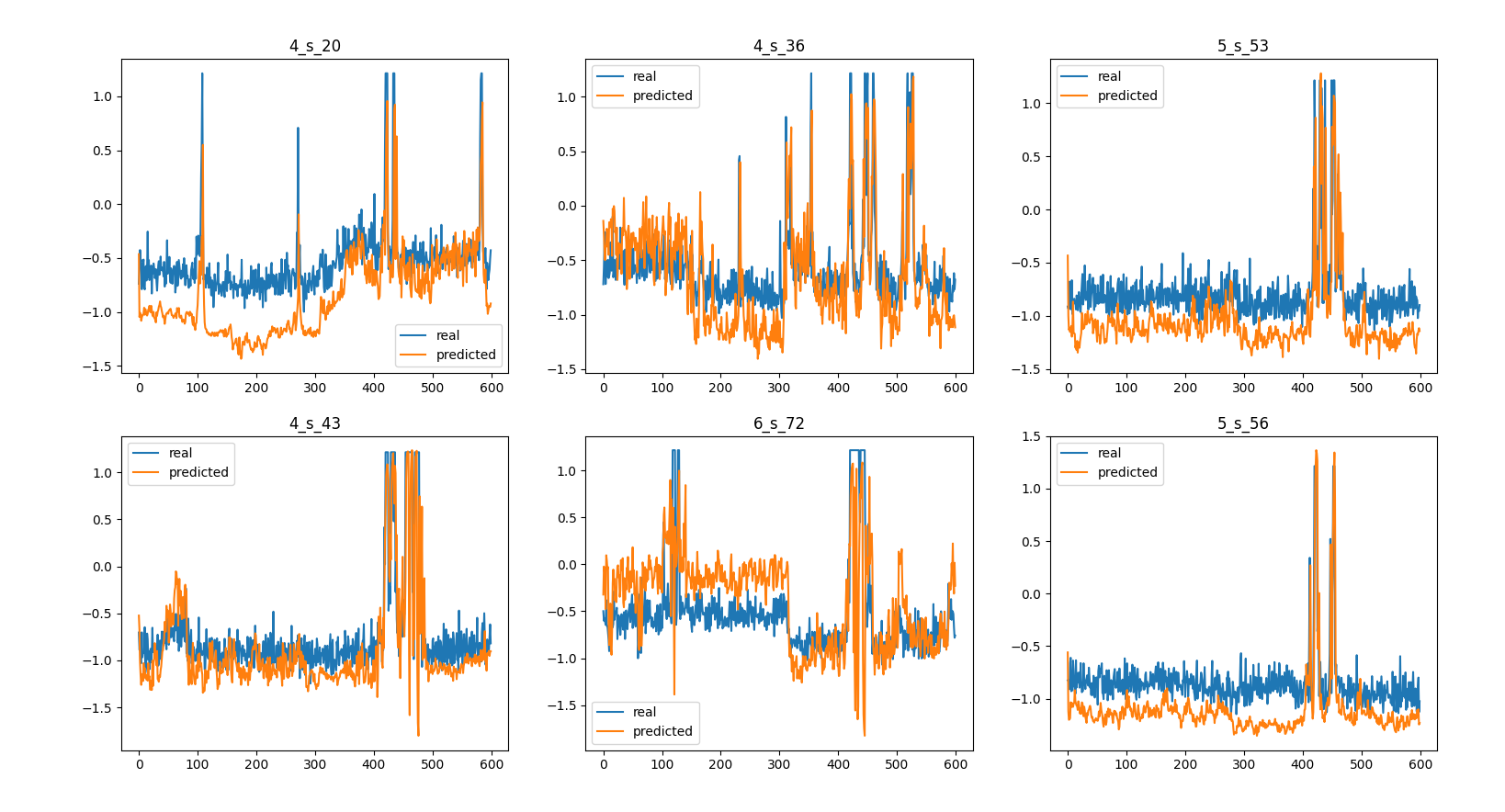
spike prediction with networking features
We iterate over different models and feature sets to identity the most performant combination.
We predict as well the risk of a spike.
We end up using a long short term memory with few layers.
forecast
We use the prediction model to run a forecast on the
camera_latency
for the next few seconds.
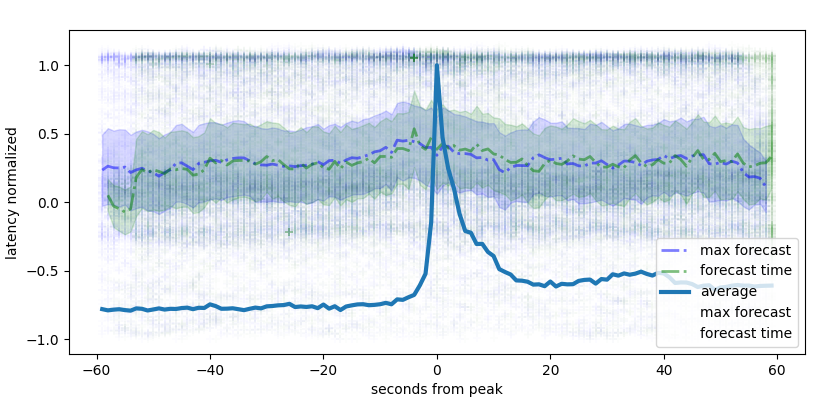
forecast for every series, for every starting point
We calculate the accuracy of the forecast depending on the anticipation time. The reliability of the model increases close to the spike.
spatial
We investigate the spatial dependency of spikes.

latency per geohash
We clearly see a spatial pattern where the latency is larger in particular areas of the city.