Spiega documentation
- Knowledge sharing
- Portfolio
privacy
privacy
Every person has a different opinion about the importance of privacy in their lives. I value privacy a lot and this is why I spent so much time to try to be as least trackable as possible. I worked in advertising and telcos and I know in how many ways they can build an identity of you.
professional experience
advertisement
When I was working in advertisement we had many traces left by users and advertisers were interested to know whether their product was fitting to that user. That was the time of programmatic advertisement and real-time bidding and before GDPR there were many things we could without consequences. Still there were many data we couldn’t use (like IPs) but it is hard to check whether no-one actually used them. The work was to create interest clusters which can have more interactions with the product. Training ML models wasn’t easy because the metrics weren’t working properly. View thru, CTR, landing page, purchase… had a lot of noise especially with large consumer goods. The most advanced work was to create a taxonomy of interest where we cataloged all the content of the publisher (over 60 properties, many verticals) to project the user browsing into those categories. The tricky part was to create accurate labels for each page it was published and in 2016 there weren’t many options.
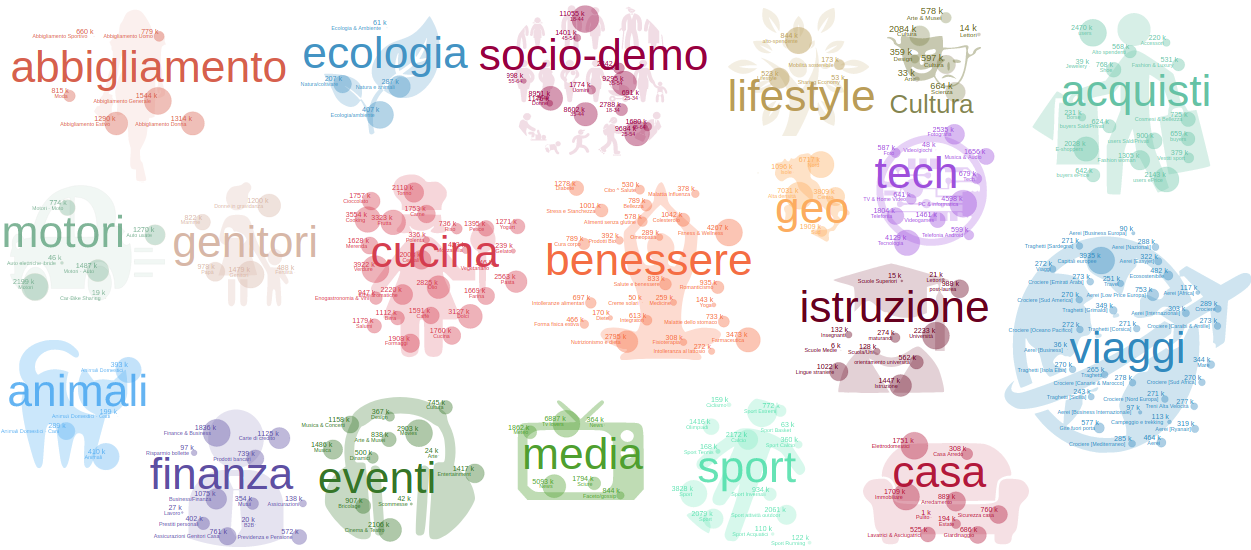
Figure 1: audience taxonomy
telco
I worked in multiple telcos and I know pretty well the type and quality of data they use. Raw granular data are in the militarized zone of the company and we couldn’t read them (apart from a test set). We could instead run scripts which were building groups (30 users minimum) on any attribute we wanted:
- cellphone type
- brand, model
- tower
- when the cellphone was connected to a tower
- country
- of origin
We couldn’t join on phone number but on a device ID which was resetted every day. We had to prove that no single could be spotted in a group of 30 people.
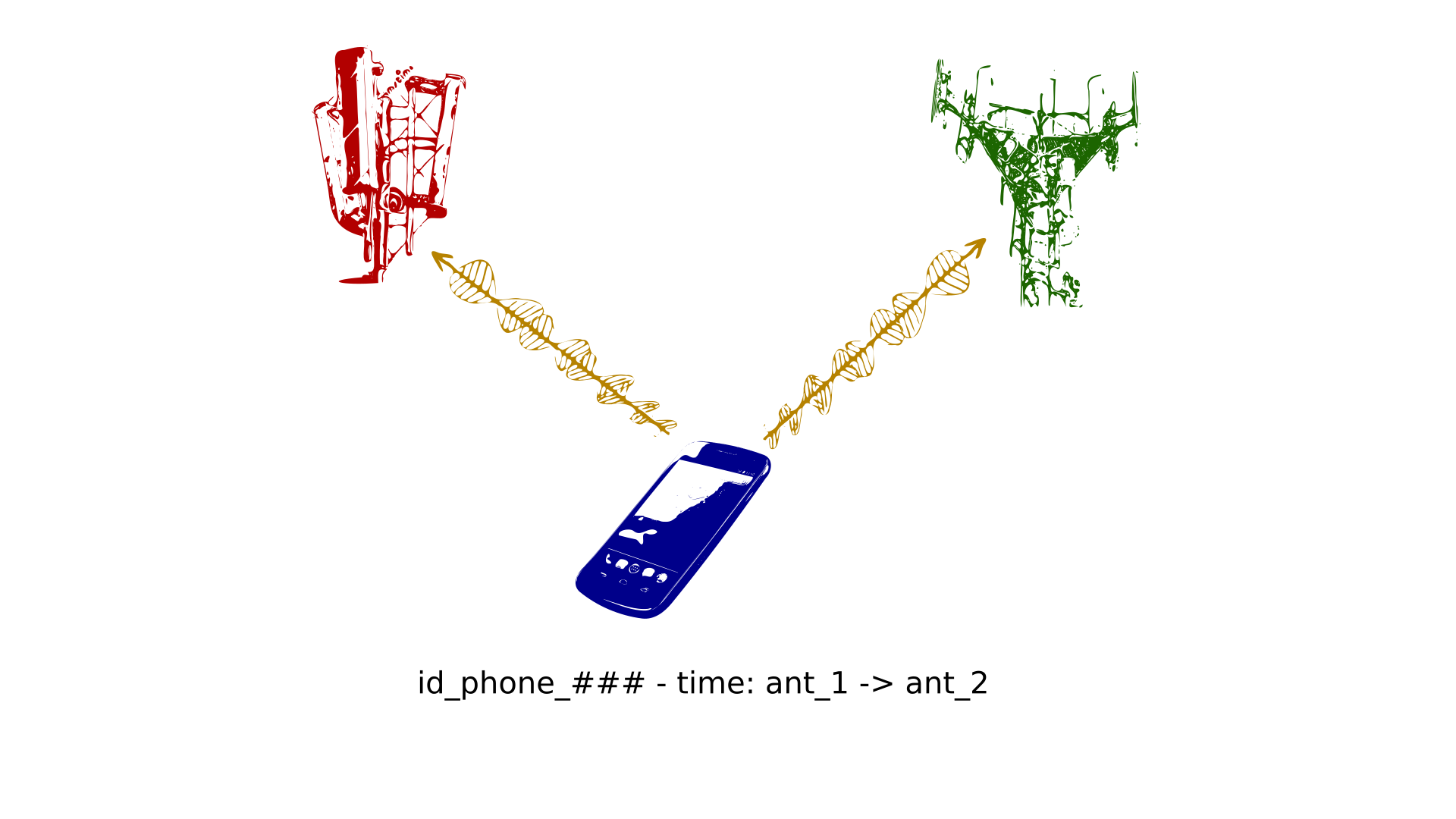
Figure 2: cellphone connecting to towers
e-commerce
I worked for a massive e-commerce portal and my job was to personalize the display so users could find on the website the most fitting information for the product they were mostly interested. It is really important to understand what the users think about the portal and how to improve it.

Figure 3: e-commerce tracking
techniques
Here are different techniques to track user and build their identity.
fingerprinting
Finger-printing is a technique where you use metadata to build an unique identifier. When you browse you leave traces in server logs which help to reconstruct your identity. There are few things that make your fingerprint particularly effective.
- IP
- really hard to mask unless you use tor or vpn but in case of vpn you subscribe to let one provider always know who you are. Theoretically servers are not supposed to parse this information because is really sensitive.
- user agent
- information about the browser, operating system, languages… The more uncommon those information are the esier is to build a fingerprint
- patterns
- navigation patterns like hour in the day, content
- login
- the easiest situation
- telephone number
- which I never share because unfortunately I can’t change it
tracking
Every time you load a web page multiple items get downloaded. Some are functional to load the web-page (javascript) others are pure tracking. Even fonts are used to track since the server will be able to log the information as per previous section. When I build a website I make sure that my users won’t download any:
- font
- used mainly for tracking, I upload the few I like
- icons
- I minimized the collection
- js
- I create a copy on my server apart from pretty complex libraries like mathjax or d3
- css
- all local, I make sure they don’t download fonts or icons
- cookie
- I don’t see the need
- local storage
- only for some simple web-apps I build
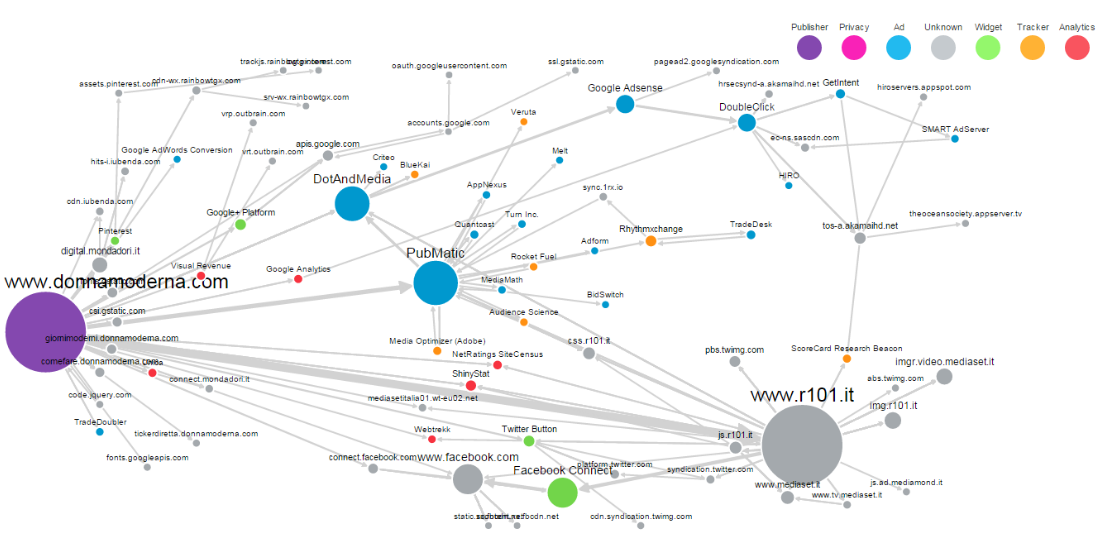
Figure 4: website tracking from ghostery
accounts
I think it is important to use several email addresses depending on the gravity of the service:
- banking
- a separate address for banking and finance
- social
- a separate email address for social media
- working
- one email for working apps (cloud services, subscriptions, …), tax consultant…
- services
- one email or alias to promote services (which has no login)
- travel
- travel companies with the excuse to send tickets they need a lot of personal information. I have at least one account only for bookings so they can reconcile one email address with no further interest.
Of course anyone knowing the email address you use to log-in in portals can create a risk.
passwords
Passwords follow the same logic, every password is made of:
prefix-kernel-suffix-parity
The kernel is different per category (banking, social, working, services, email). Prefix and suffix should be something easy to remember. Parity is like a parity check of the string. Since websites store hashed passwords every website would see a different one and won’t be able to use it for other services.
subscriptions
I have none and I would find really uncomfortable to have a paying services where the
cellphone
Cellphones are the worse for privacy protection. There are only two operating systems which have no interest to protect privacy and I have no trust in either. Telcos know exactly where you are because your cellphone always asks to connect to a tower in the neighborhood. Still there are few things you can do to protect your privacy.
accounts
I have tons of accounts, every new device a create a new one and start from zero. This doesn’t mean the provider is not able to match your ID but I didn’t experience continuity in advertising. Unfortunately changing phone number is really difficult this is why it is important to keep it as private as possible. I use a separate sim for sms verification and use temporary emails for sites where I need to download one file and never go back.
apps
I try to avoid apps as much as I can. It’s really hard to see the added value of apps. If I need to login to any site I do it on a browser. The only exception are offline apps:
- maps
- offline for hiking
- chess
- mostly offline
- synth
- to practice music
- messaging
Some cellphones have ways to isolate apps in containers and create virtual environments where apps have limited access.
- island
- a separated environment where you can turn on/off apps
- second phone
- a separated instance of the operating system you can unlock with a different patterns
cloud
No cloud services, I need to organize my data properly. From my cellphone I just need to backup some pictures I moved to the export folder. For more information about backup backup sync.
browsing
I use multiple browser/profiles for different purposes:
- work
- chromium for compatibility with many web-apps like video calls
- surfing
- firefox to navigate internet and look for information
- another firefox to access my accounts
- social
- opera to login on social media from the same corporate
- videos
- duckduckgo to watch videos
In this way all of my accounts are separated and anyone trying to reconcile information would find a pretty scattered profile.