What spiega is about
- Knowledge sharing
- Portfolio
data sets
Definition and prepartation of the data sets
deci seconds
Source:
etl_telemetry_deci
Query:
network_log.sql
To analyze the deci second data we can use fewer features (because of sampling rate) like the
computing
features and
vehicle_ping
. Event
rtp
and
modem
features have to be removed. We collect other
networking
features from the
network_log
table where we subset the telemetry data into a series of spikes and we merge the network data information using the
timestamp
and the
vehicle_id
. We pivot the
network_log
table wrt to the modem name.
We also discard
ttl
and
interval_duration
for the low information contained.
We discard
packets
because the hava a correlation of 0.98 with
bytes
.
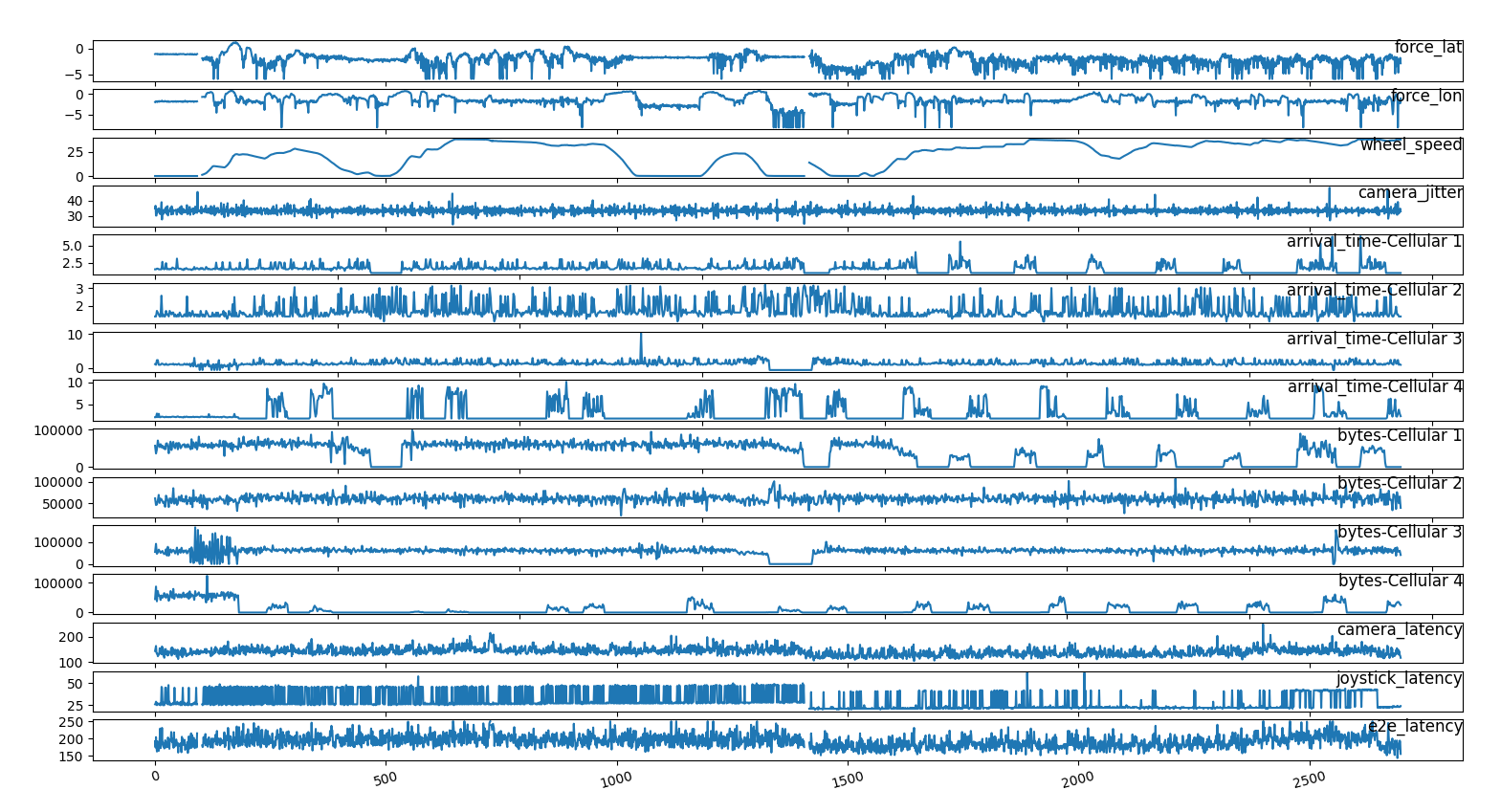
time series of the most relevant features
We see that the quantity of transmitted information slightly correlates between modems signalizing similar networking issues across operators. The correlation between bytes and arrival time is lower than expected
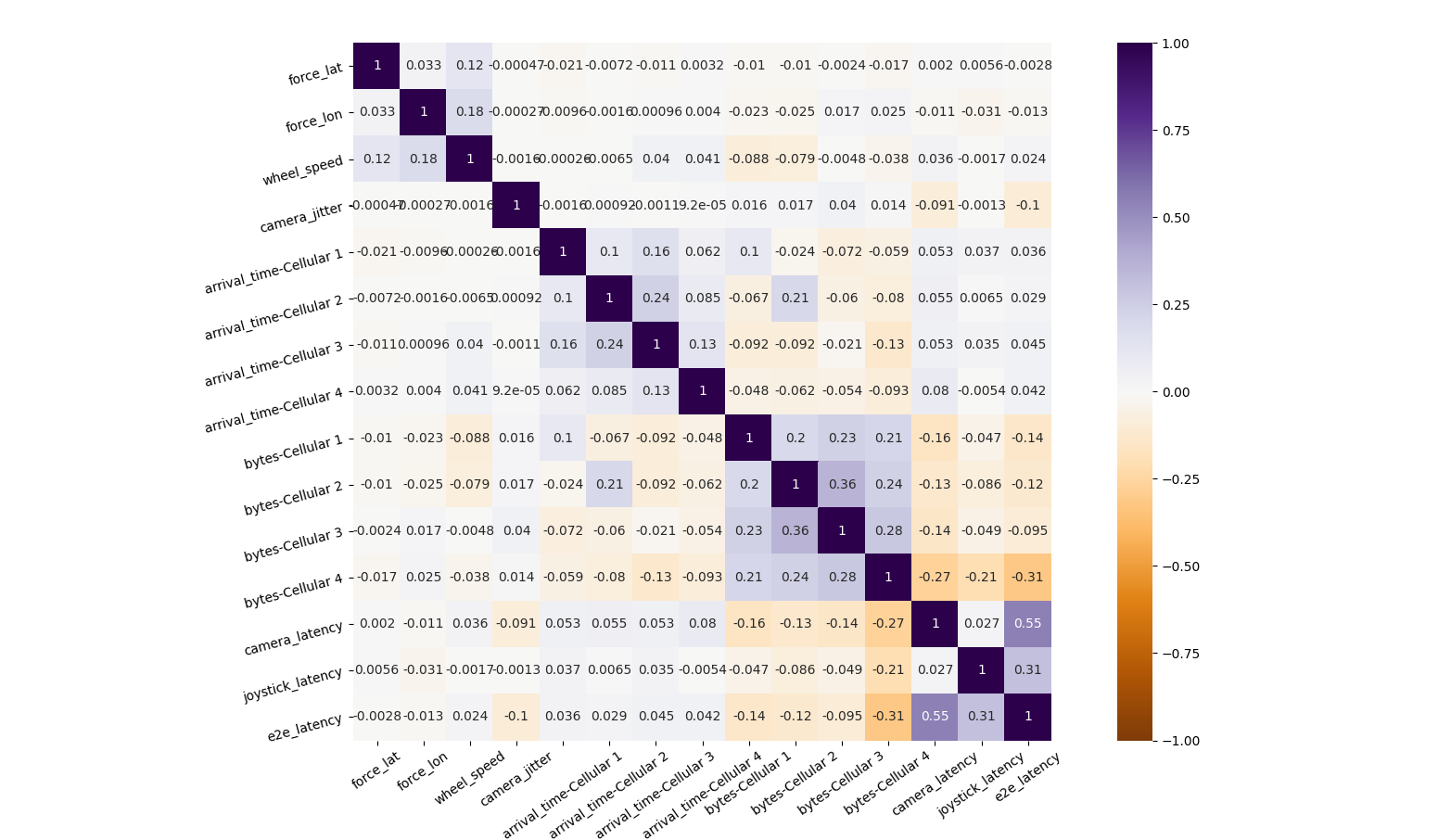
correlation between the network log features
But in general modems have a different behaviors, cellular 3 is the most stable and transmits more data.
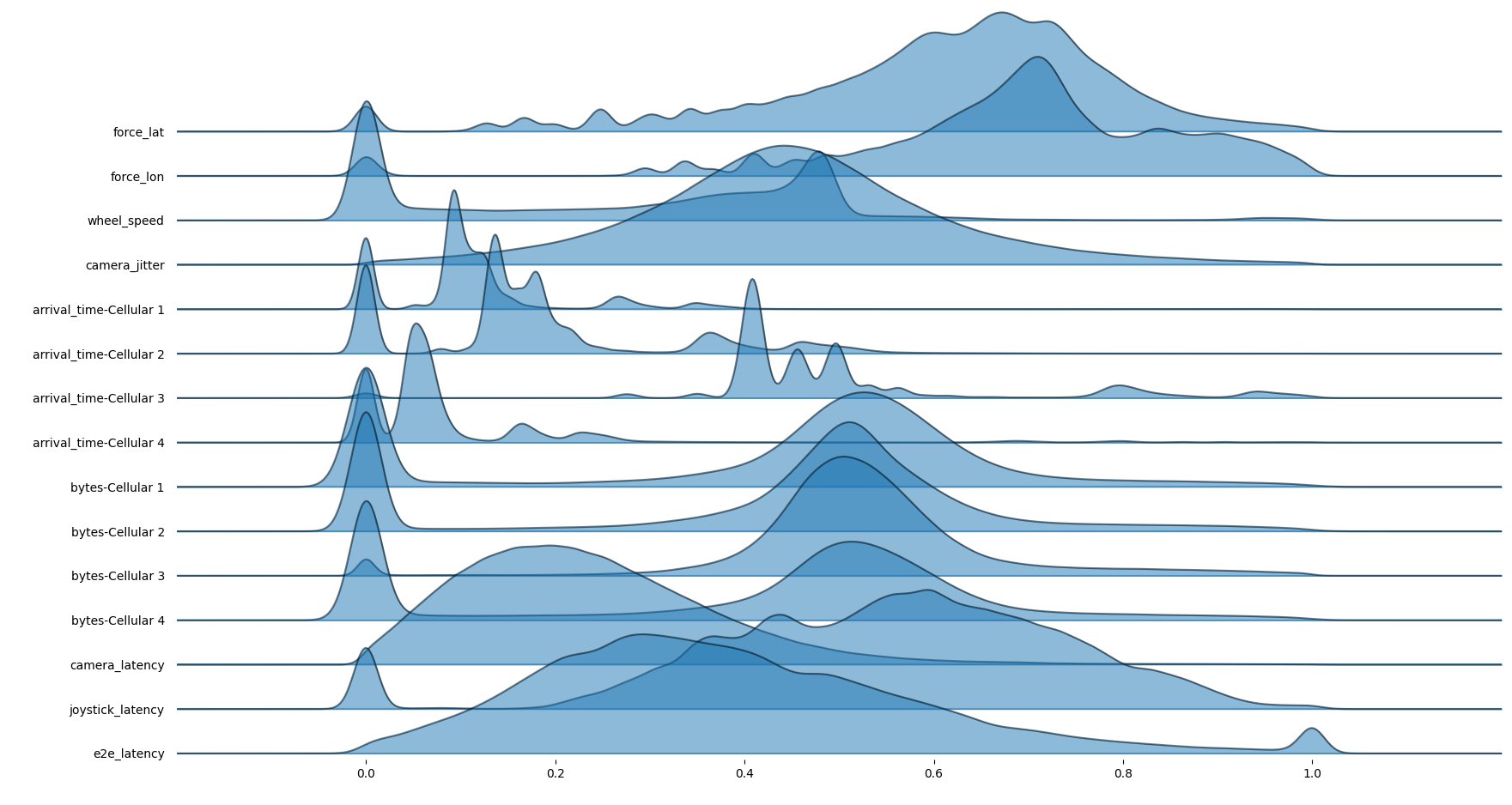
joyplot of network_log features
datasets
We prepare different datasets for different parts of the analysis:
- latency set complete august and september data: etl_telemetry
- location
- networking
- vehicle dynamics
- computing
- spike set subset of latency set referring to spike events etl_spike
- location
- networking
- vehicle dynamics
- computing
The different sets have a different sampling of events, the
latency set
has few spike events while the
spike set
has all the perturbations before and after a disruption event.
From the two dataset we can see the different feature distribution and feature importance.
spike preprocessing
Query:
resample_1sec
Code:
etl_spikes
We resample averaging 1 sec worth of data but some fields are still uncomplete, around 1% of the timse
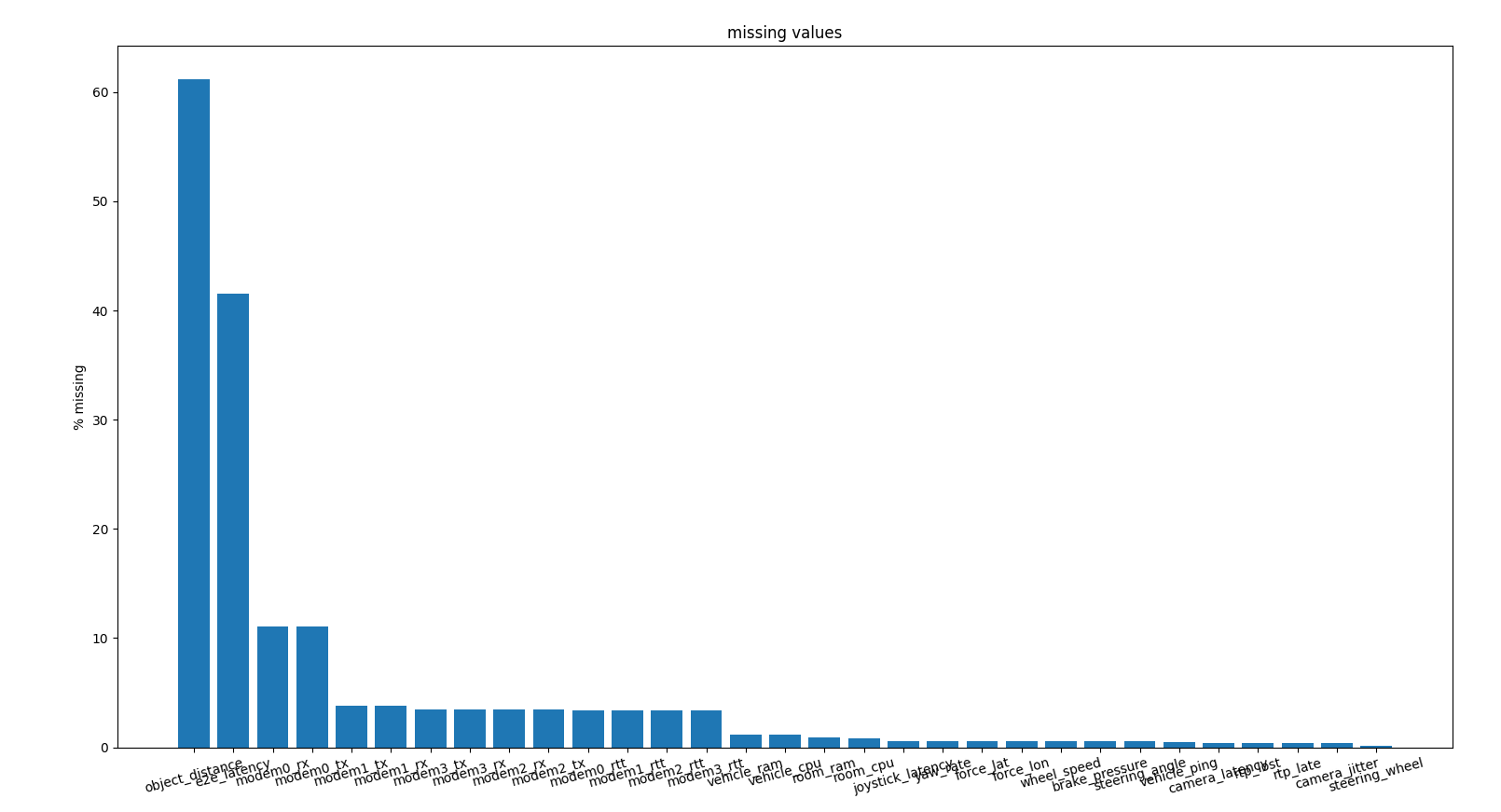
percentage of missing data in certain features
We identify the peak and split each time series in sub series where all peaks are aligned at the minute 4 and we leave one minute after the spike.
We artificially exagerate the peak to help the model understand it and set the peak max value to a plateau
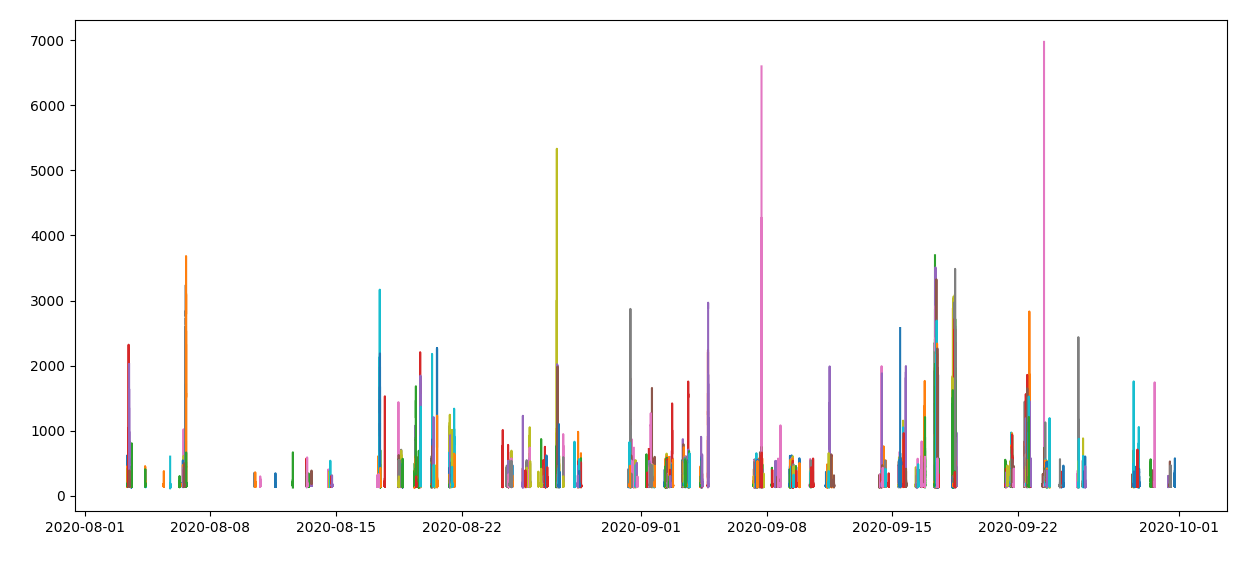
series of spikes
We than abstract the time and create a stack of series where the peak in phase
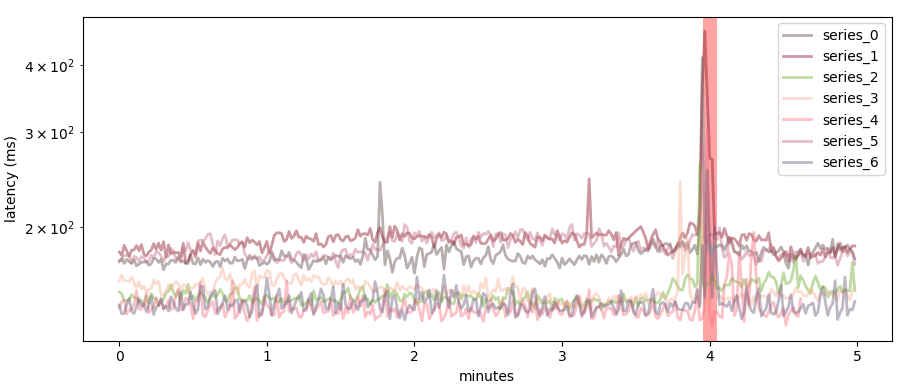
stack of spikes where the spike happens at minute 4
spike inspection
It is interesting to analyze some spike series to understand qualitatively what might happen during incidents. In this case we see two concurrent spikes in two different sessions
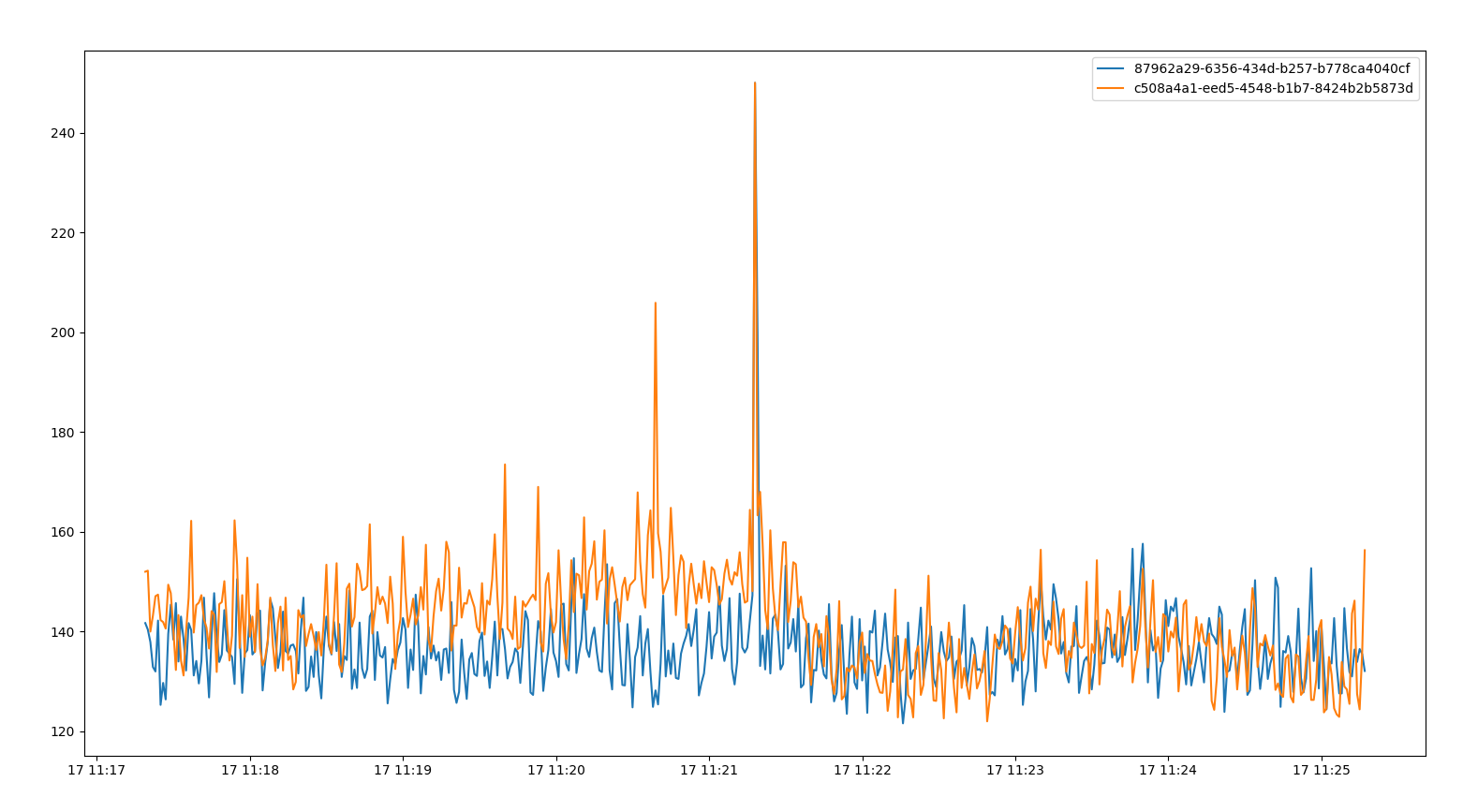
two spikes at the same time on different cars ( 24, 76)
Averaging the two series it seems that the
room_cpu
has a clear variation prior to the spike.
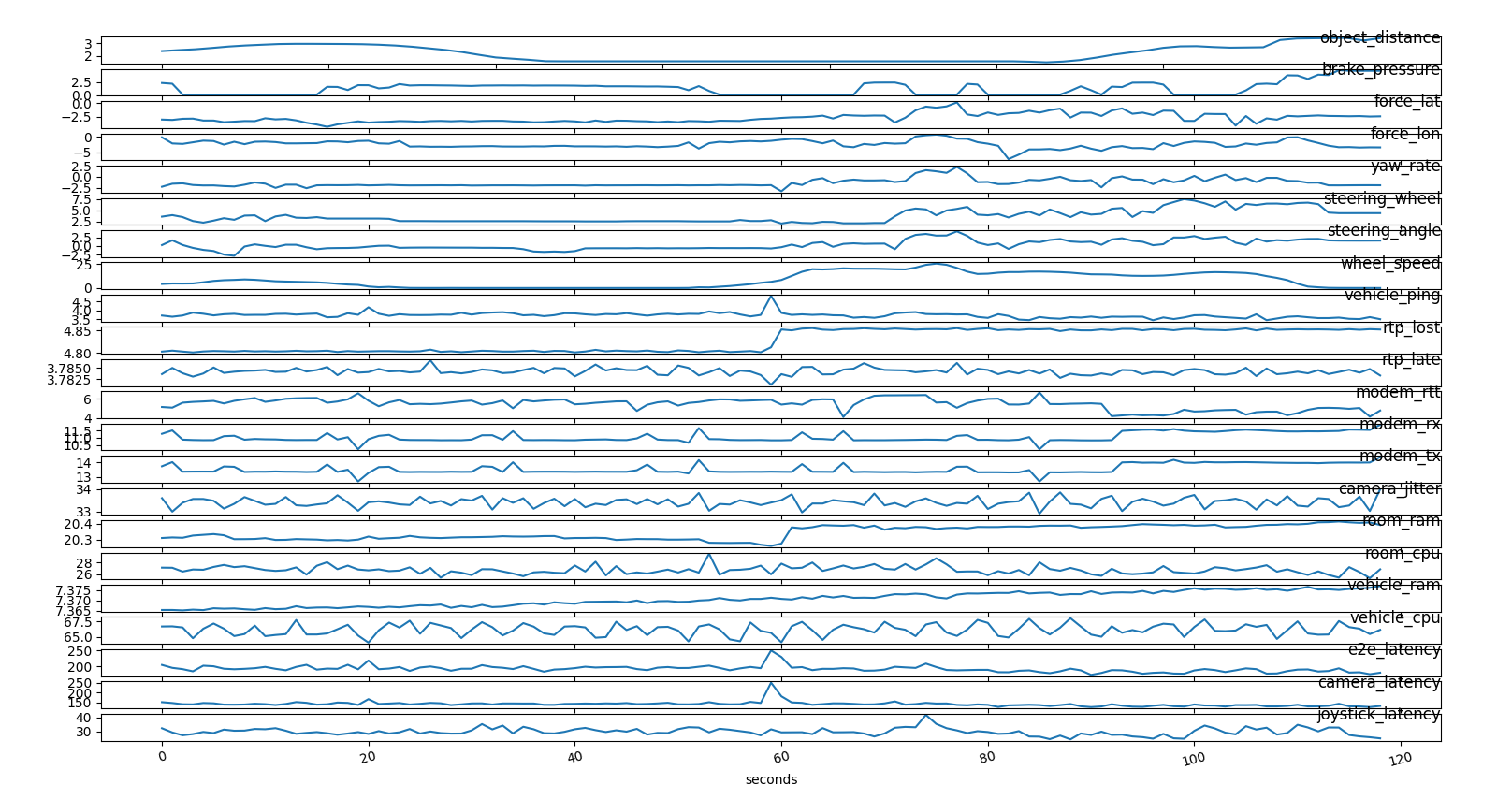
average of both time series prior to the spike
We see 3 of such pairs: 2020-08-17T11, 2020-08-24T18, 2020-08-20T08.
feature selection
At first we discard poor features analyzing:
- low variance
- low frequency
- noise level
Spikes are rare events and some features might be as rare as spikes and than a indication of them but in case of
['td_brake','td_throttle','steering_interval']
we see that data are rare don't happen in high latency cases.
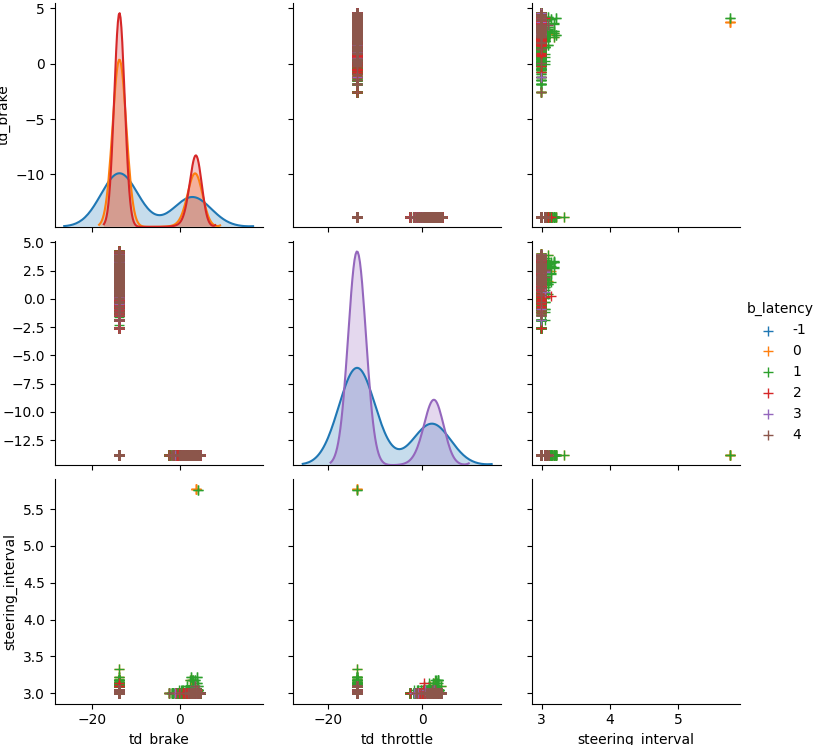
poor features
In comparison we see that
rtp_lost
and
rtp_late
have a clear distribution dinstinction although most of the time data are NaNs
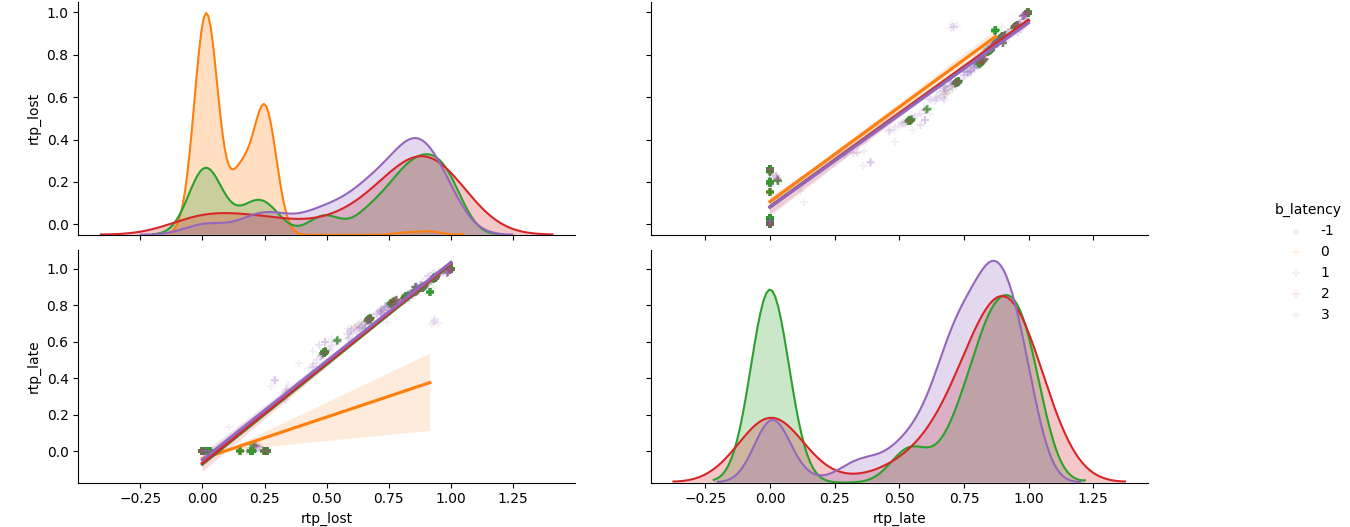
poor features but discriminators for latency
feature statistics
Code: stat_telemetry , stat_latency .
Of the most important feature we visualize the time series
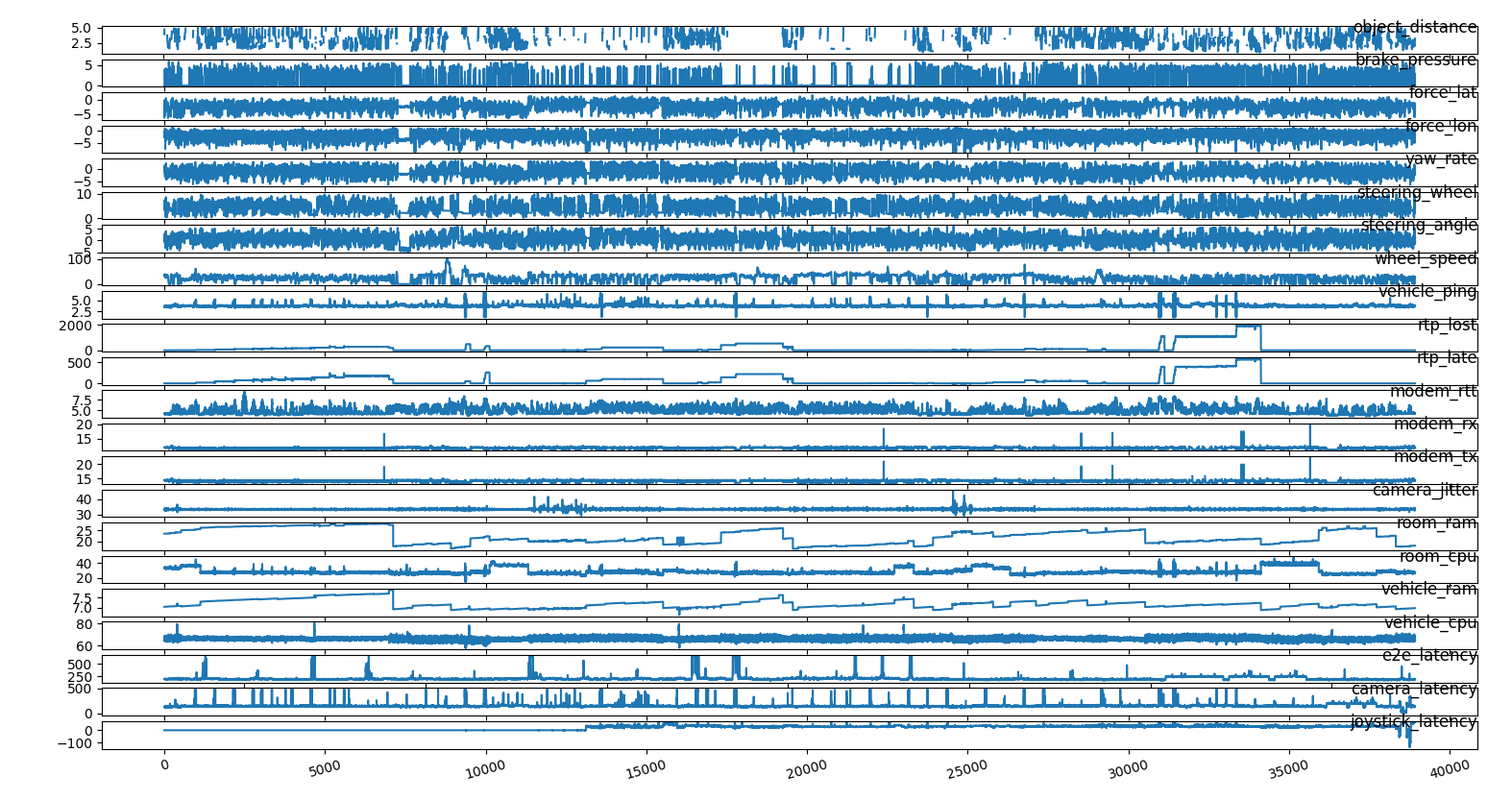
visualization of the time series
We collect a day of data and subset the time series prior to a spike
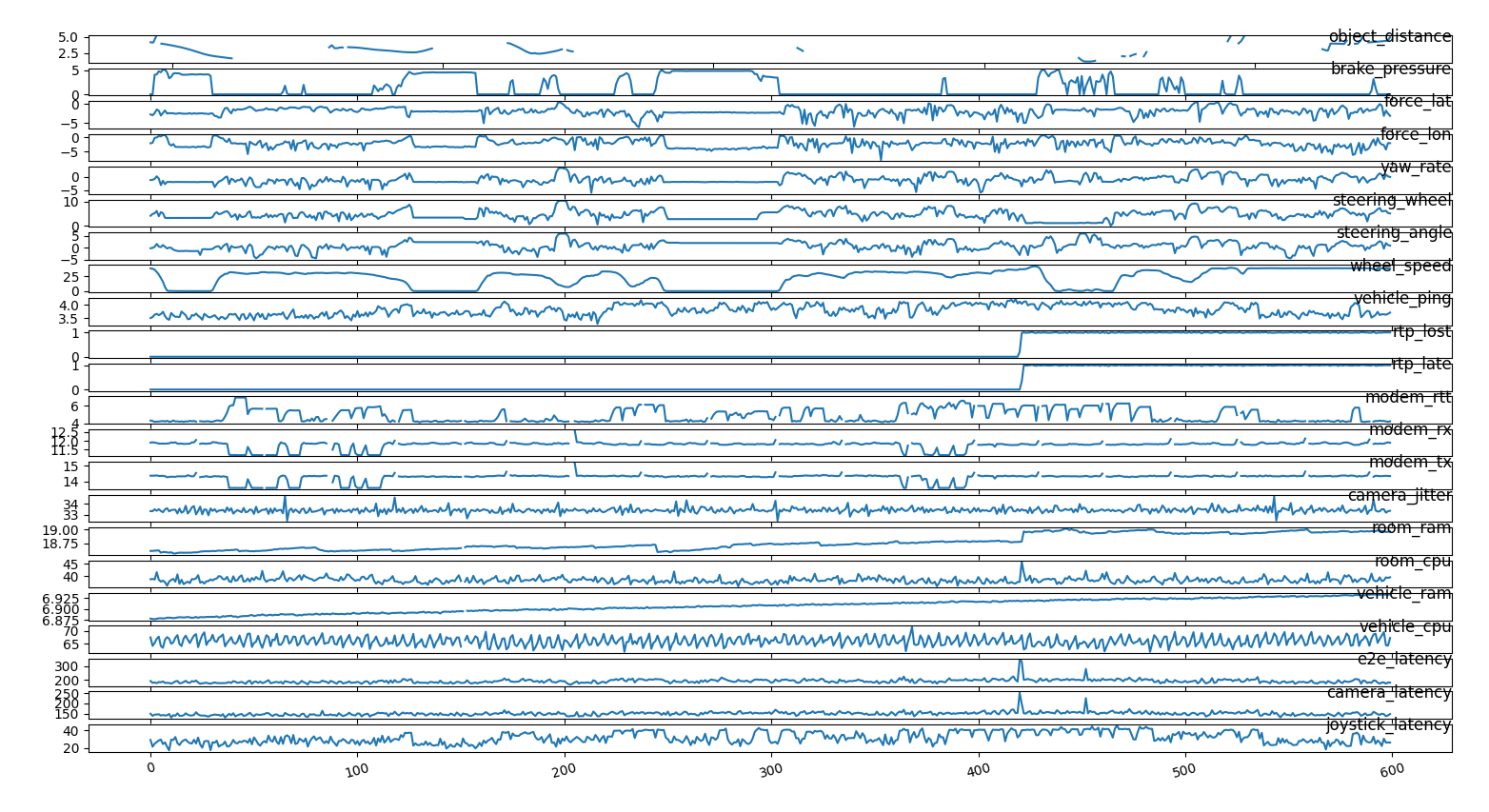
time series of the most relevant features prior to a spike, we can see that after the disruption the vehicle brakes
We removed some features because of the obvious cross correlation (ex:
brake_pressure
~
wheel_speed
)
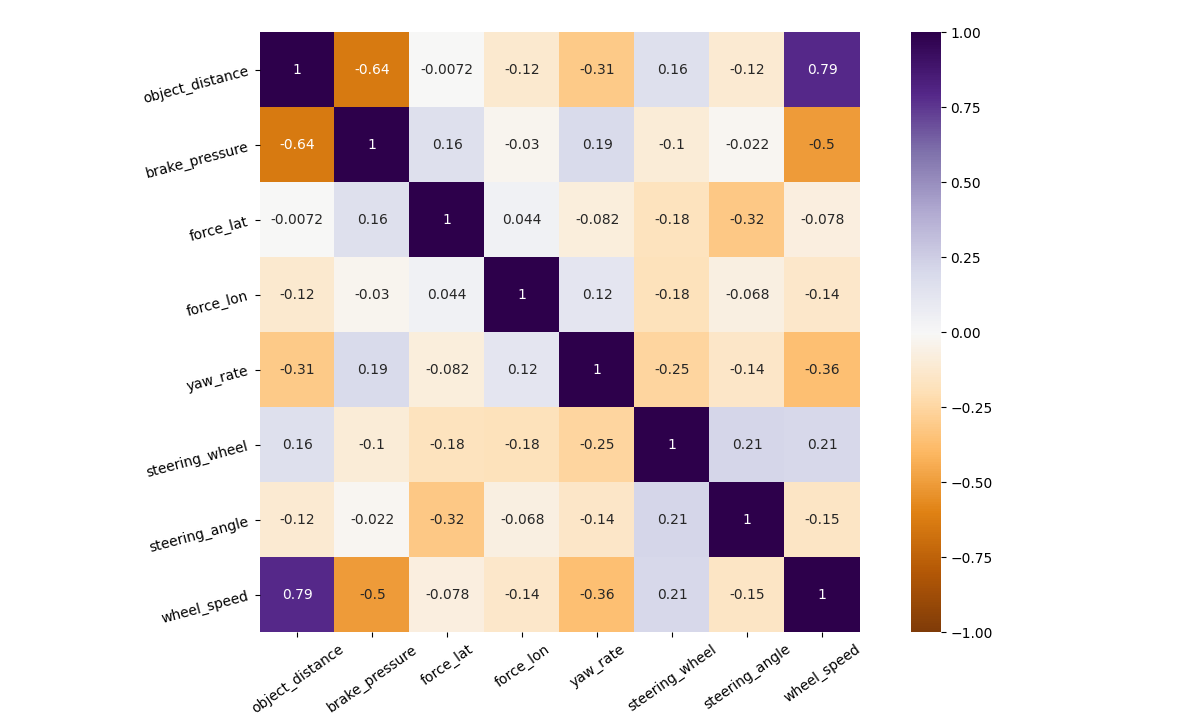
feature correlation, obvious cross correlation
We see a dependency between
vehicle
and
control_room
cpu
and
ram
usage
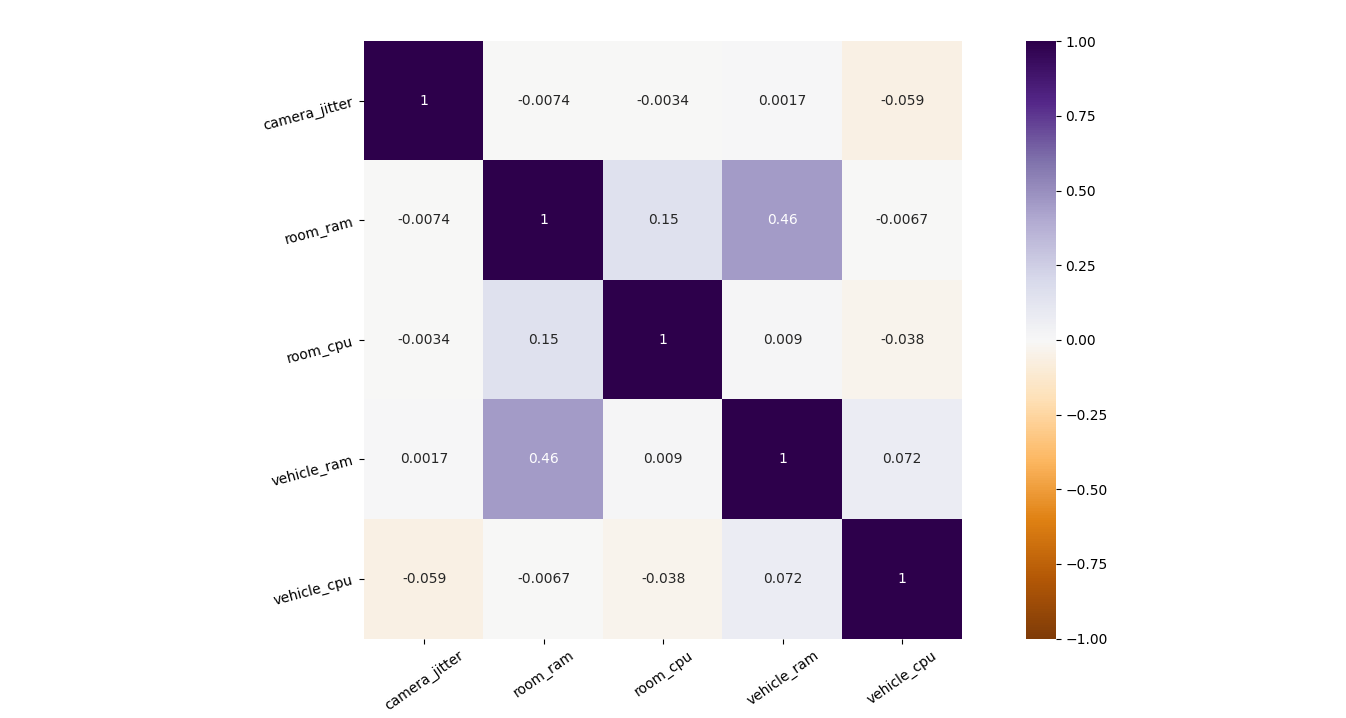
vehicle and control room interdependency on computation
We see that not all the features are distributed regularly and some are pretty noisy.
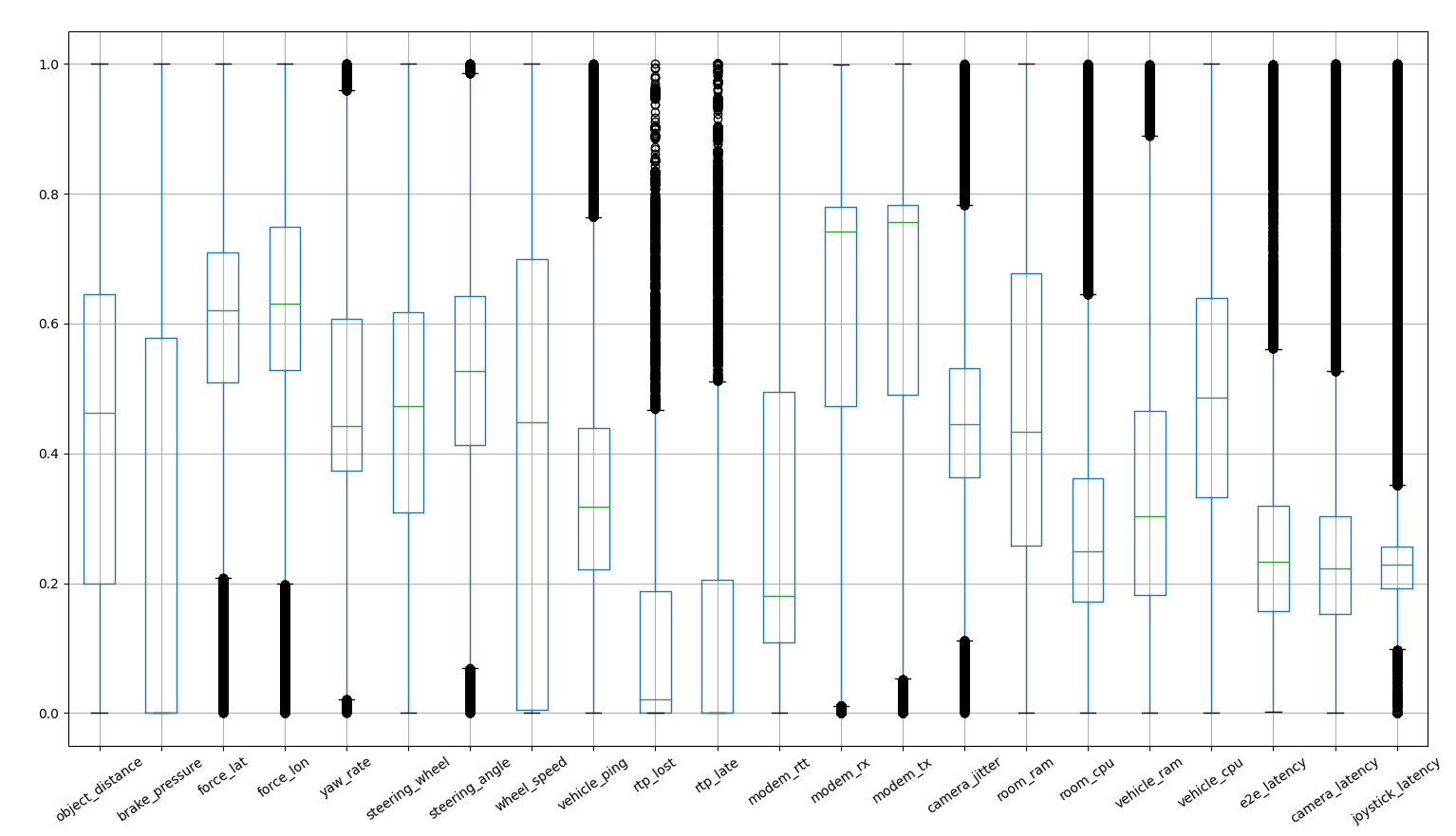
distribution of the latency features: boxplots
In case of the spike subset the distribution get a bit broader
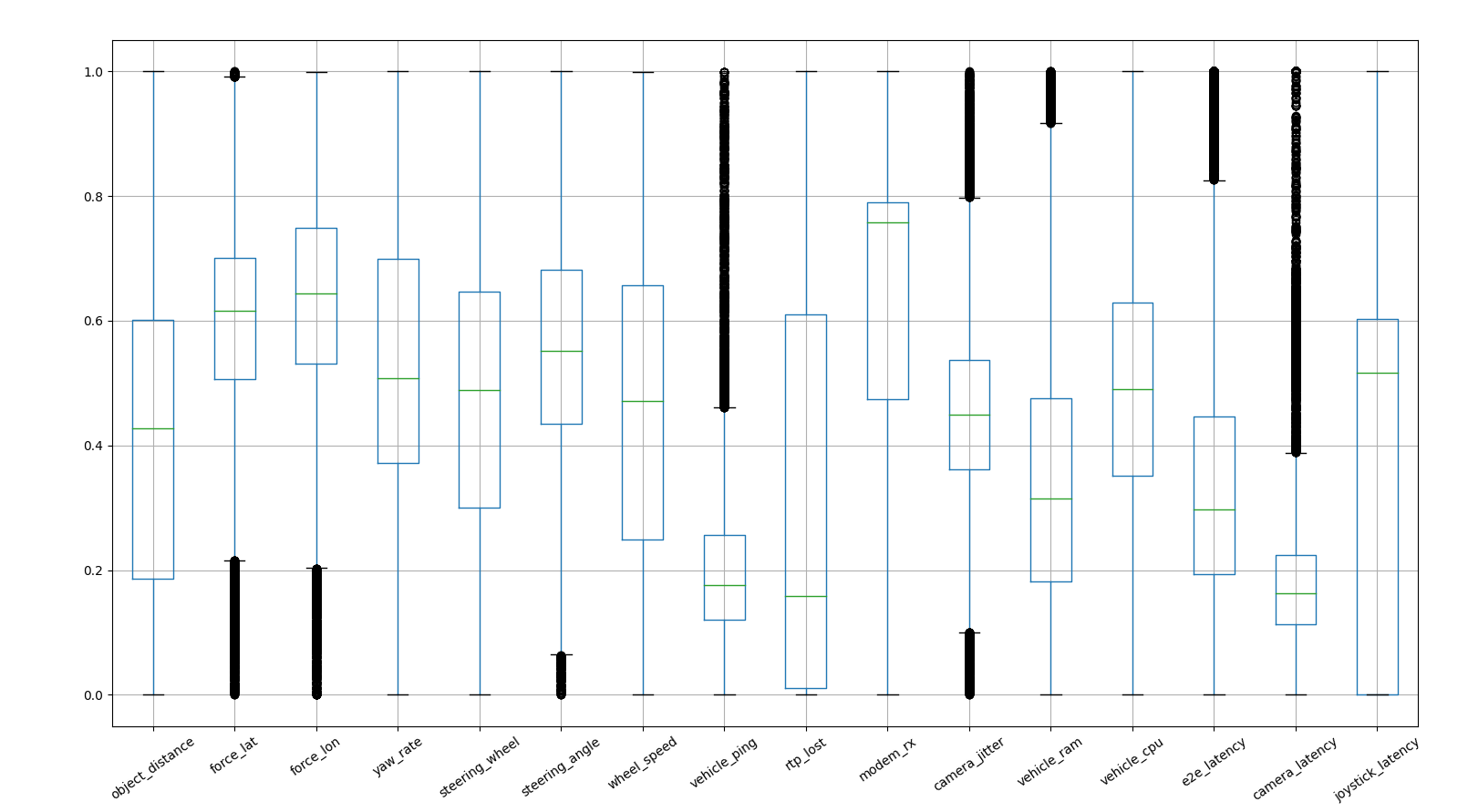
distribution of the spike features: boxplots
We than calculate the logaritmic of the most dispersed features (e.g.
_force_
) to gain more meaningful information. Changing the latencies to their logaritmic value doesn't change much the distributions
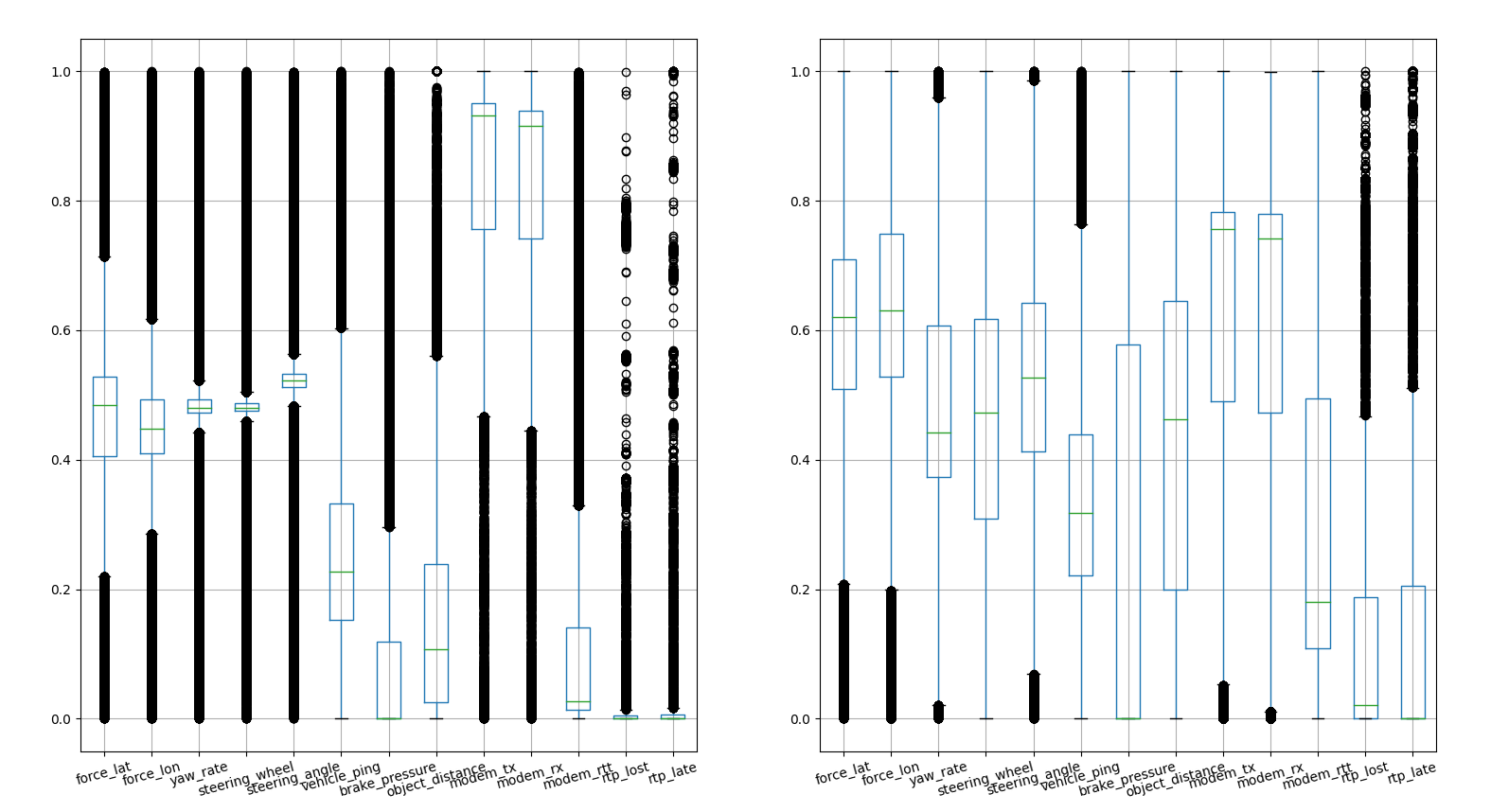
logaritmic transformation for some features
We see that some quantities are bimodal, interestingly latencies too. It seems there are clear distinguished operating regimes.
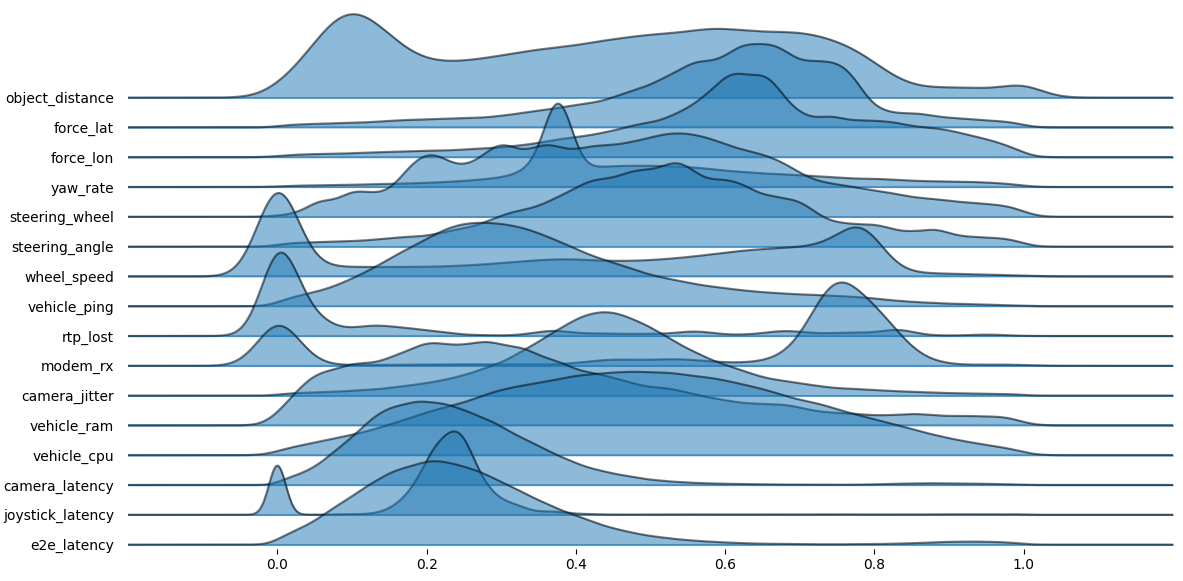
distribution of the latency features: joyplots
Another feature selection takes more into account the networking features, the different time frames change a lot the data distribution. In this case we consider only events in the proximity of a spike and the features become even more bimodal
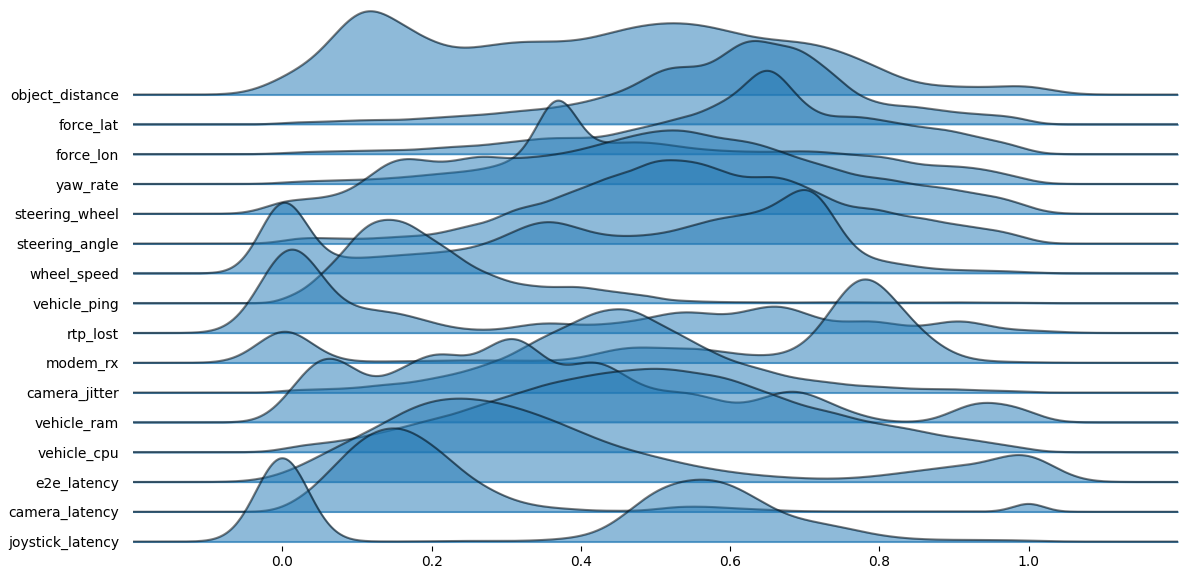
distribution of the spike features: joyplots
Looking at the pair plot we see that only
ram_usage
has an interesting dependency on the
camera_latency
, the **purple set is the one corresponding to the larger bin of the
camera_latency
We analyze the how the networing features distributes in different regimes of camera latency
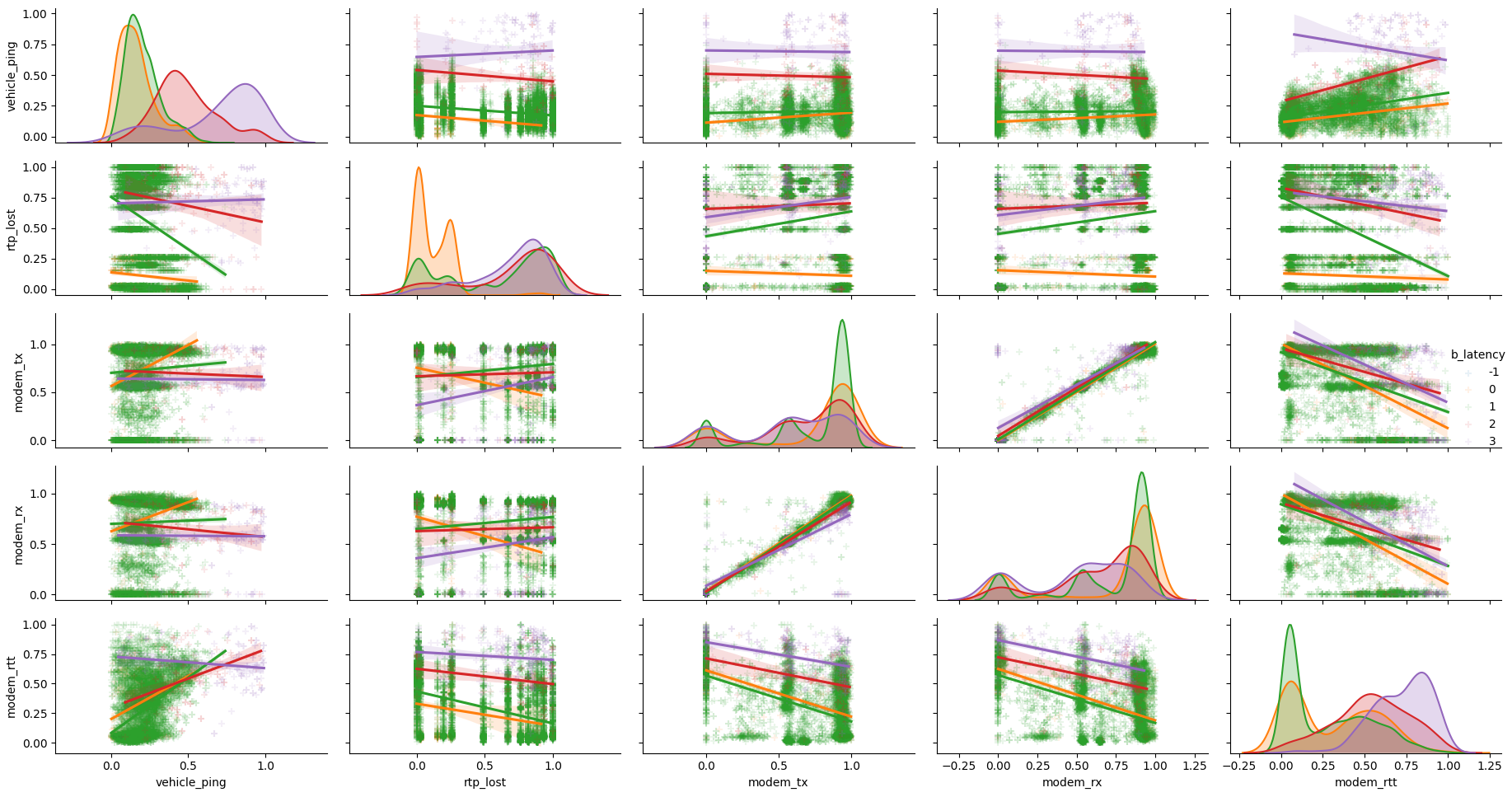
pairplot of the networking features
Same for the computing features
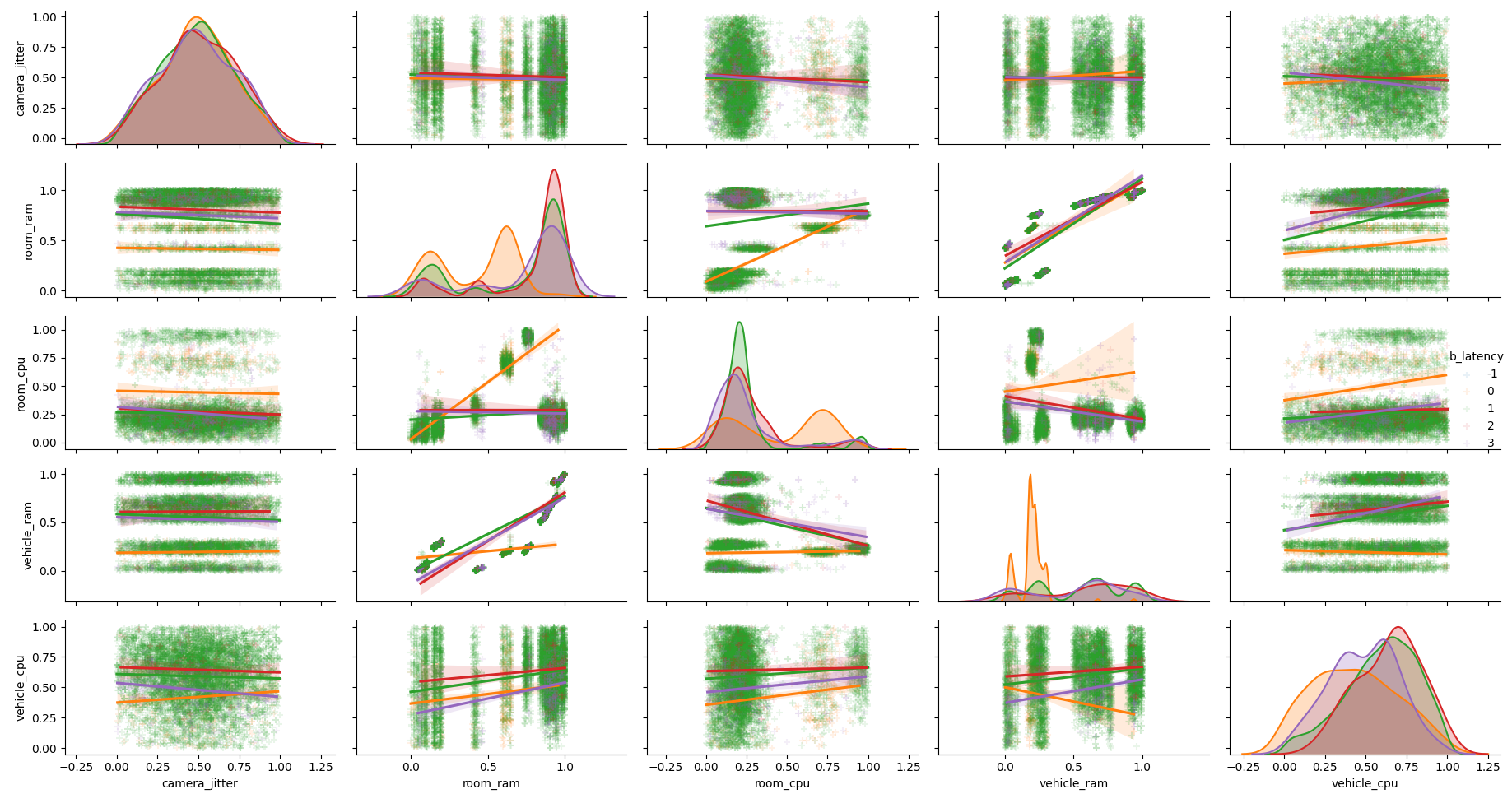
pairplot of the computing features
Pairplot for vehicle dynamics features don't show a clear dependency on latency
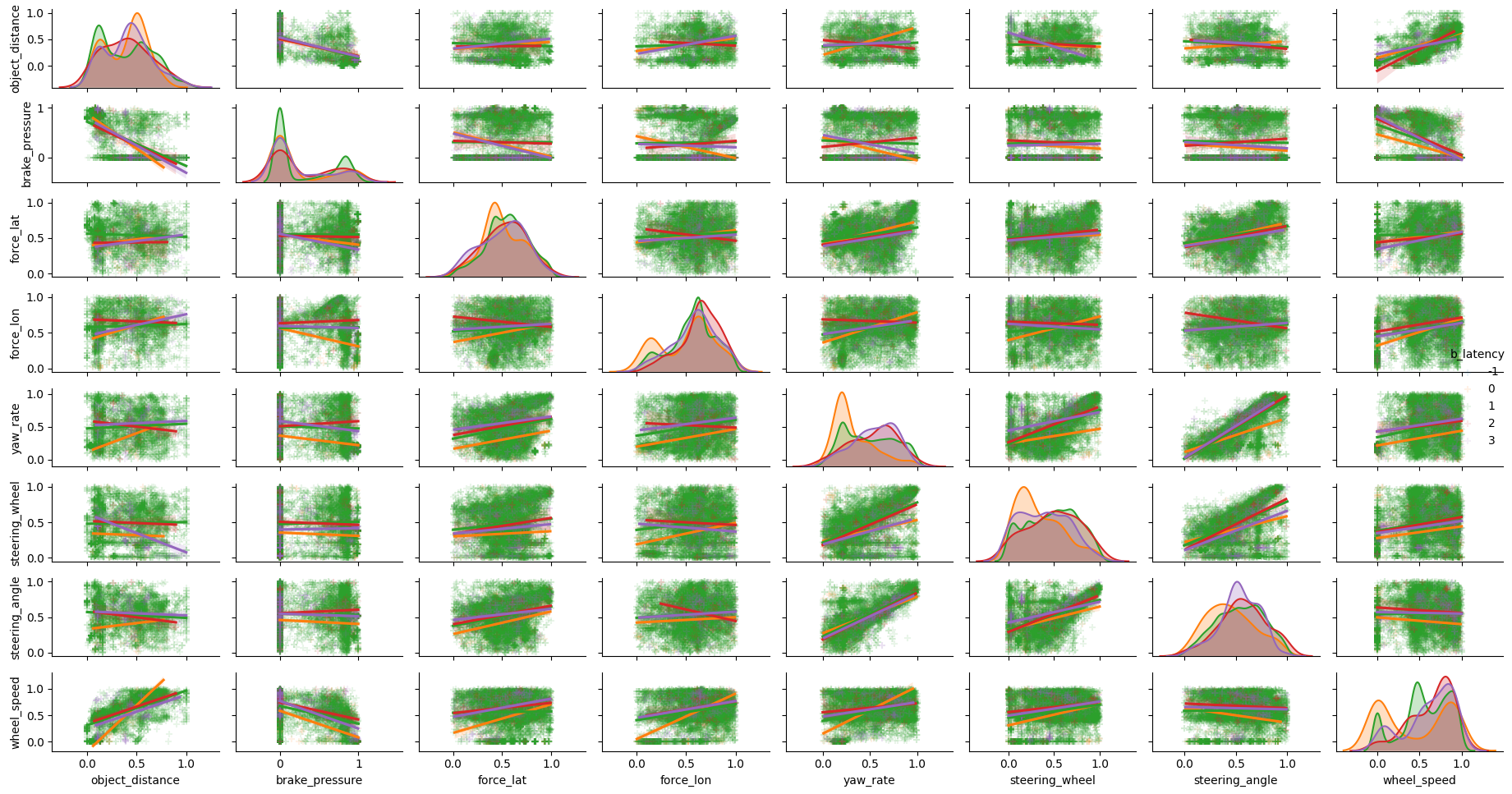
pairplot of the vehicle dynamics features
latency statistical properties
We want to understand the periodicity and auto correlation of
camera_latency
to understand how to separate different regimes
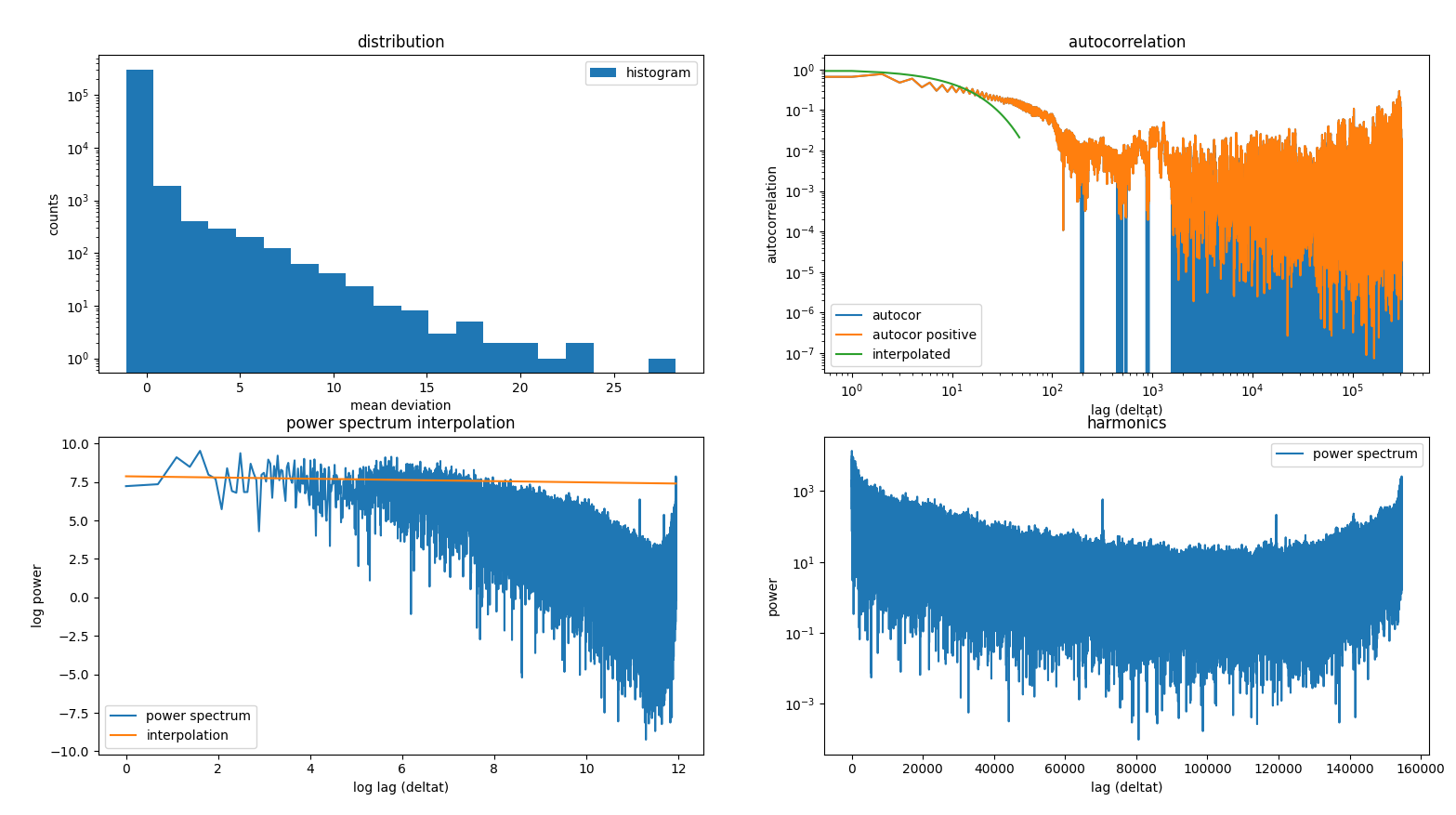
latency decays and frequency behaviour
We analyze the power spectrum for a normal latency or during a spike
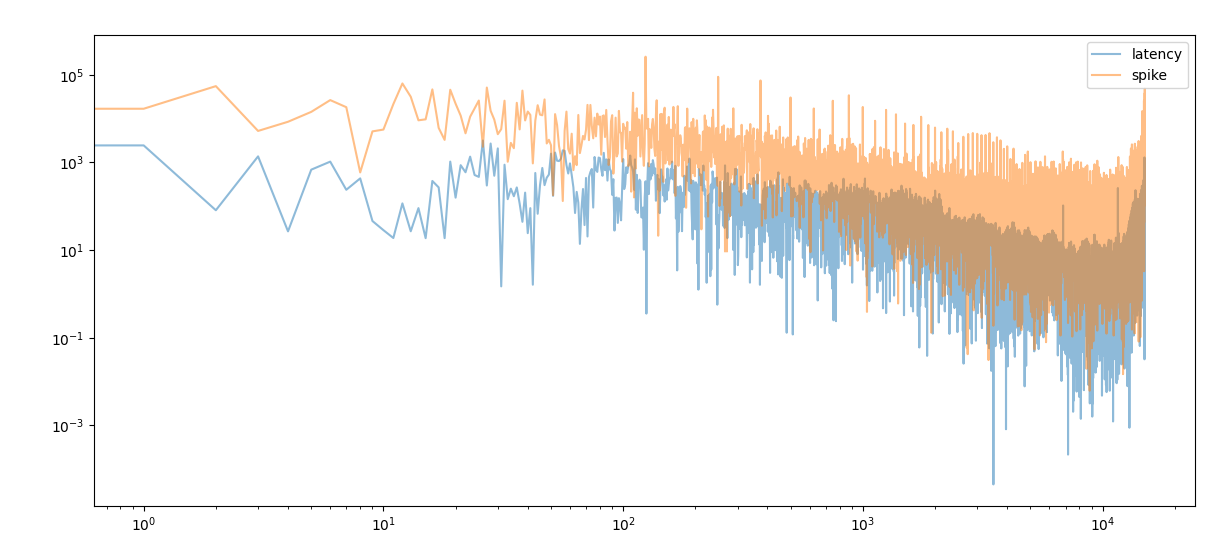
latency power spectrum for normal and spike regimes
During the spike event autocorrelation is a bit larger and more stable than in the normal regime
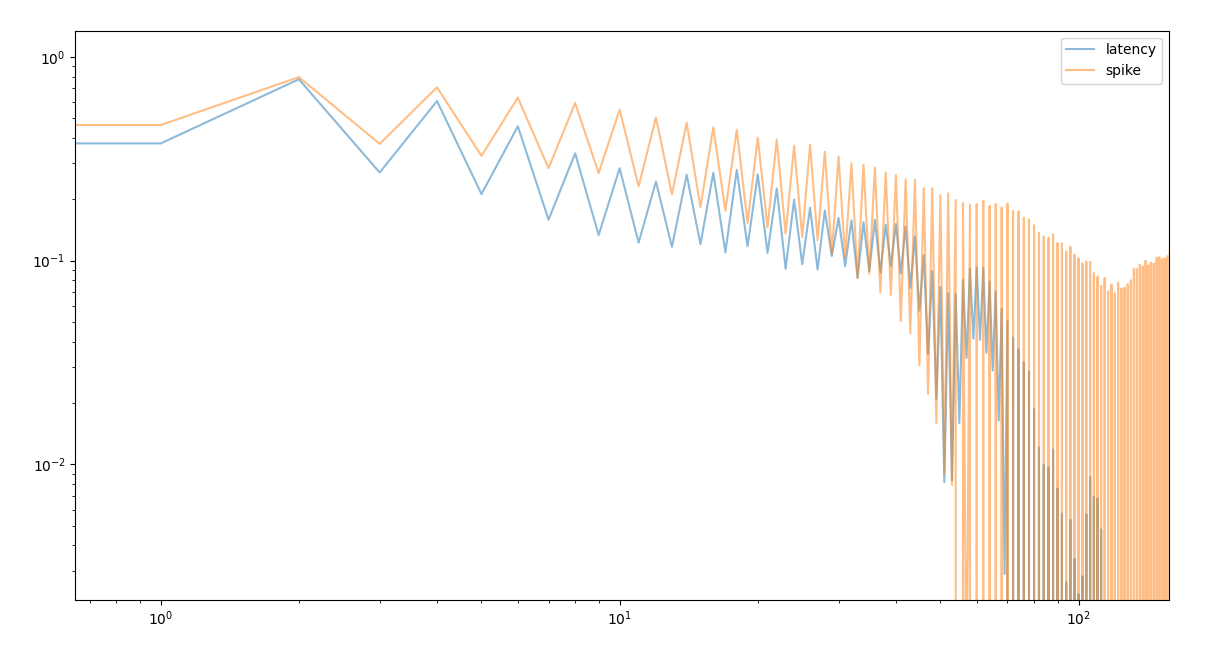
Autocorrelation for camera latency in normal and spike regimes
feature normalization
For a fast and reliable training a good normalization is essential for the performances of the predictions. We need to find a stable normalization to keep across all predictions. If we need to change the normalization than we need to retrain the model.
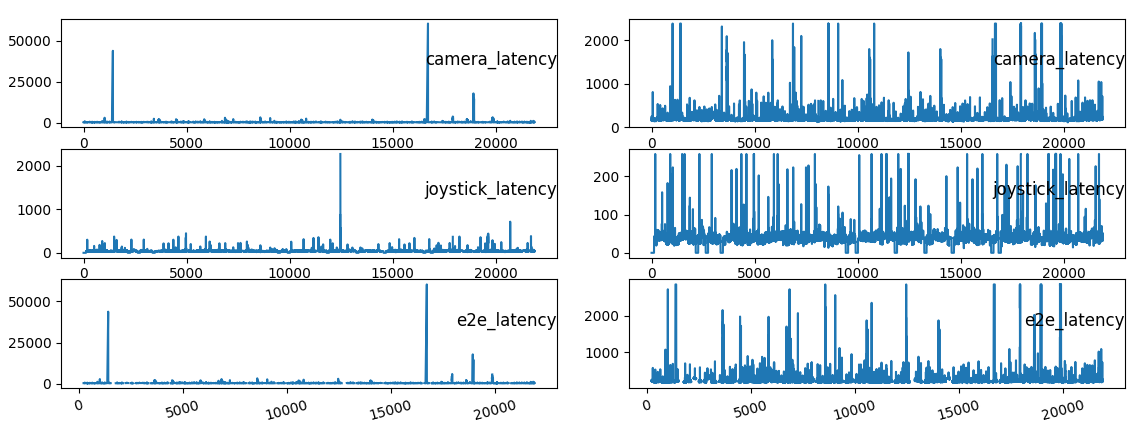
flattening of outlier to let the normalization to operate in a consitently populated regime
denoise
To have a clear understanding on what is happening we stack many time series where the spike happens at the 0 second. We take 160+ time series and we calculate the average to denoise and have a more statistical understanding on the process
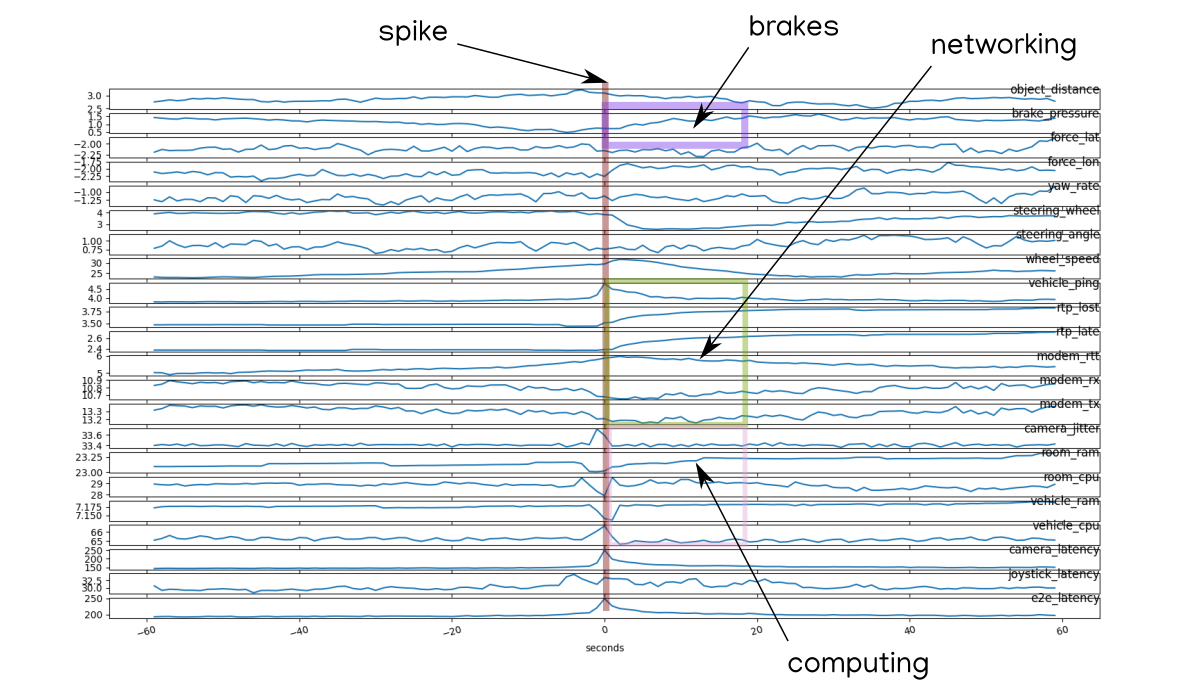
average on spike events where the spike happens at second 0
If we have a clear look at the moment where the spike happens we clearly see that some features show a change previous to the spike and others consequent to the spike
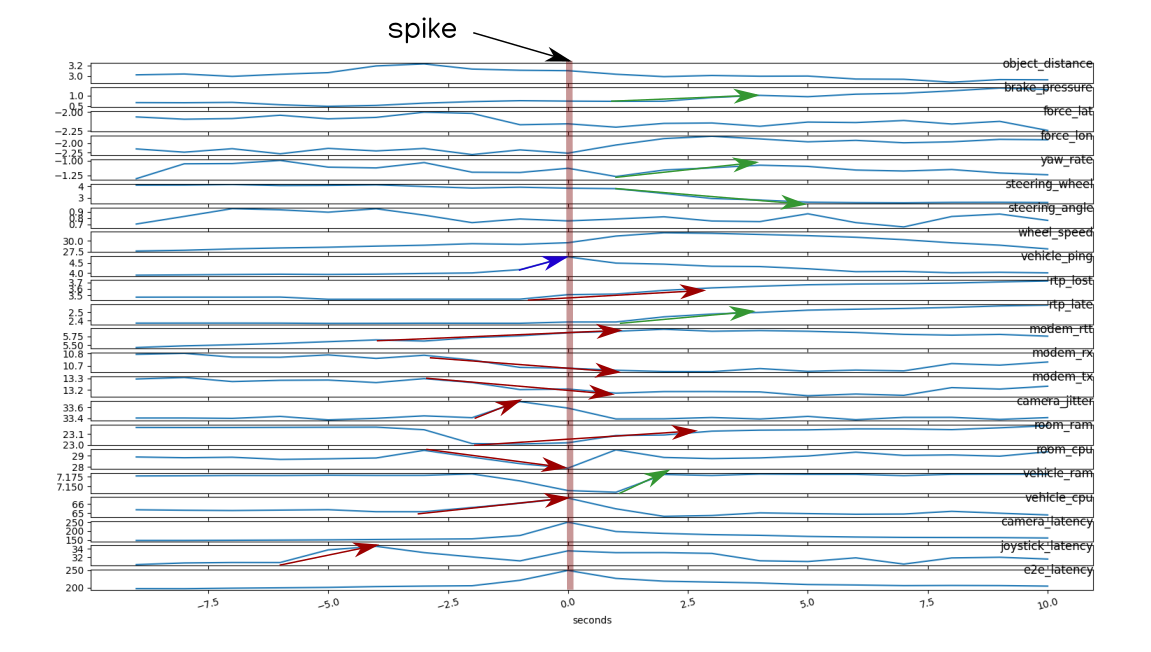
detail on the few seconds around the spike event
Similarly we look at the signal differences
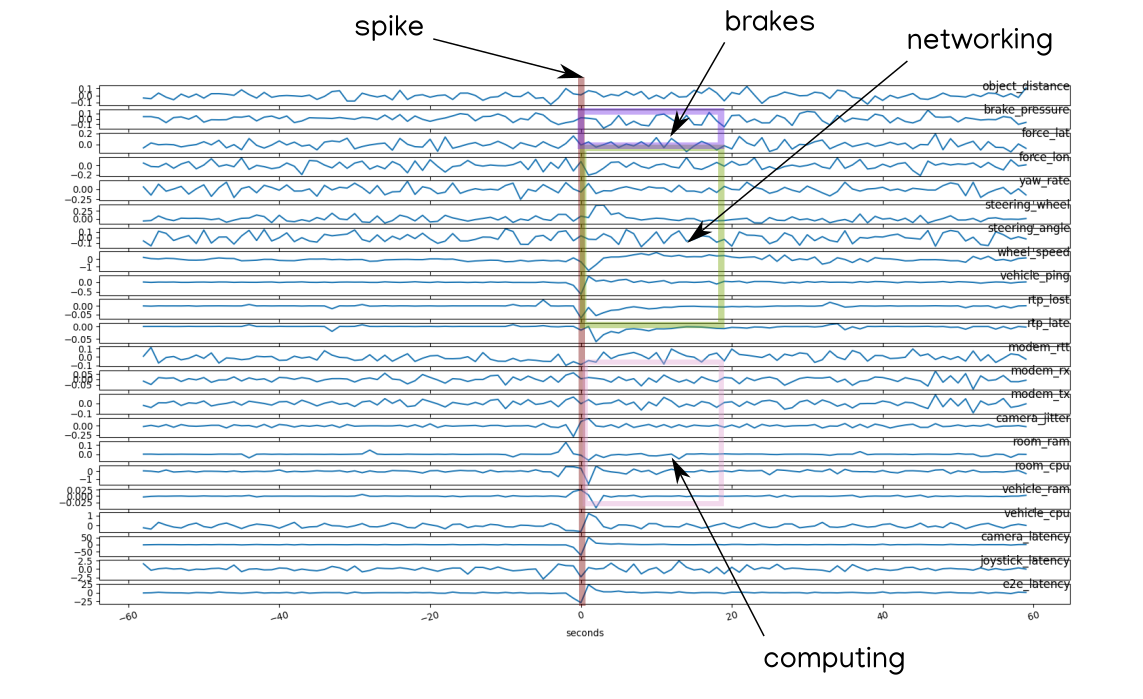
series evolution of the feature differences
and the close up
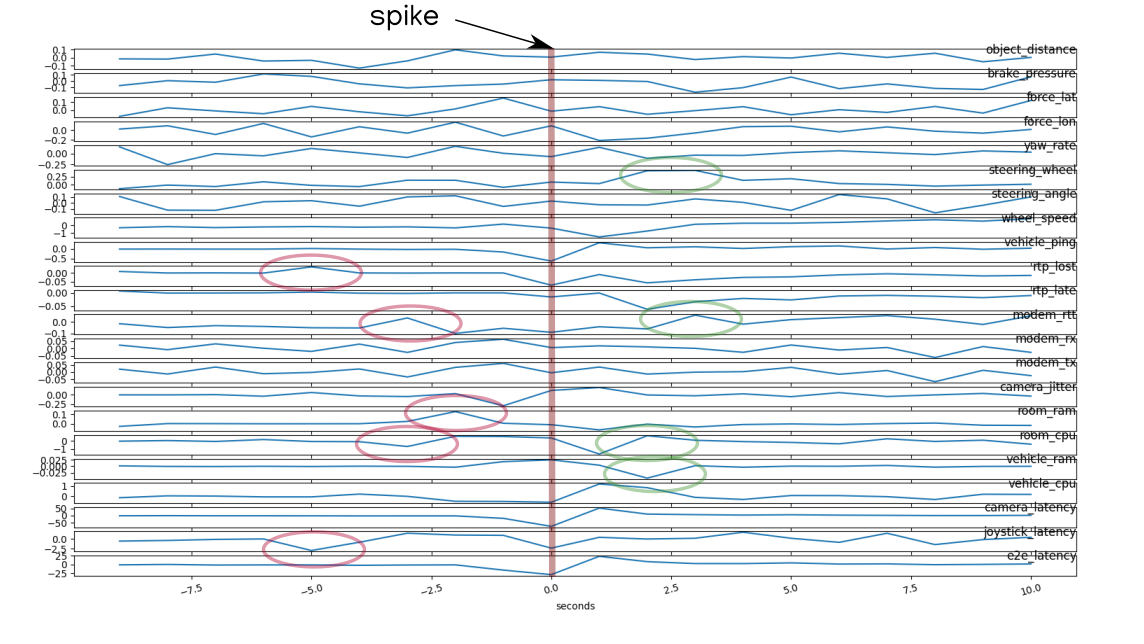
series evolution of the feature differences
We analyze the variance depending on the time to the spike
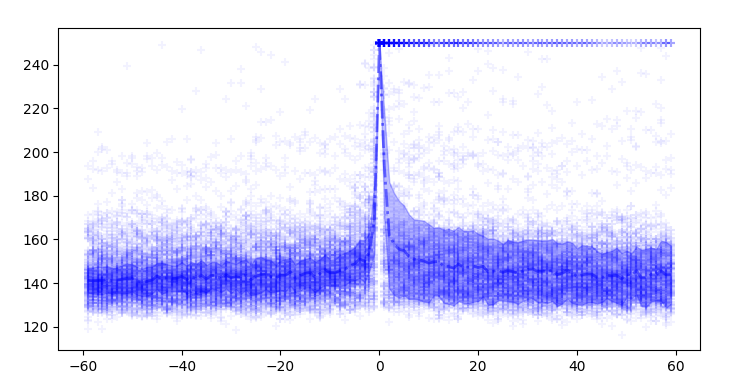
variance of camera latency
Another important indicator of causal dependency is the dropping of
variance
before a spike which tell us that
ram
is clearly affected by spikes
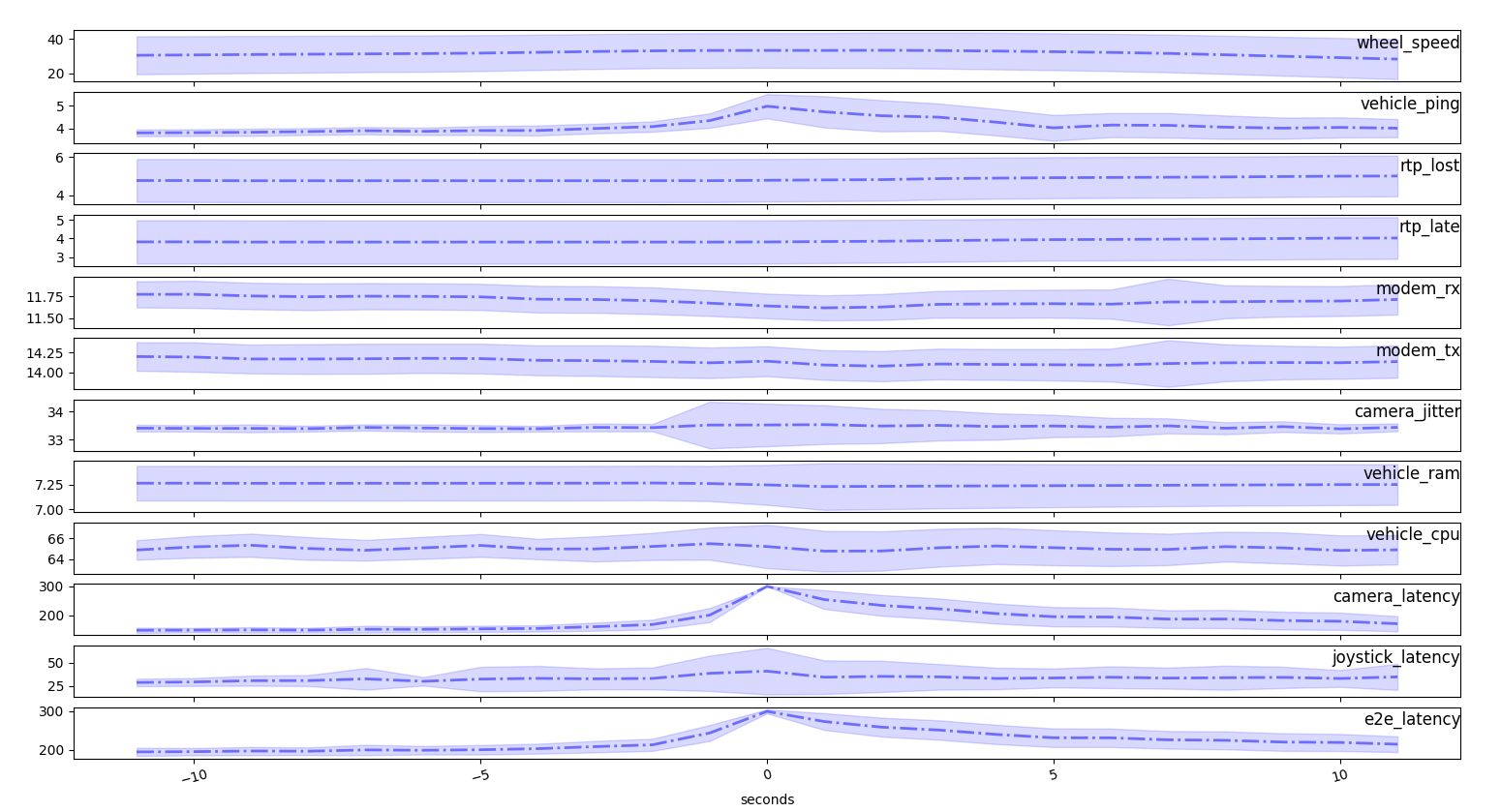
variance of time series
For some features the variance is so high that we would consider the averages just random fluctuations
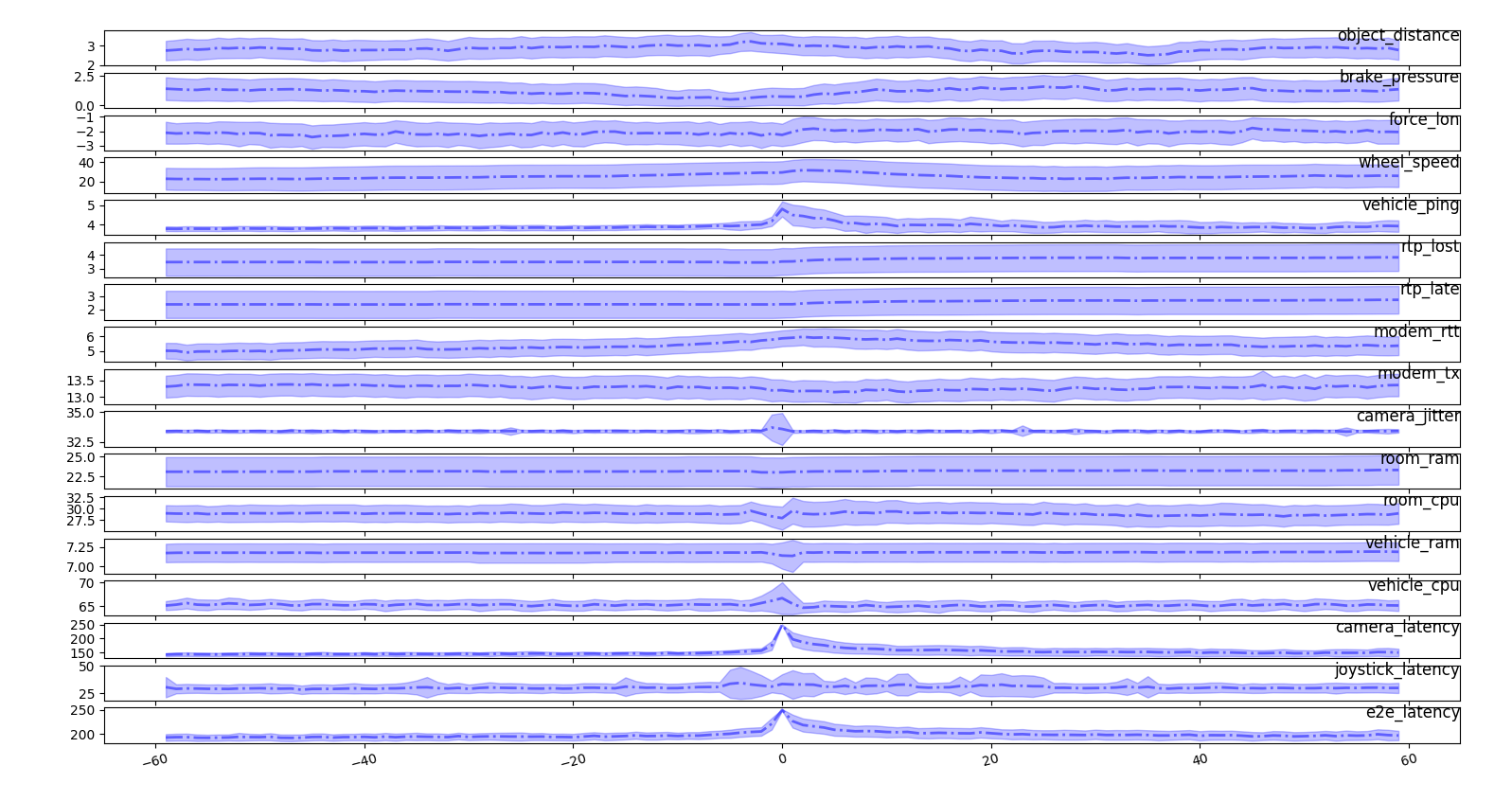
variance and mean for time series
We analyze the time series for the features with an higher firing rate, we see that in average the byte volume drops across all modems
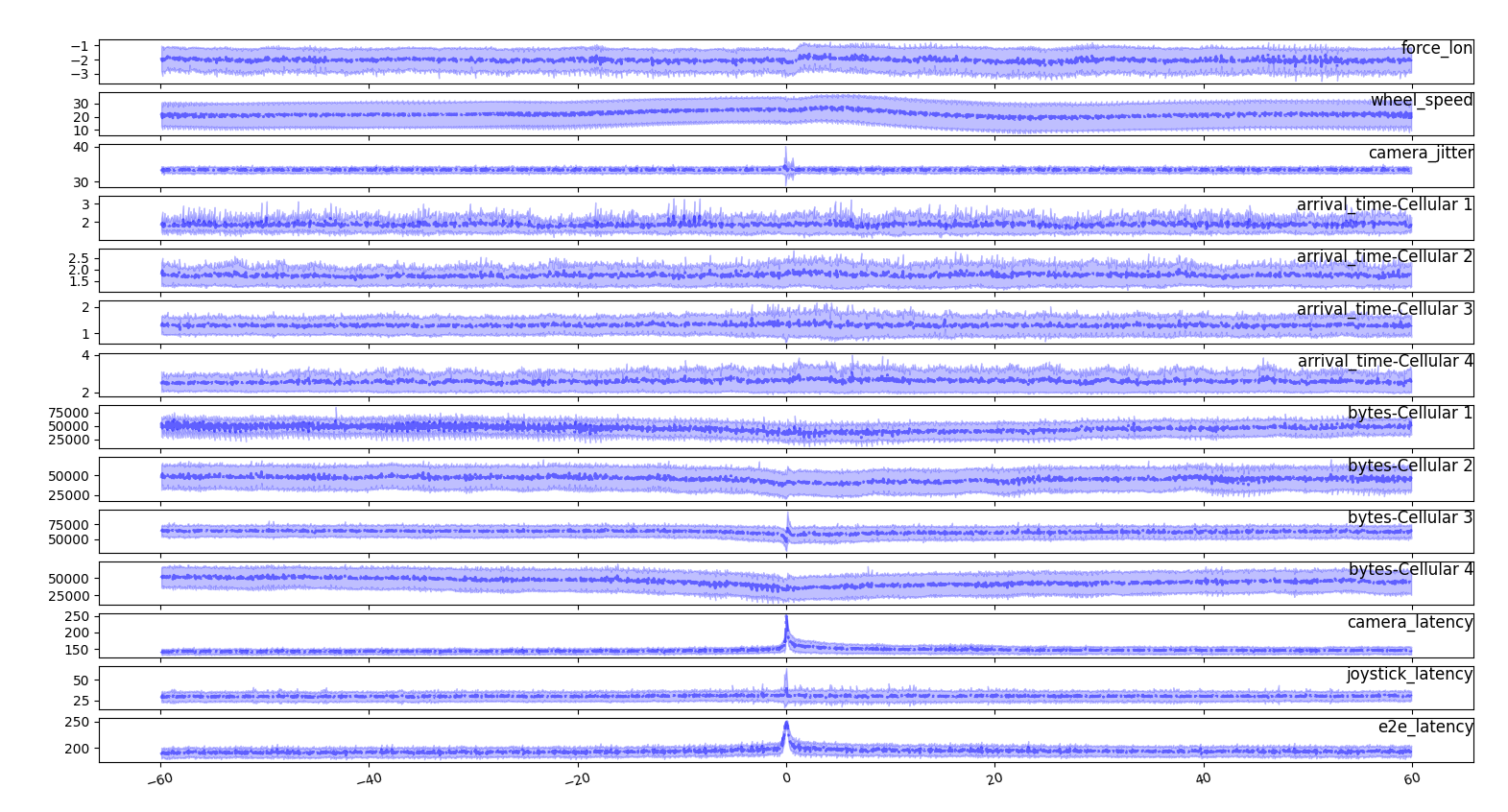
time series on deci seconds
If we look at the few seconds close to the spike we don't see clear signs of incoming spikes
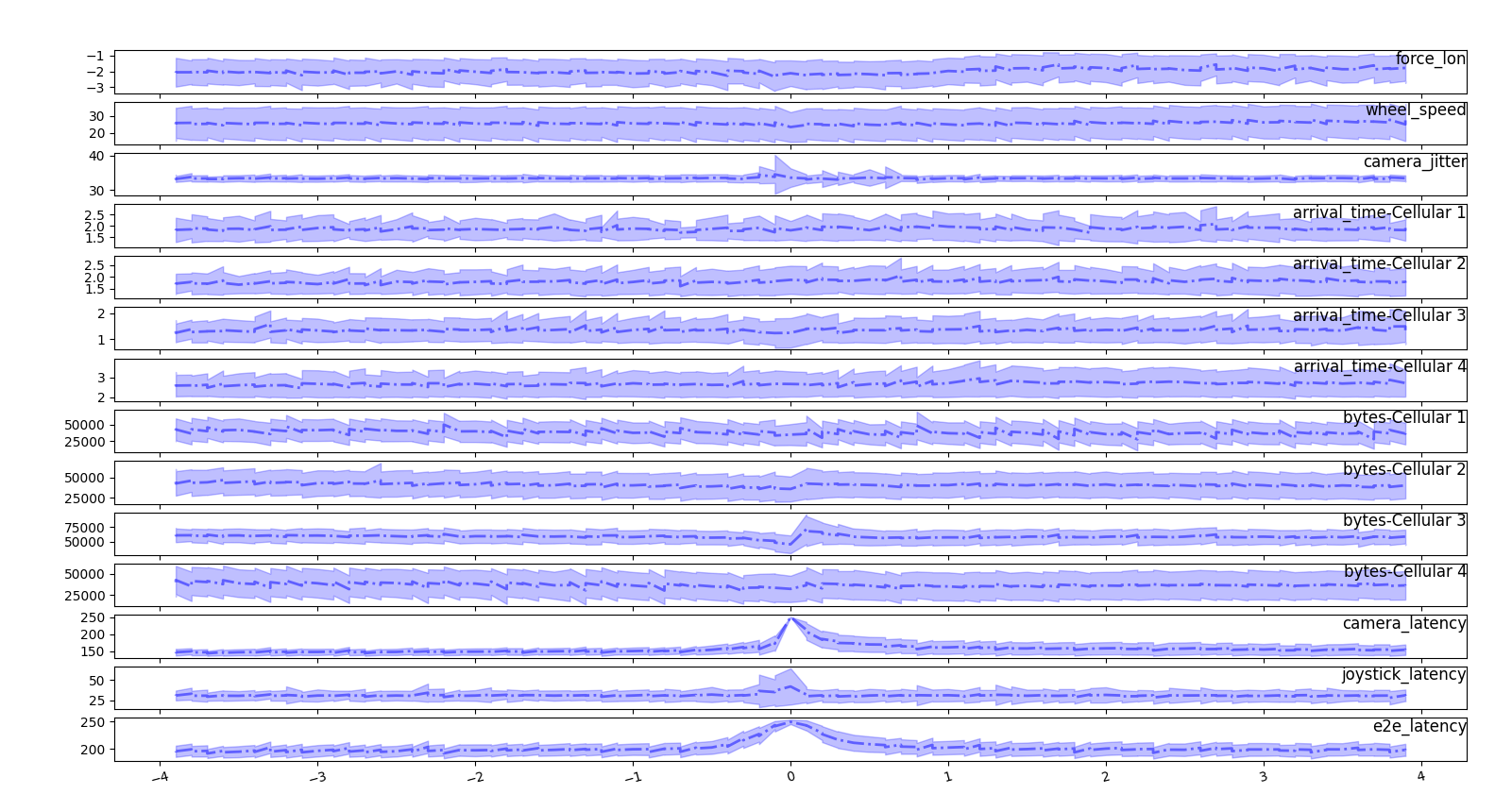
time series on deci seconds, detail
Neither looking at the derivative we see a clear trigger
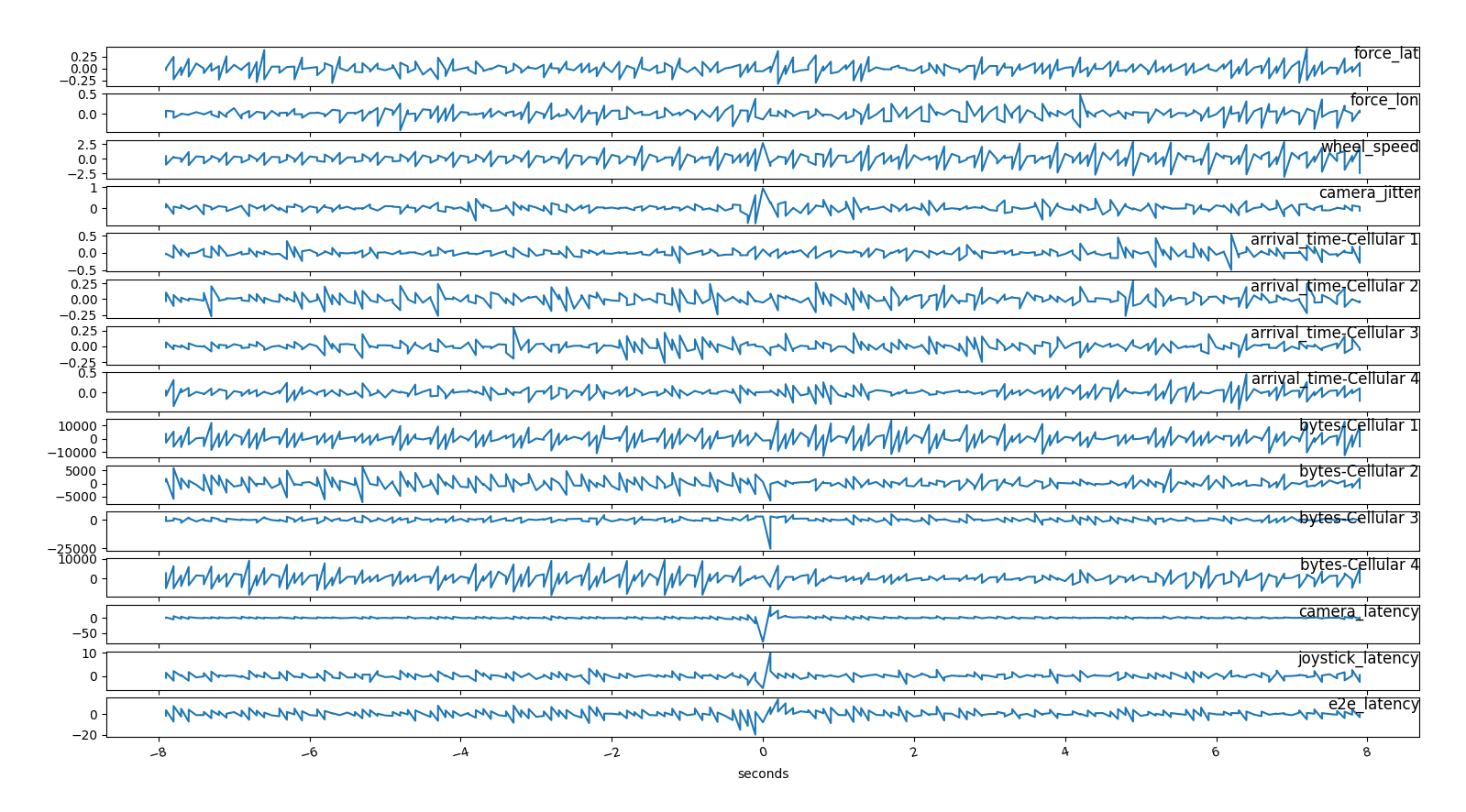
time series on deci seconds, derivative
We than smooth the series to have a better picture and start recognizing some patterns
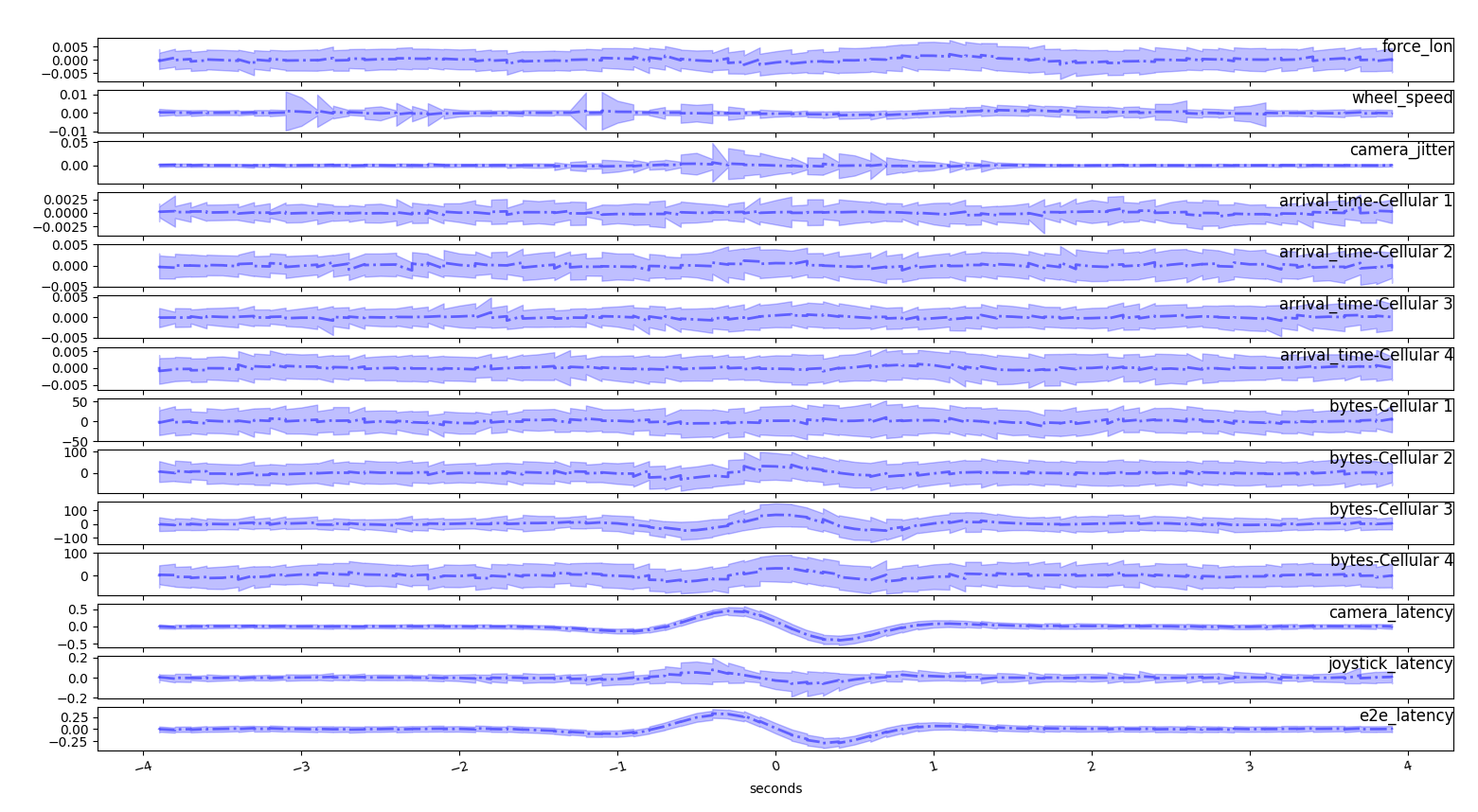
time series derivative on deci seconds, smoothed