Spiega documentation
- Knowledge sharing
- Portfolio
Activities and ODM
Per user we collect a series of events that contain the information about the cell where the user was seen:
- IMSI - hashed sim card of a user (one day life time)
- event - time and cell information about a user
- chain - series of events connected to an imsi
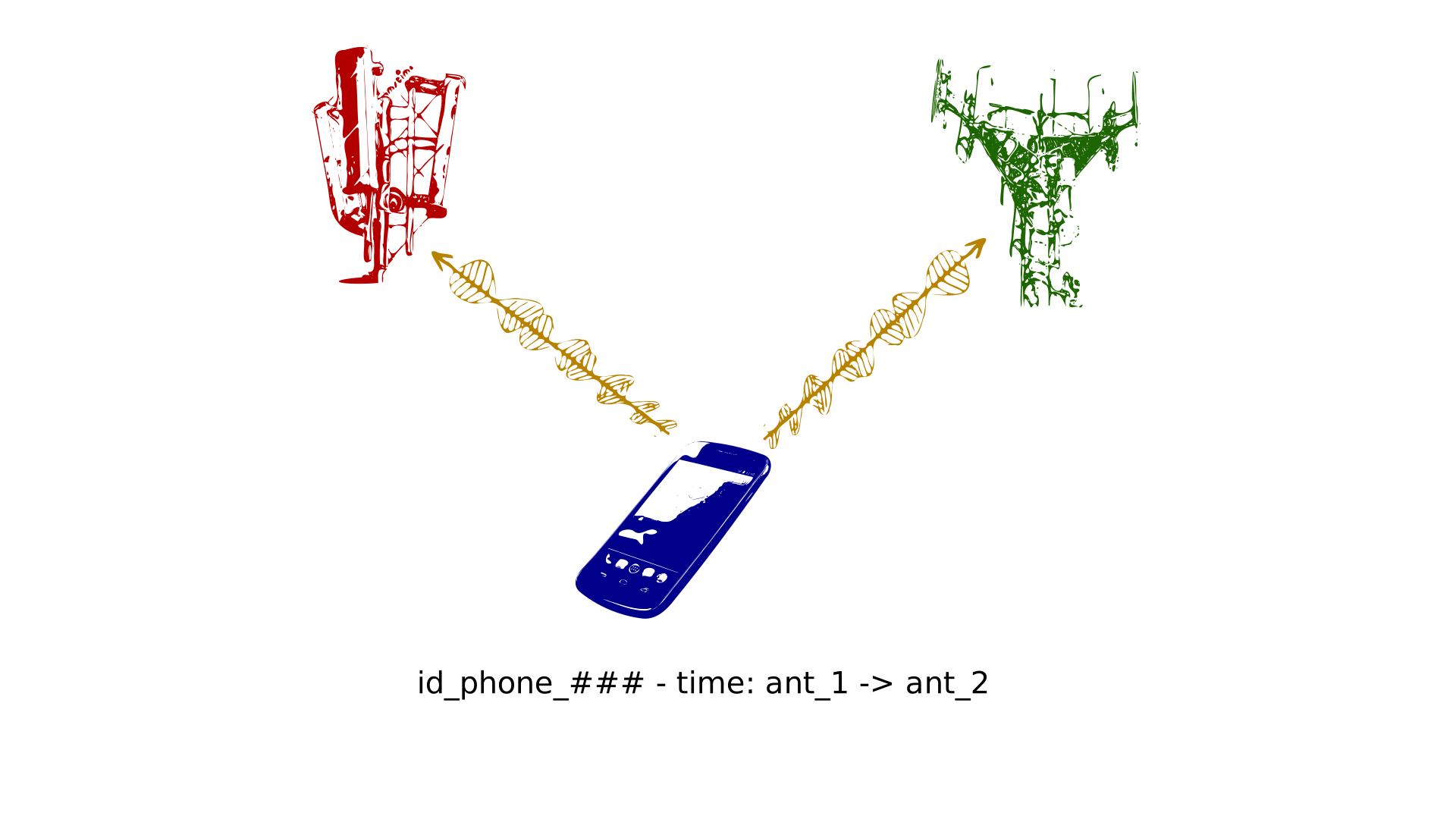
We collect an handover between cells per device (D1-Netz)
We interpret this information defining:
- activity - cluster of events limited in space, continous in time
- trip - series of events connecting two activities
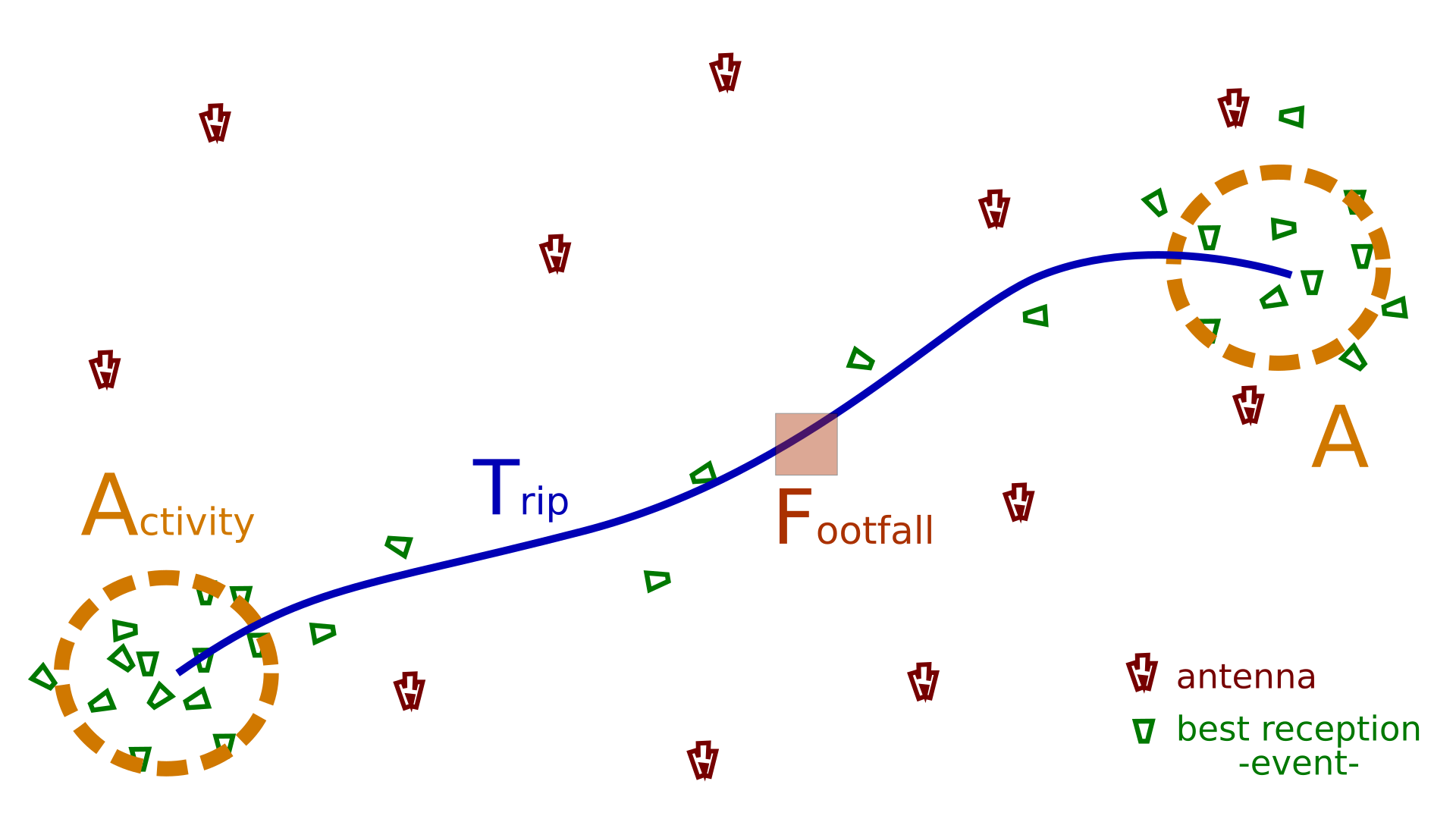
a chain is divided into activities and trips
We can aggregate the event information with cell specifications which consist in:
- ci-lac : id composed by the mast id and the specific antenna id
- BSE : best server estimate, simulation about the best coverage for the specific antenna
- centroid : centroid of the polygon describing the BSE
- tech : particular cell's technology (gsm, umts, lte) and frequency
Currently an activity is defined flat over the BSE polygon for the most frequent cell inside the events set.
Depending on the particular situation (cell's position, time of the day, geographical information) we can interpret user's behaviour.
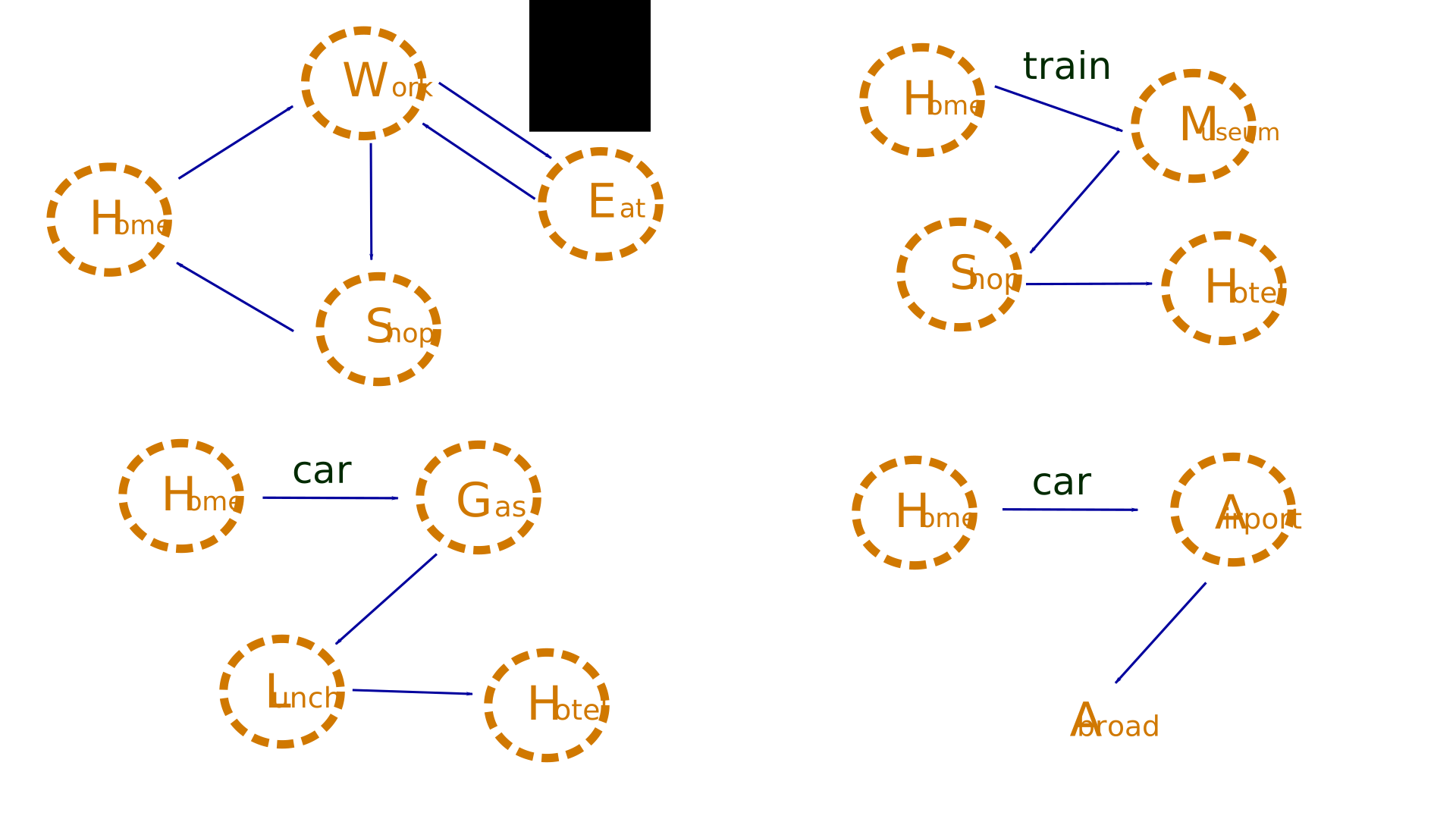
interpreting users behaviour
zone mappings
We define where an activity took place by calculating the intersection of a zone polygon with the cell's BSE. We overimpose a geometry on the BSE and we assign the intersection between the two geometries as fraction of activity.
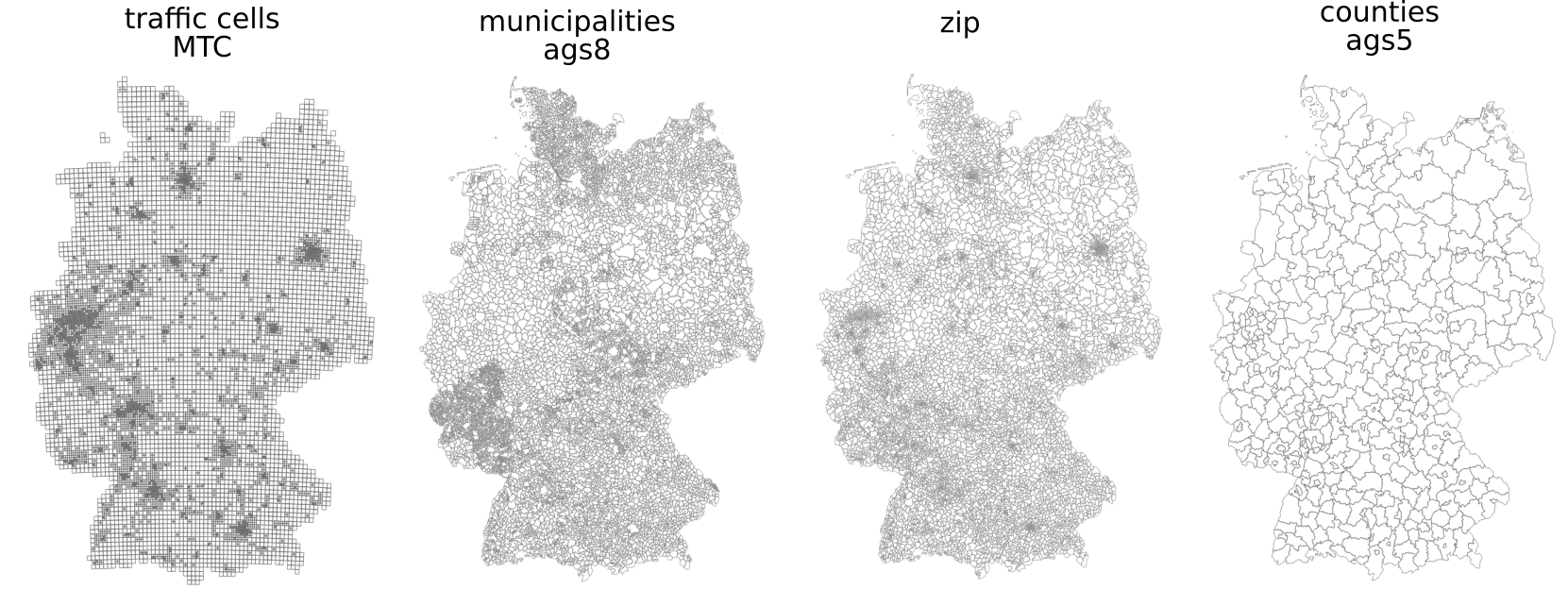
geometries used to calculated activities
All the mentioned geometries are available to download
time mappings
We write hour 14 meaning all the activities between 13 and 14.
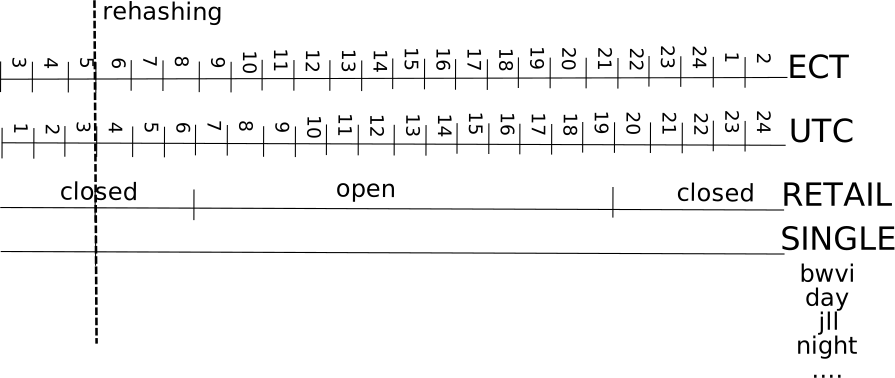
example of time mappings
We have to convert the time zone depending on the legal time time zone converter .

different conversions between summer and winter time
Statistical week
The statistical week is a collection of statistical days which consists in a series holiday free days grouped by weekday type.
The first consistency check is done visualizing the data
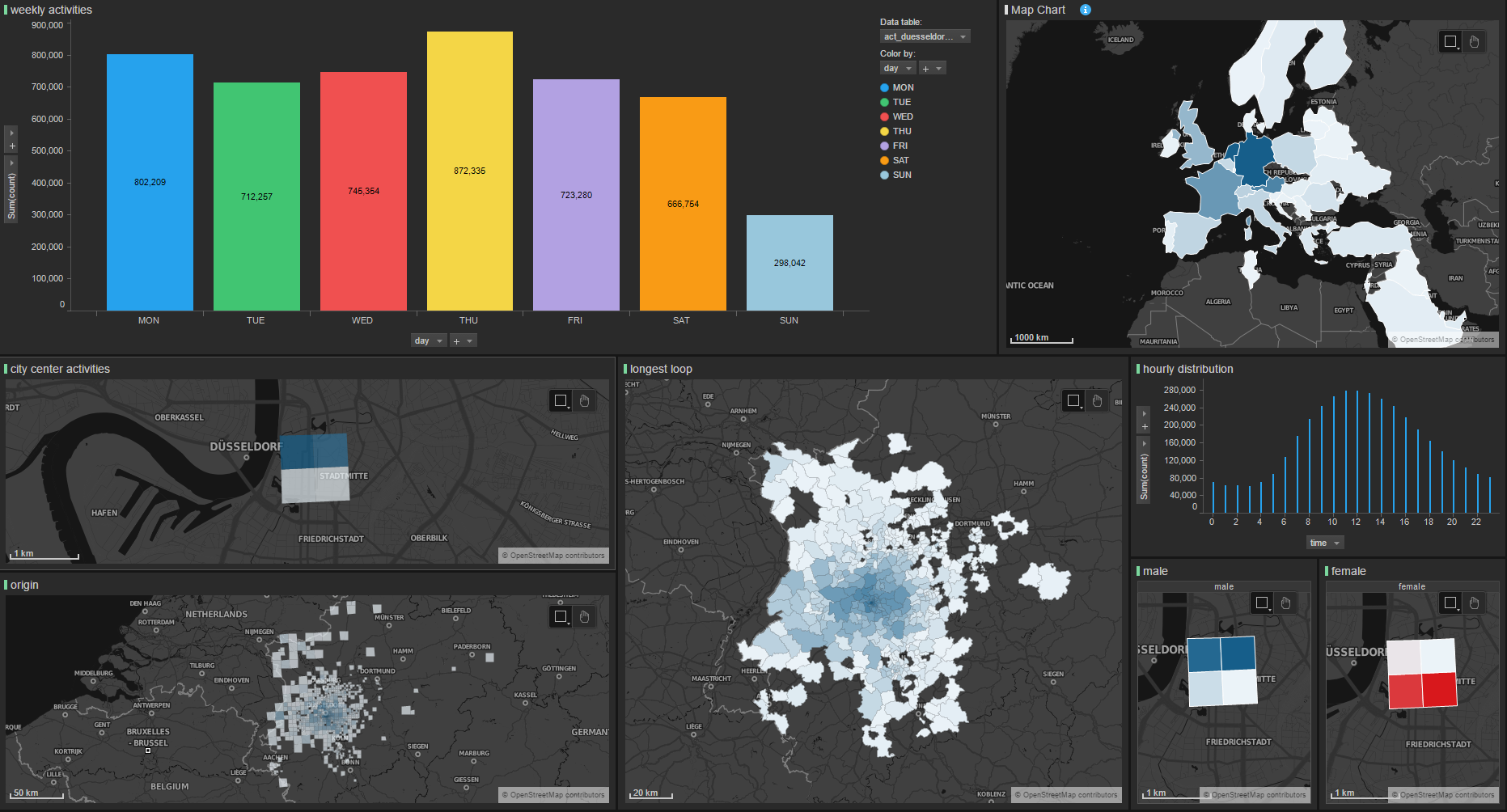
statWeek duesseldor../../f/f
ODM
An ODM is an origin-destination matrix where we consider every single trip to create an origin-destination relationship.
We compare people behavior with different statistics.
München suburbs many people travel to München to work.
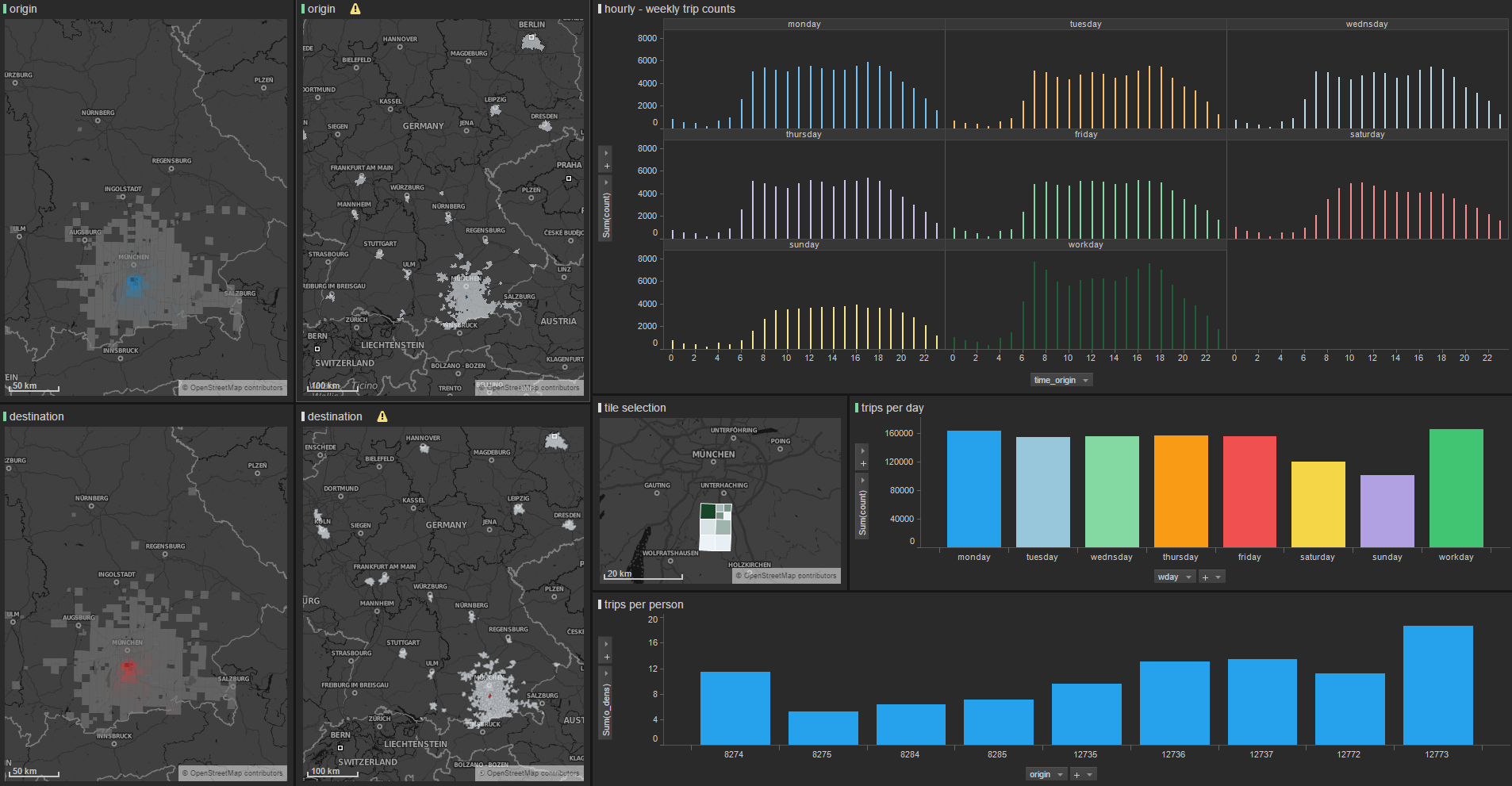
statWeek odm for oberhaching
In Stuttgart there is a clear pattern of commuters during the day.
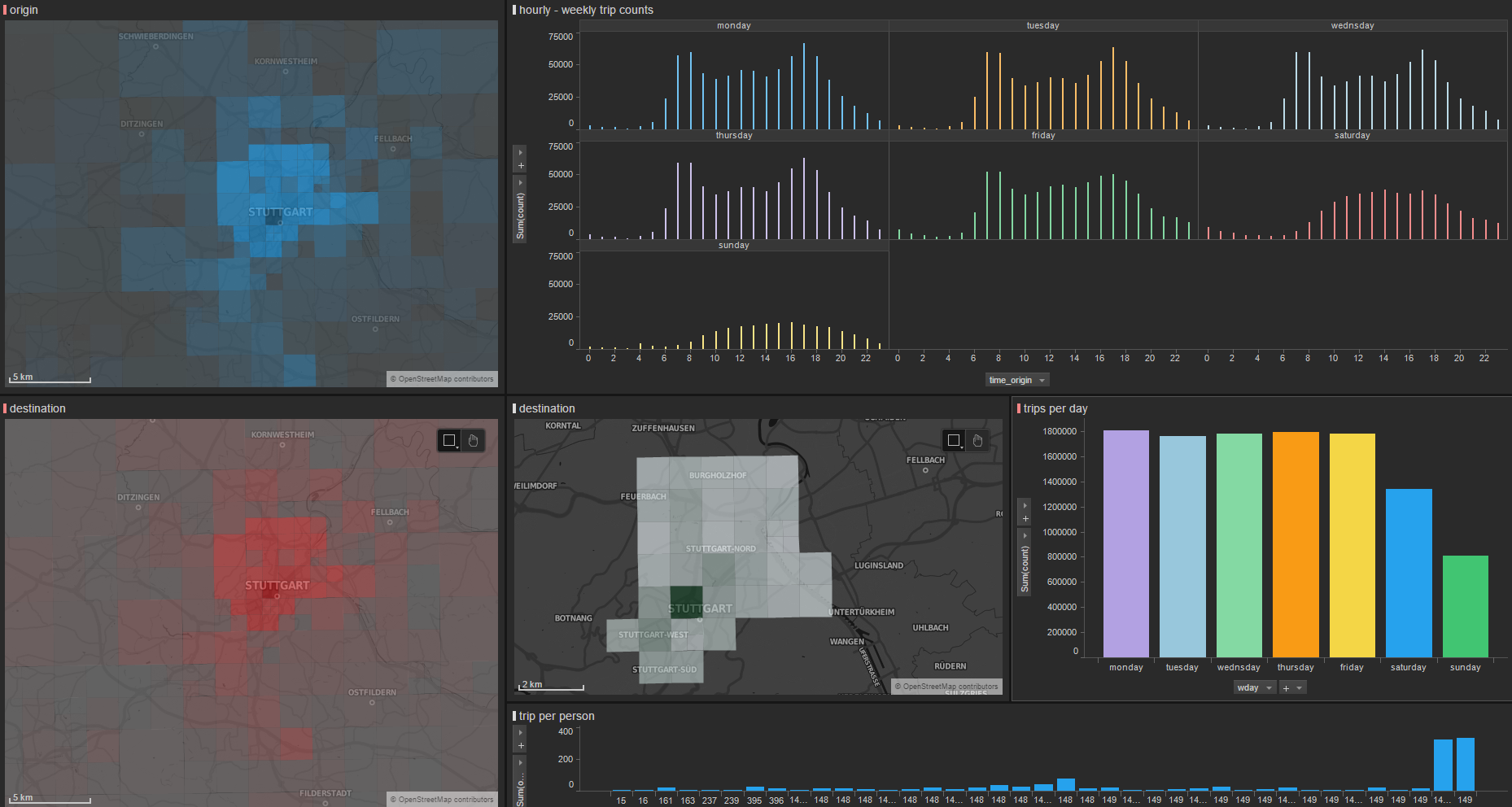
statWeek odm for stuttgart
Hannover has a lower dense neighborhood, people travel less.
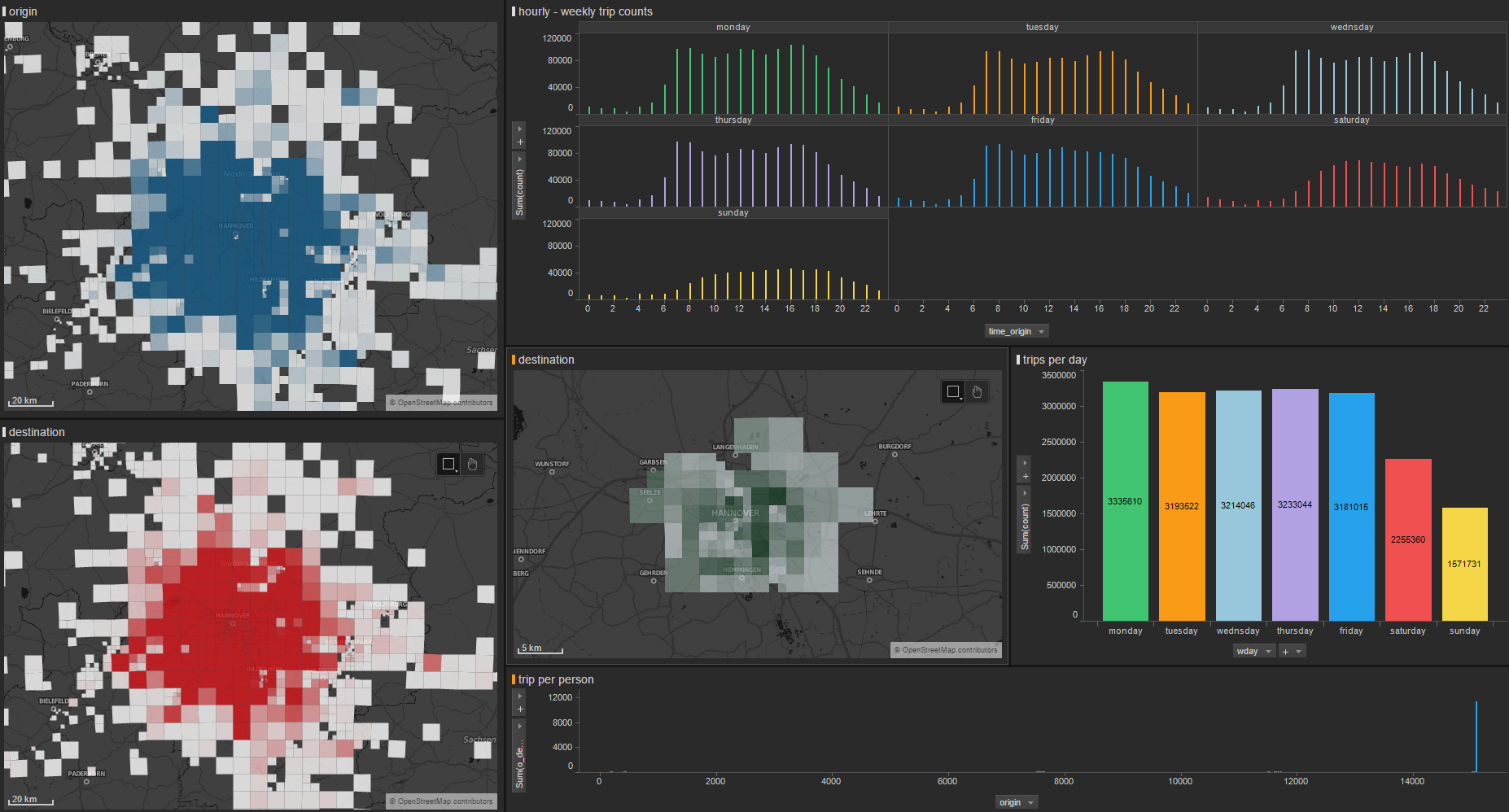
statWeek odm for hannover
Berlin is harder to interpret.
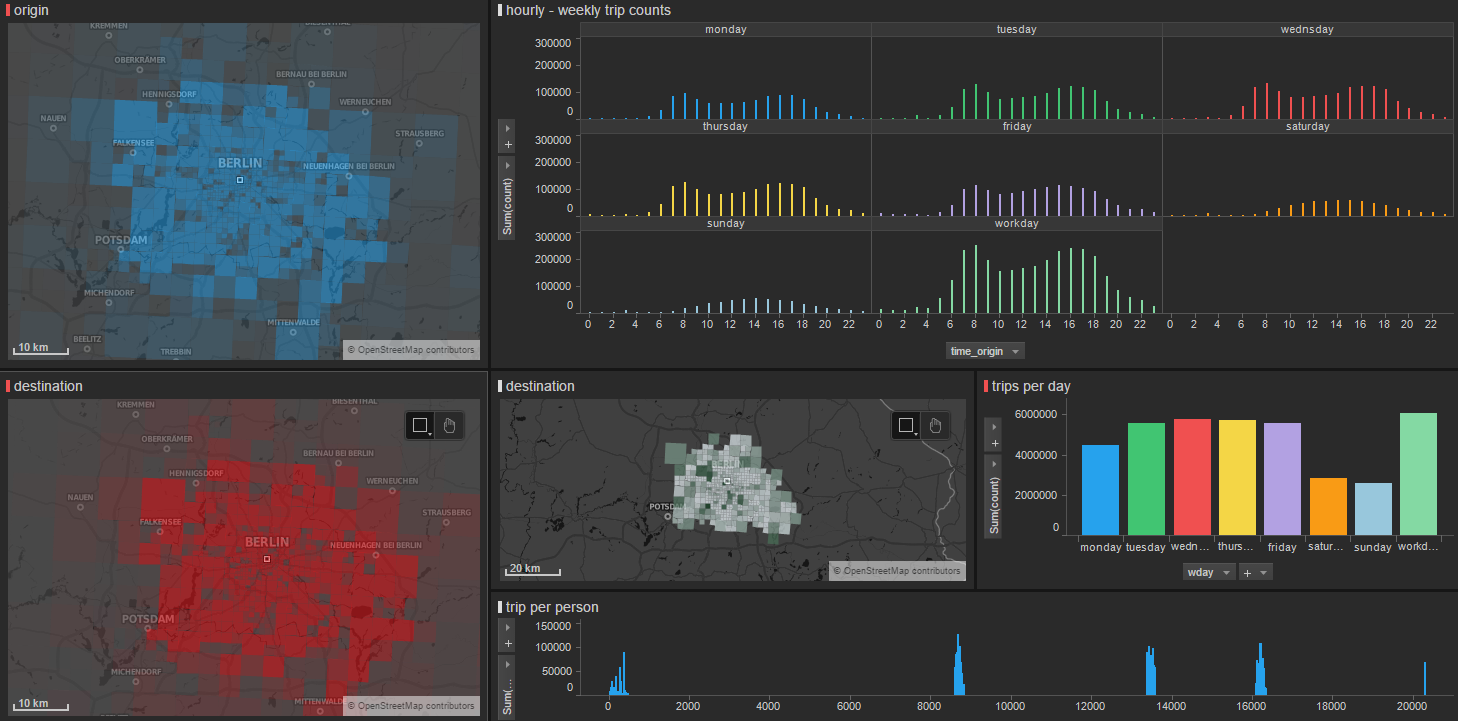
statWeek odm for berlin
footfall
The most important quantities to consider are:
- nodes are the openstreetmap nodes describing a street
- tile is a 250x250m grid containing nodes
- Footfalls is the number of non unique trajectories crossing a tile
Nodes can be verified on openstreetmap
Building an overpass query returns all the nodes and ways returning the same label
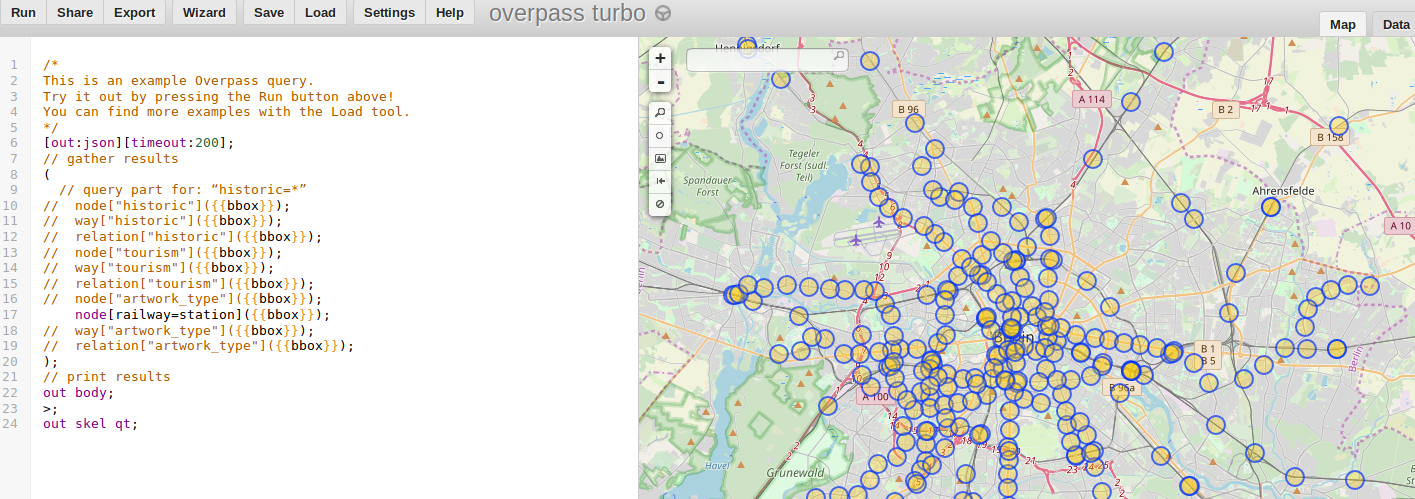
overpass query
We build a network for routing all trips into trajectories.
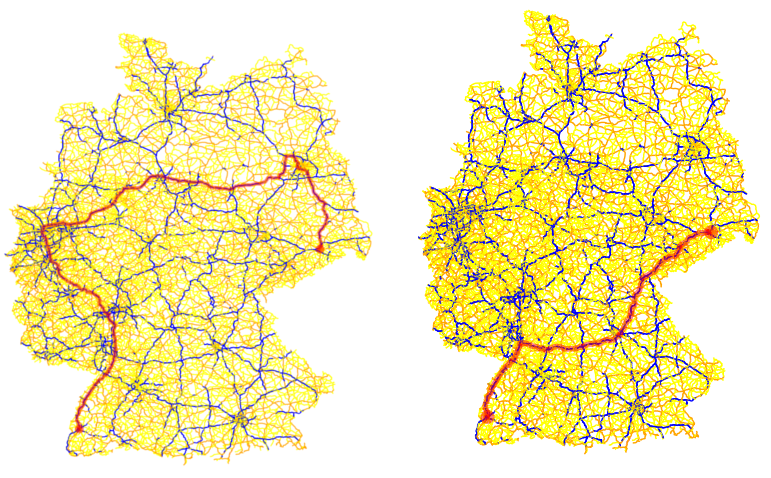
routing, improve in weighting
and we take into account all the events to calculate the best trip.
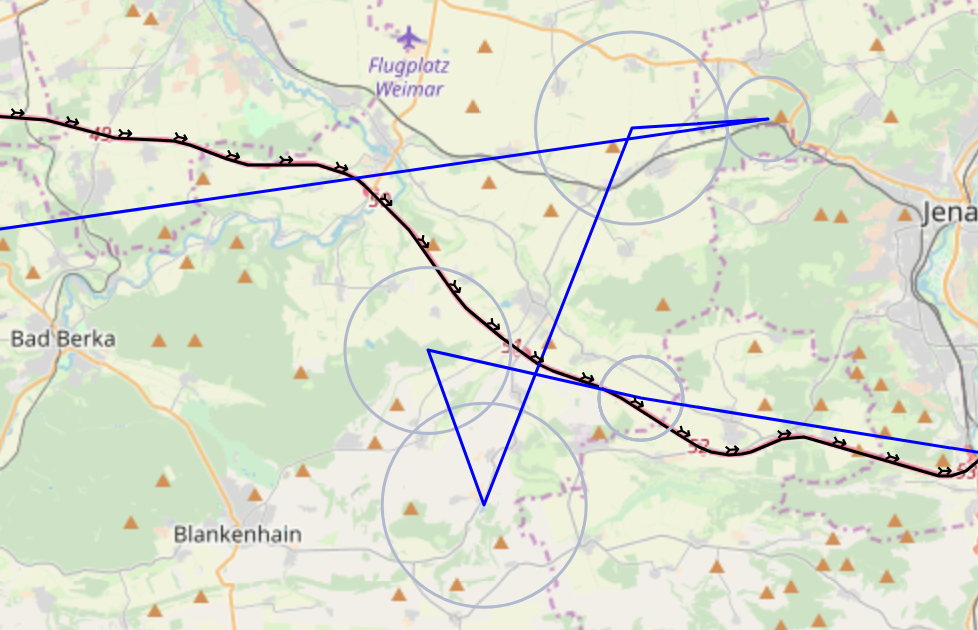
detour avoided discarding neighboring events
We count than the number of trajectories for the nodes contained in the tile and obtain the footfalls.
From each tile we collect the information and we apply it to the geometry under study
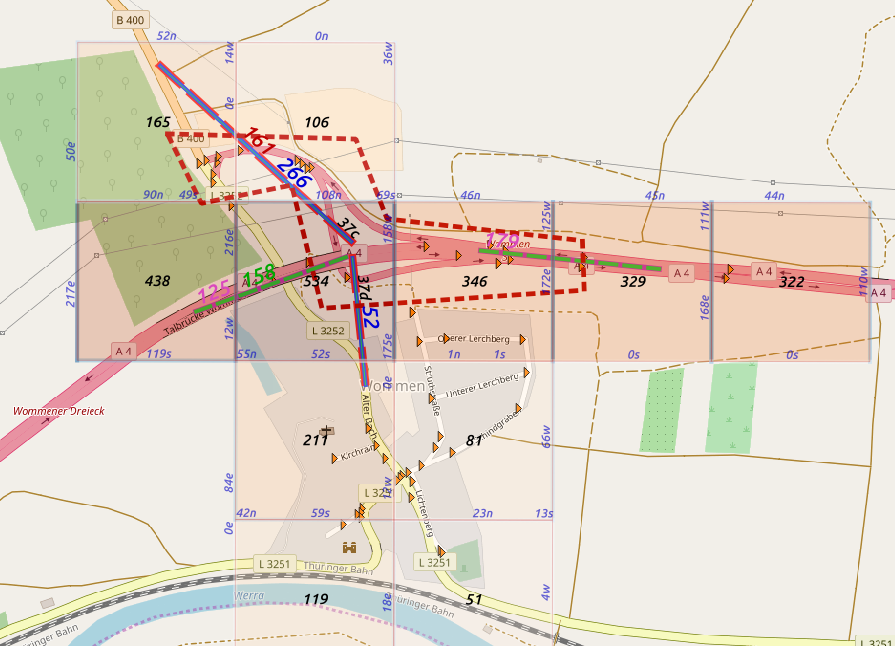
edge count
API
Data can be collected via API
Usual header and credential:
headers = {"Content-type":"application/x-www-form-urlencoded; charset=UTF-8","Authorization":"OAuth2"}
baseUrl = cred['api-url']+":"+str(cred['api-port'])
List of features
optL = {"debug":"debug=true","mtc":"geoType=mtc","days":"aggregation=days"}
repL = {"hello":"/tools/hello","dates":"/tools/availableDates"
        ,"login":"/v1/auth/login"
        ,"location":"/v1/locations/"
        ,"tiles":"/v1/tiles/location/"
        ,"counts":"/v1/reports/counts/overall/location/"
        ,"direction":"/v1/reports/directions/overall/location/"
        ,"odm":"/v1/reports/odm/counts/location/"
        ,"geometry":"/v1/tools/geometries/geoType/mtc?shapeIds=777,789"
        ,"overnight":"/v1/reports/overnight/overall/location/"
        ,"tourist":"/v1/reports/tourists/overall/location/"
}
Collecting available dates:
resq = requests.get(baseUrl+repL['dates']+authP,headers=headers,verify=False)
We loop over all locations to obtain the specific location information:
for i in range(locL.shape[0]):
    print('processing: ' + str(i))#,end="\r")
    getU = baseUrl + repL['direction'] + str(locL['locationId'].iloc[i]) + "/from/" + str(datem) + "/to/" + str(dateM) + authP
    resq = requests.get(getU,headers=headers,verify=False)