section {
background-color: #ccc;
}
dynamic target
Agents compensation is a crucial stimulus for improving individual and company objectives.
compensation models
save rate
code: target_rateCard
The usual agent target is the save rate
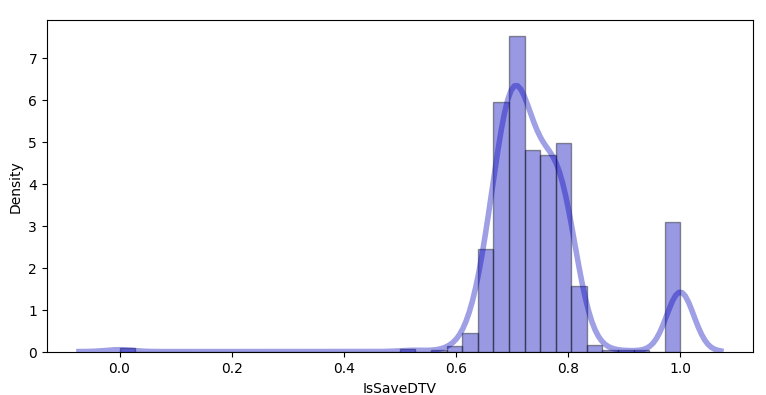
overall save rate
We actually know that there are many factors influencing the save rate
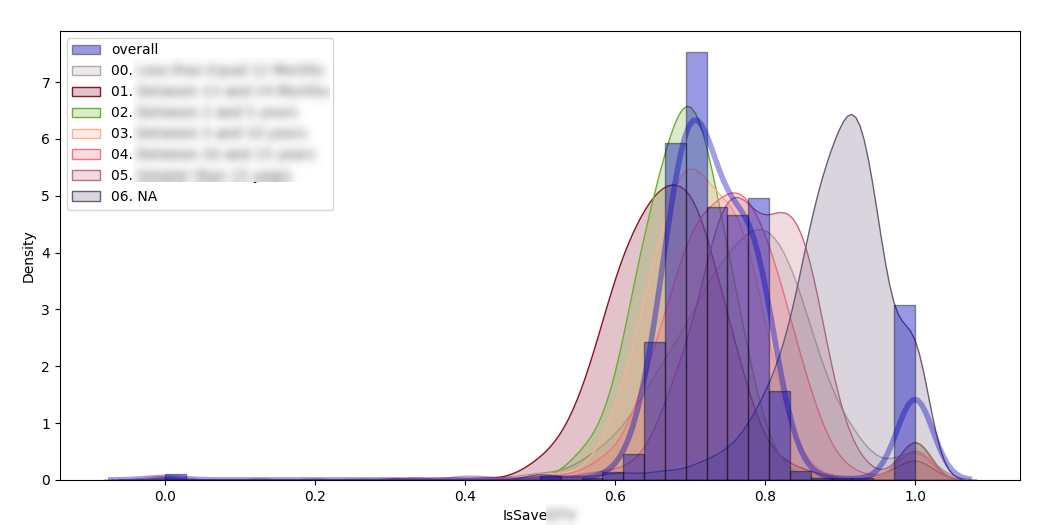
save rate depending on customer tenure
The problem can be extended to multidimension

3d representation of the save rate
ETL
code:
target_etl
query:
clv
We first extract the data running the query on the client machine and extract the saving rate and the agent/user data.
data type
We have few features describing the customer, the agent group and the call type. Most of the data are in buckets which we turn into continous variables
categorical
We than convert categorical features into continous variables to improve the model performance.
-
last_bill_amountis substitued by the upper bound -
precall_tenureis substituted by the interval mean -
packagehierachical tree -
categoryone hot encoding
data quality
code: target_stat
We have few features to predict the success rate and we analyze the quality of the input data
missing/outliers
We have missing values across all features, we need to do a typecast to allow python handling the different kind of data.
Data are narrow distributed and we don't replace/exclude outliers neither perform a transformation on data
save rate predictors
We start investigating the customer dimensions
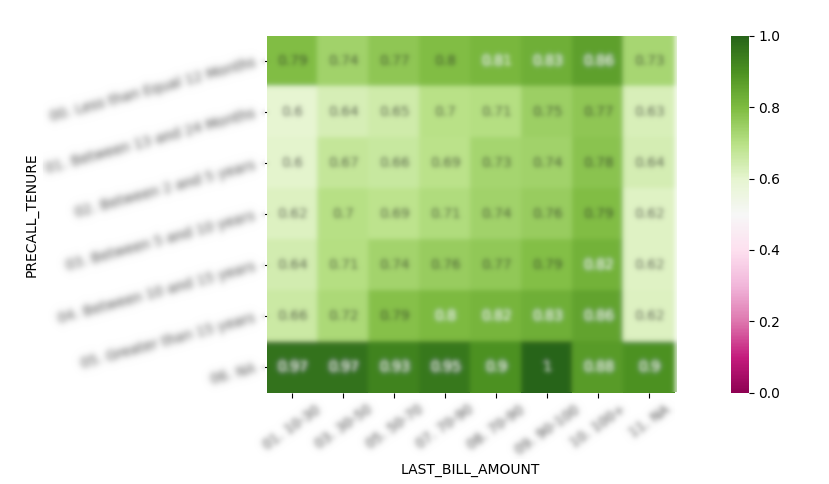
save rate depending on last bill and tenure
We see a dependence on call time but we consider it more as an effect than a cause of save rate
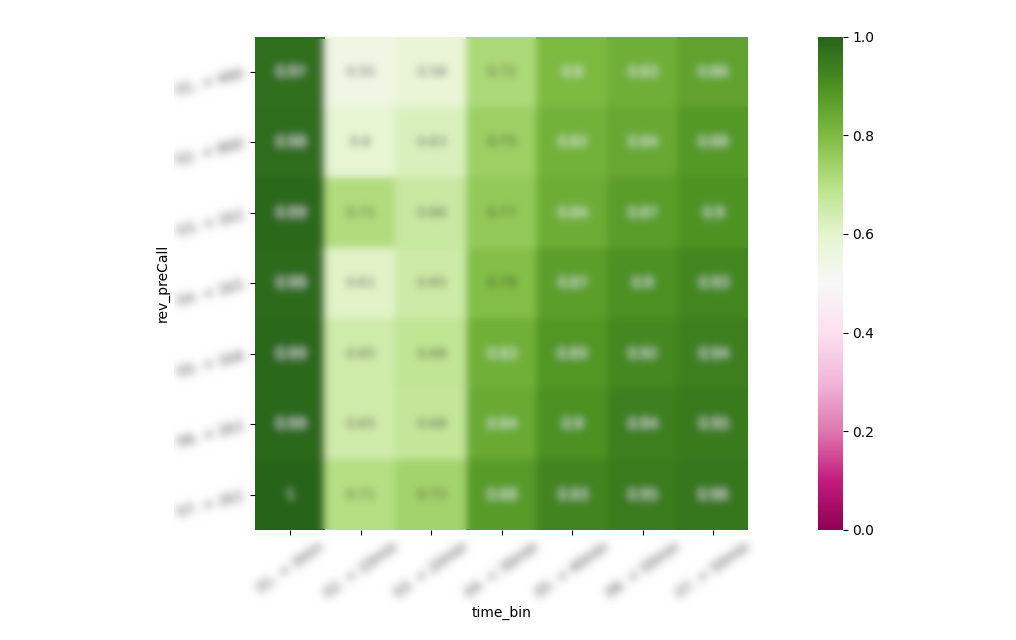
save rate depending on call time and customer revenue
We can narrow down on many different levels and we will always see a feature contribution
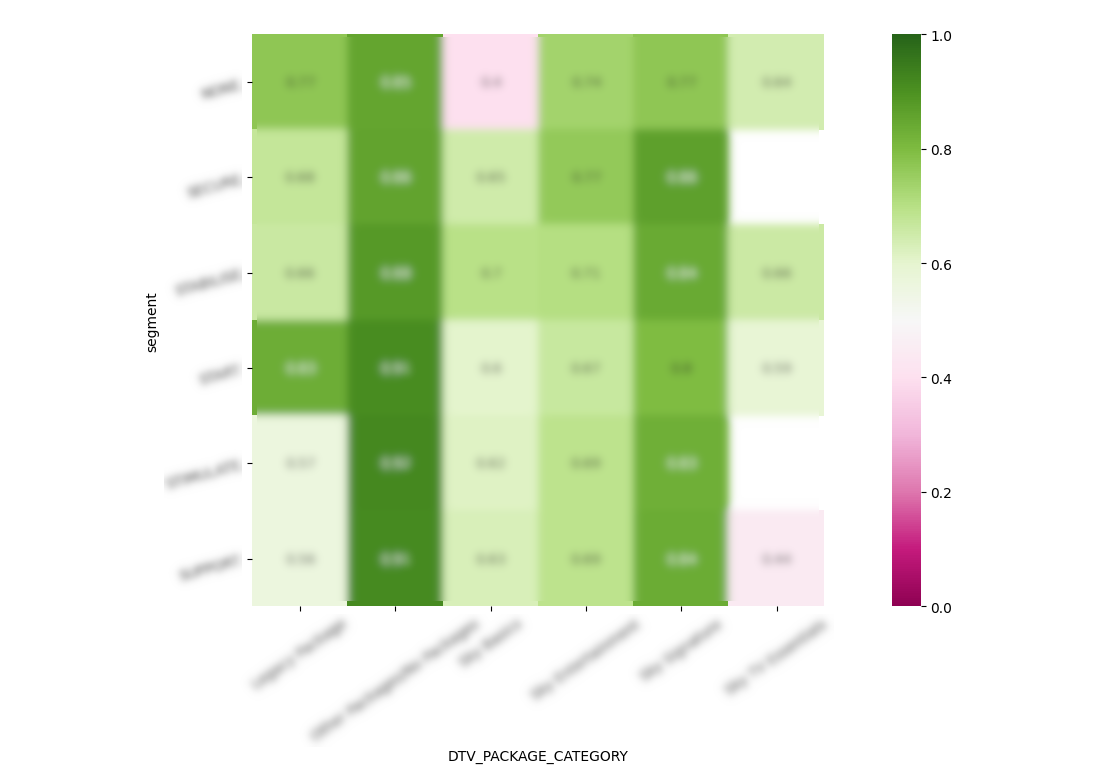
save rate depending on segments and product categories
taking into account that low values will be discarded or clamped into larger buckets
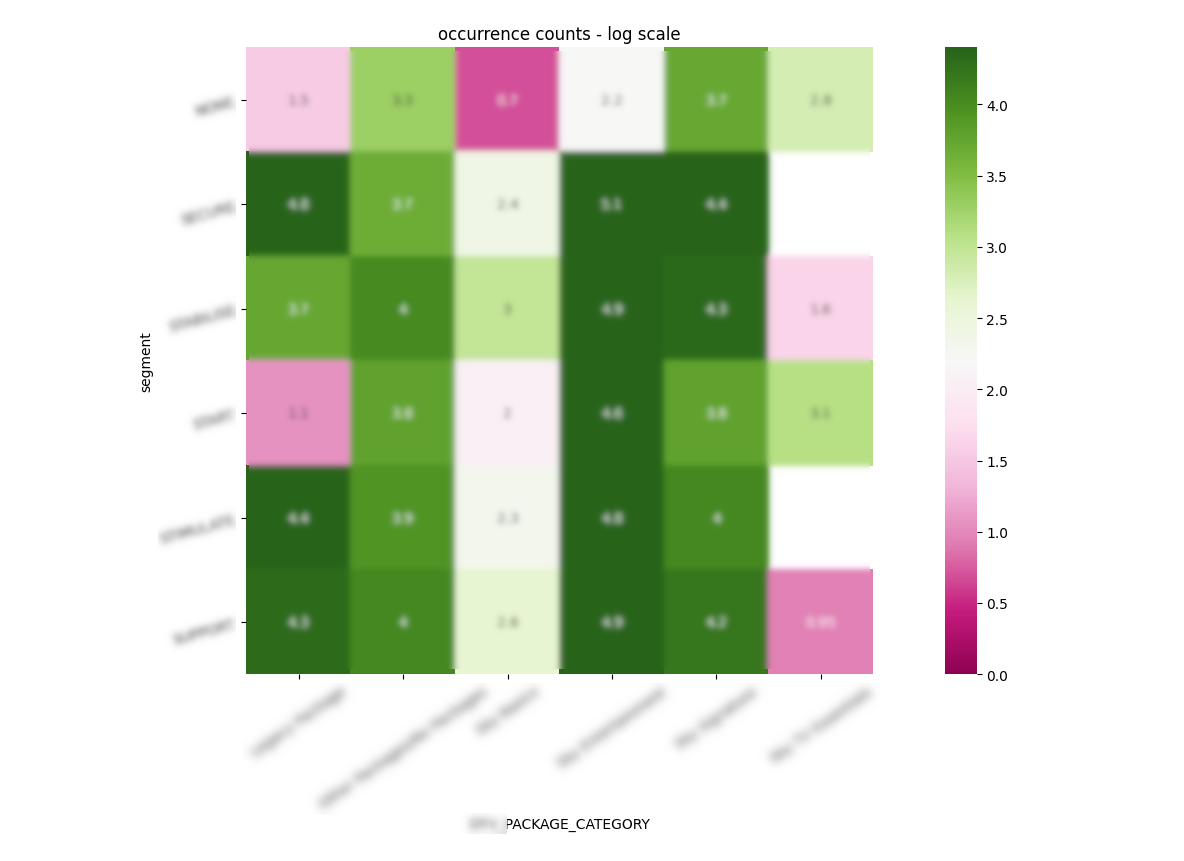
save rate depending on segments and product categories
We finally propose the following save rate for the rate card because in connects with the revenue stream and the product development
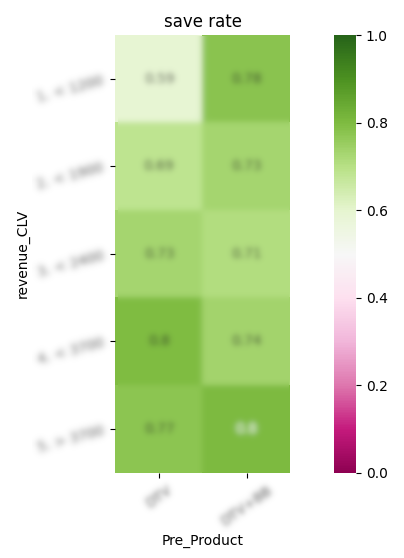
save rate depending on customer value and product holding
We see that other variables are implicitely modeled by the rate card
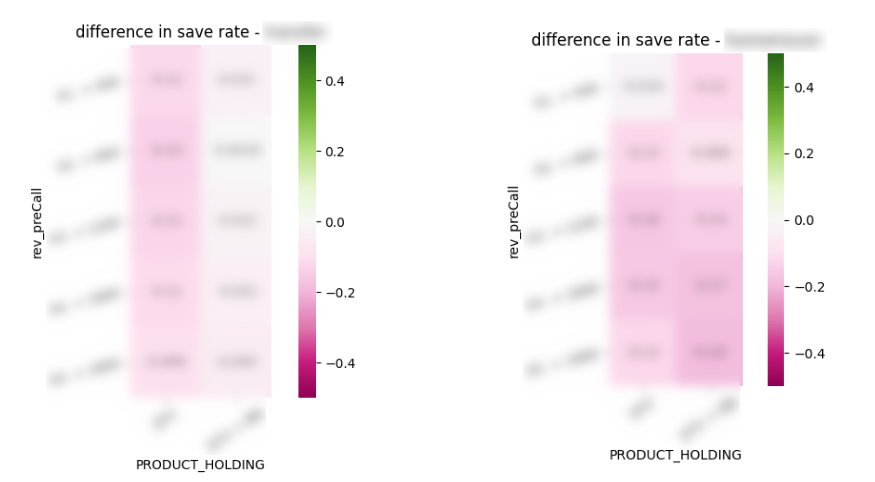
variables implicitely defined by existing variables
sampling shuffling
Is there a bias in homemover and no transfer calls where a group of agents gets an un even distribution of user groups? We test it calculating the share of call groups for each agent for each week and calculate the ranking distribution
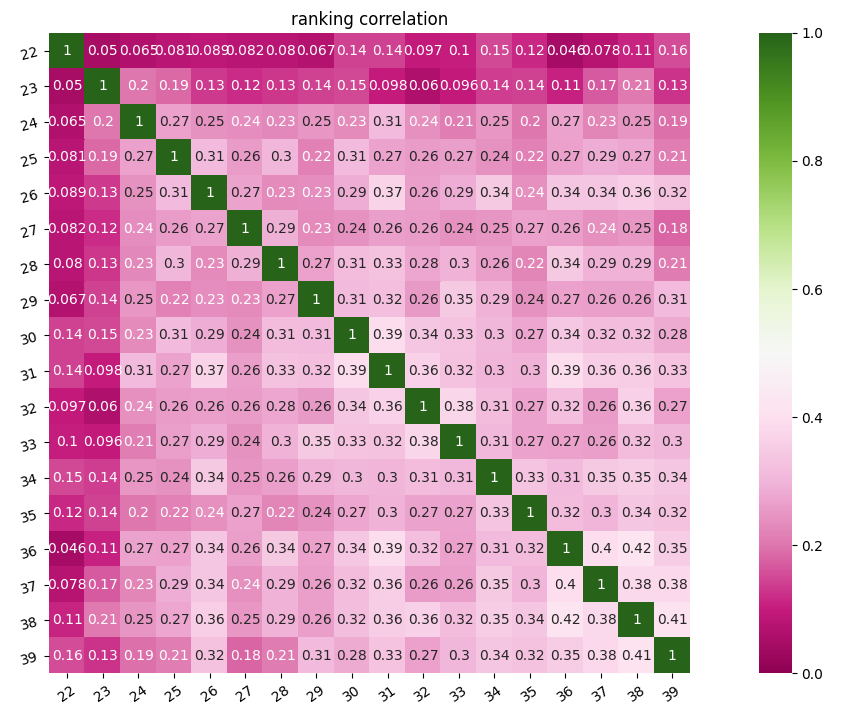
ranking from week to week
The ranking correlation drops after few weeks
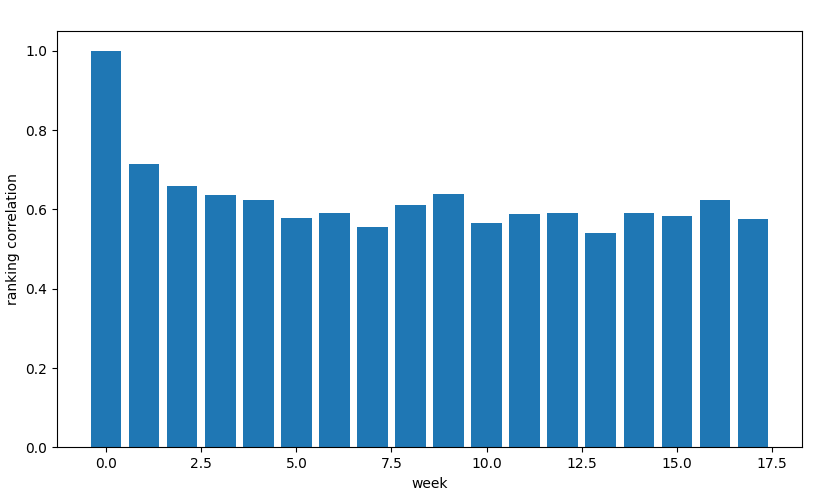
decay of autocorrelation over weeks
We test the chi square for the agent series compared with the average
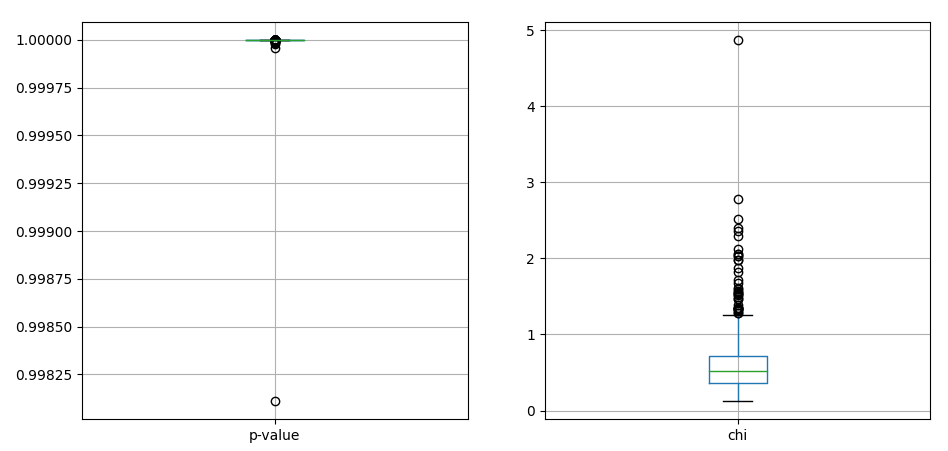
chi values for agent call distribution
We see that the chi values are pretty small and the p-values really high
distribution
We analyze the distribution of features (normalized) and compare the variances
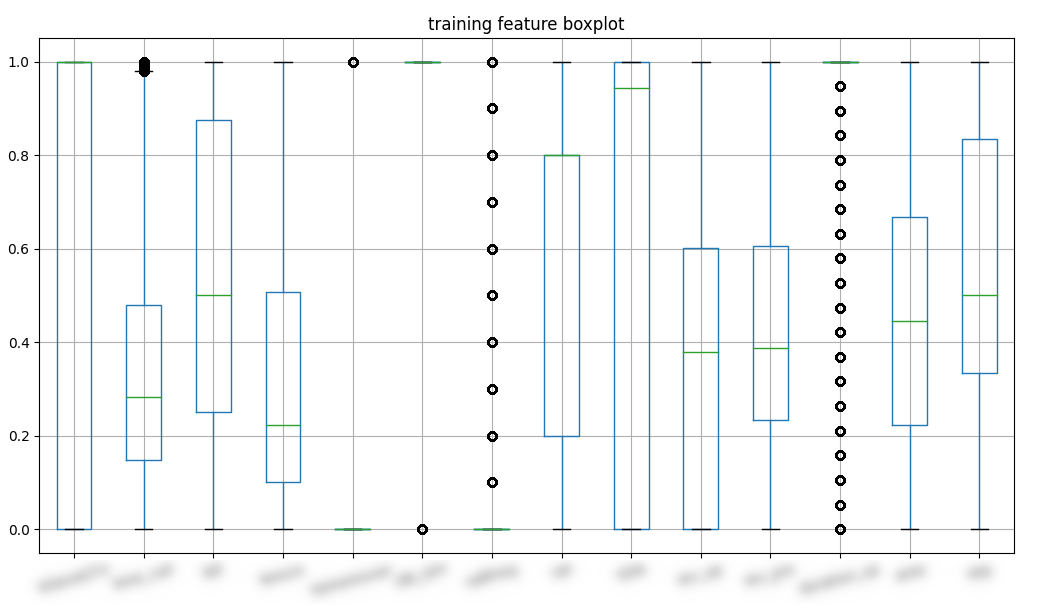
boxplot of normalized features
Most of the values are discretized
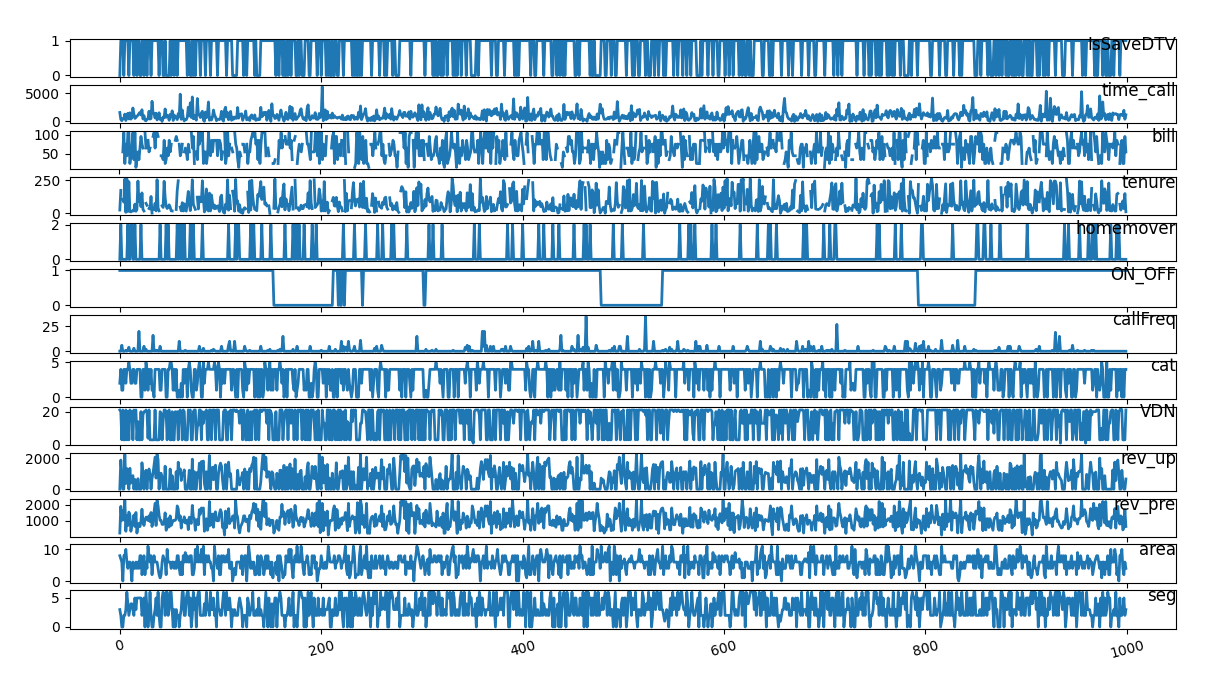
time series of features
obvious dependencies
We see that this feature set don't have any internal correlation
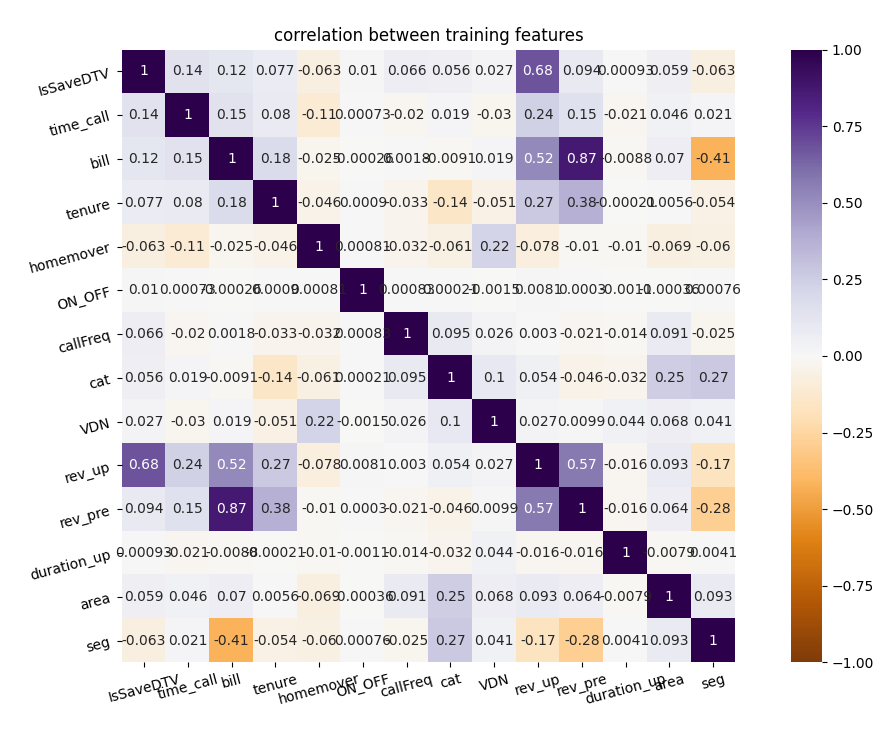
correlation of features
We display a pairplot stressing the different distribution depending on the save rate. We see a clear difference in distribution across all features and especially different regression depending on
last_bill_amount
and
precall_tenure
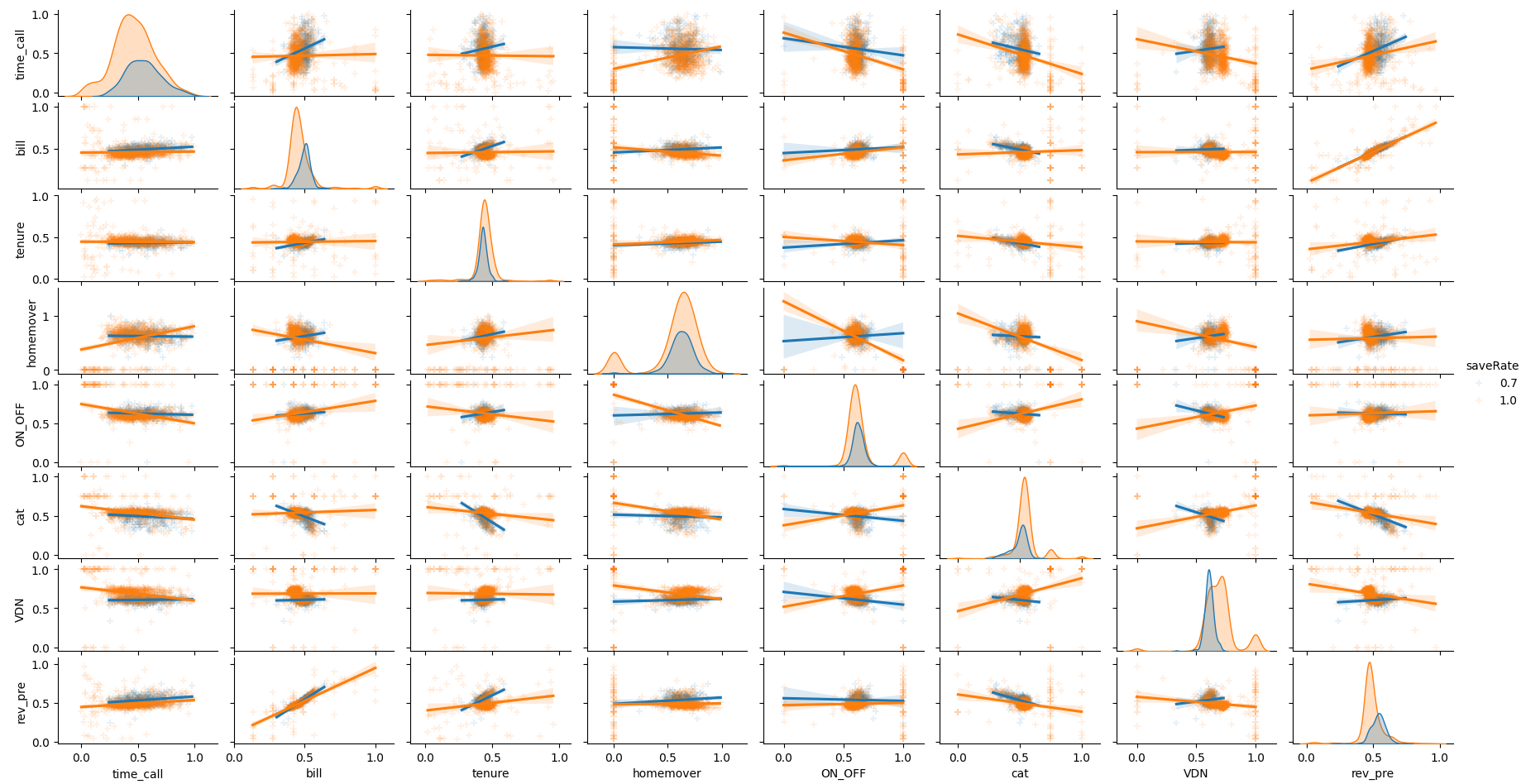
pairplot of features depending on success
A close up explains which features are important for the prediction
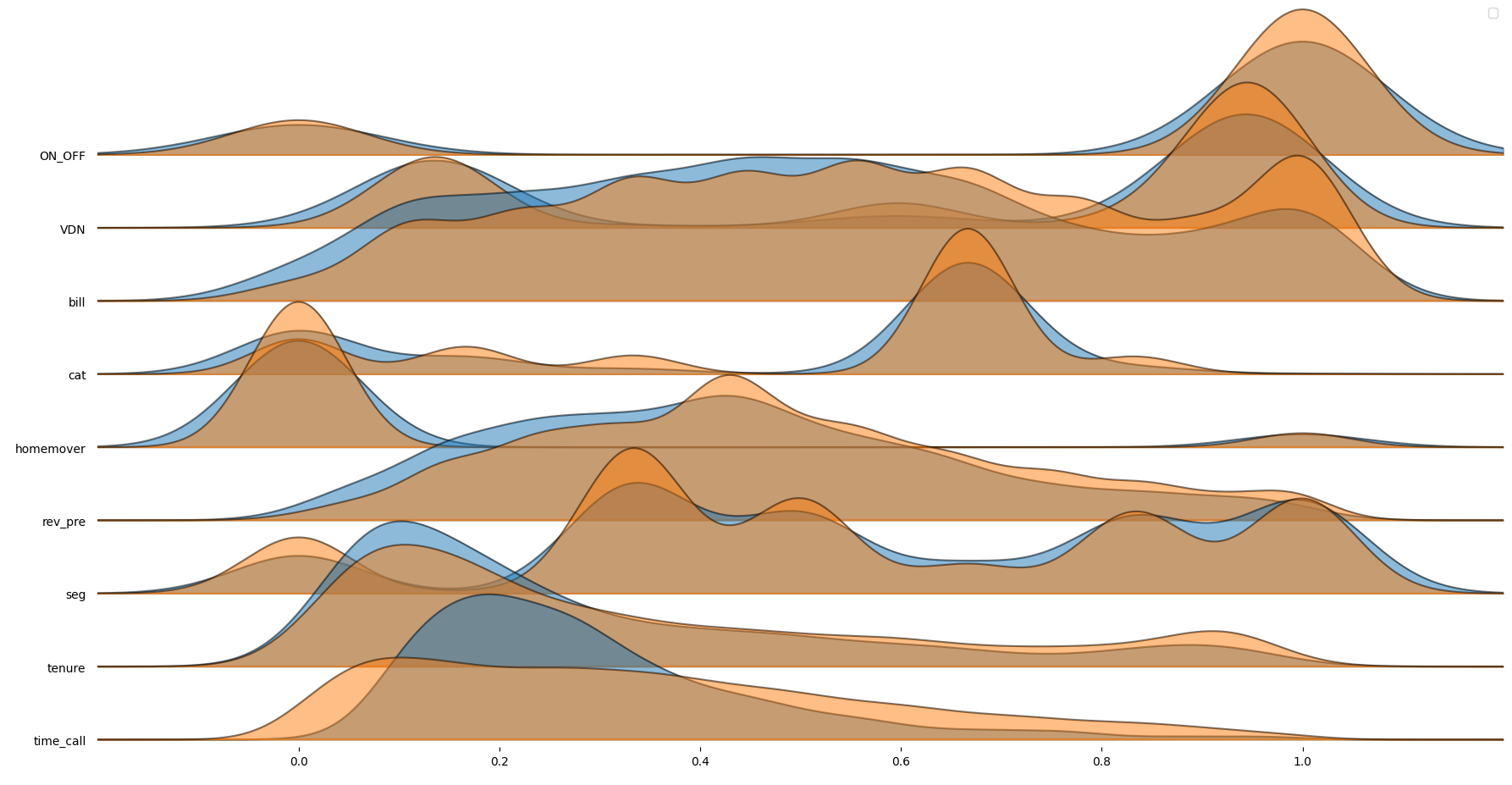
joyplot for the most relevant features
We can say a slight difference in distribution in the different success subsets
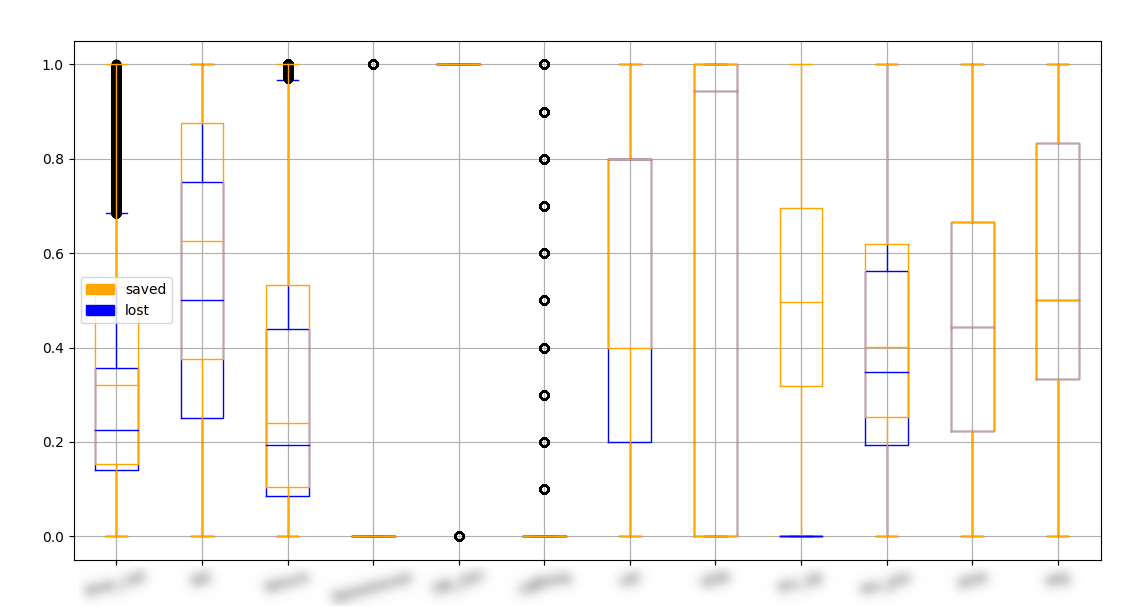
feature on success
We see that the afiniti engine is slightly increasing the call time
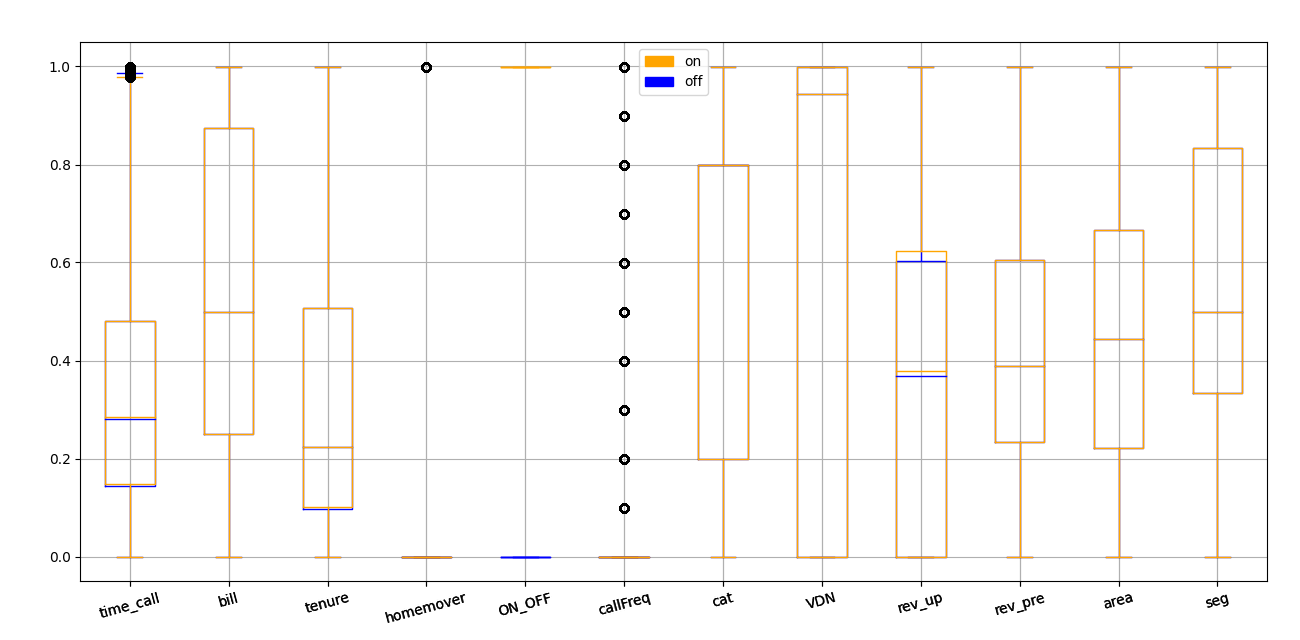
feature on afiniti on
prediction
We iterate over different models to calculate the prediction strength of this feature set. We see that performances are not high
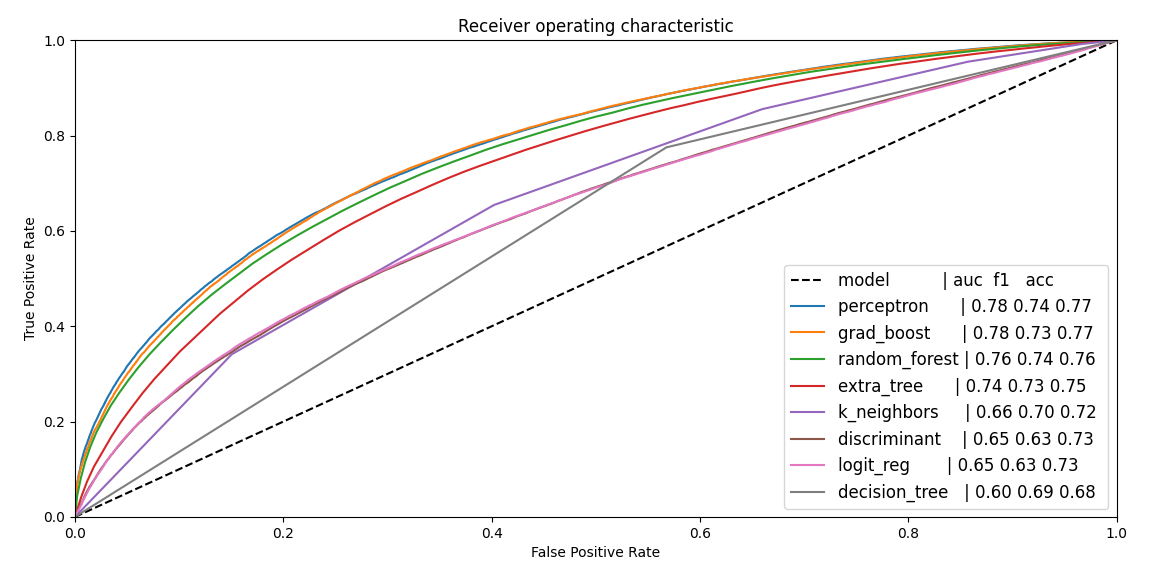
prediction of save rate
We see a larger number of false positive which tell us the difficulty to understand for a customer to cancel the contract
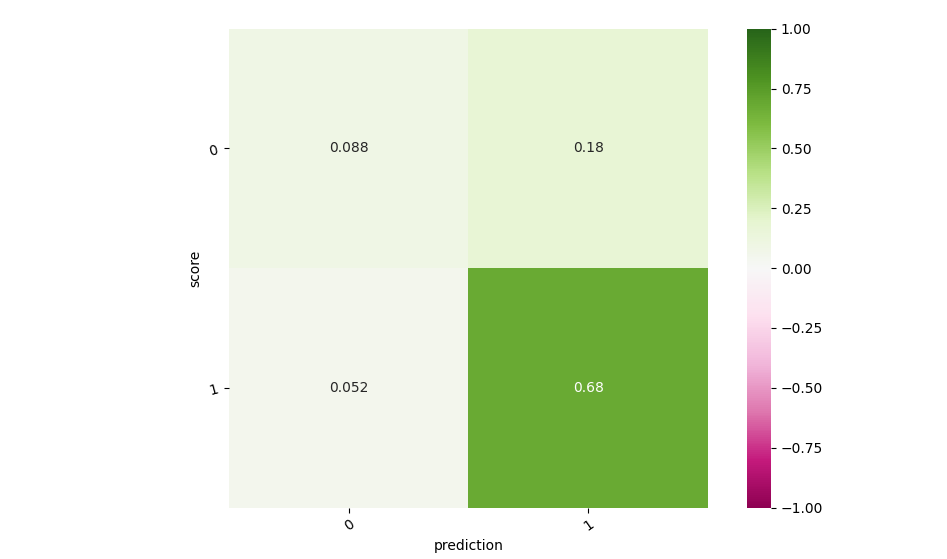
confusion matrix on save rate prediction
agent skills
We know that agent skill is a really important variable to model but we have few information on agent data to model such a variable and we hence treat it as a latent variable .
To assess the relative ability we imagine the agents being on a tournament, the customer is the referee and the game pitch is the area and the product.
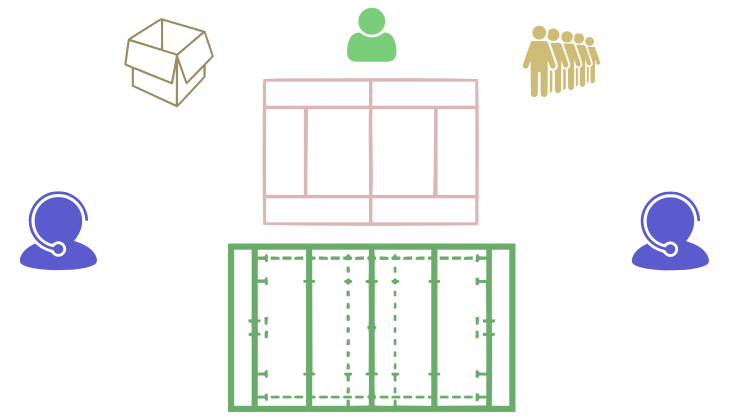
agent ability simulating a match between agents
Based on the historical series we run a stan simulation based on a prior ability where we compare the agent performances on the different game pitches
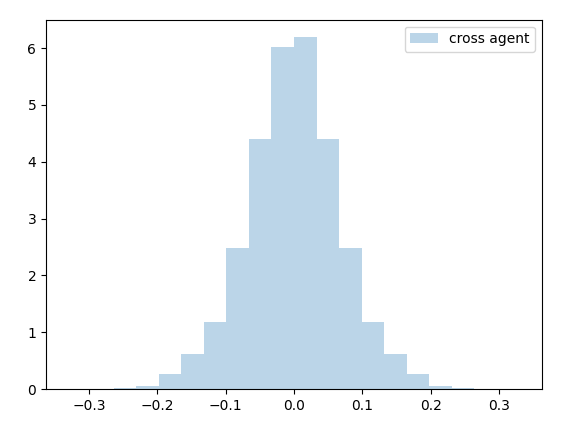
prior of the agent ability on area and product
Once we get the prior distribution we run a simulation across all the agents over multiple games
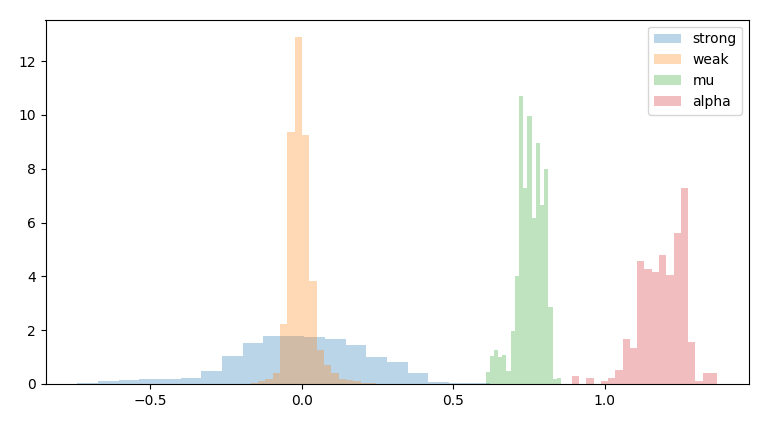
posterior of the agent ability on area and product
and we create a ranking
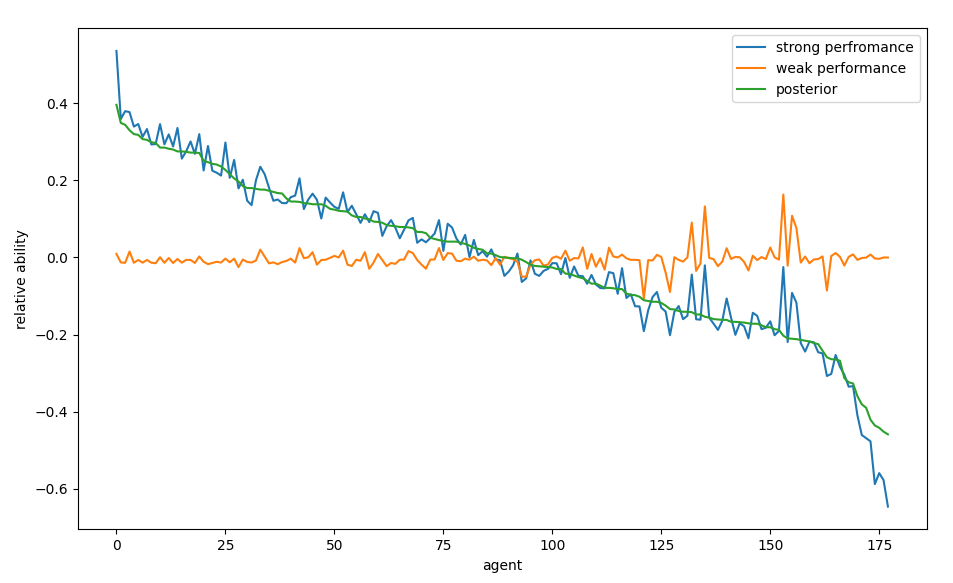
posterior of the agent ability on area and product
We than simulate a series of matches and we finally calculate the posterior agent ability
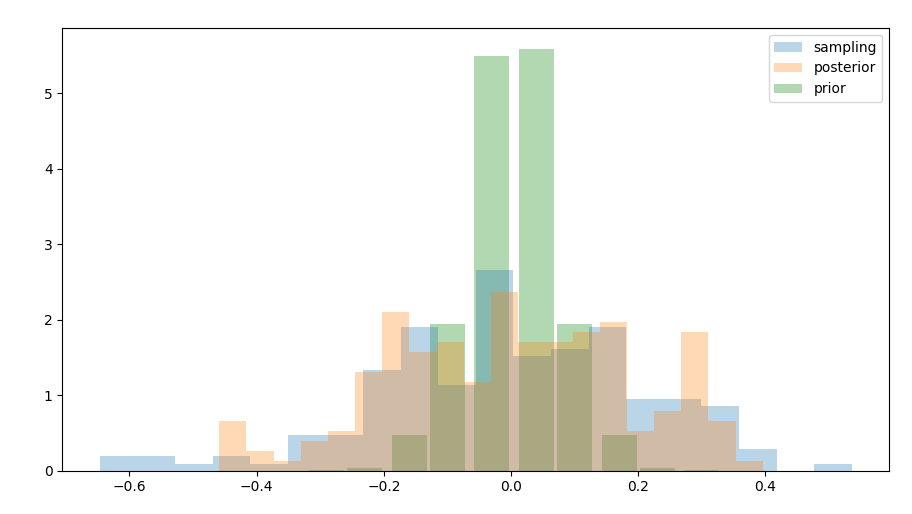
posterior of the agent ability on area and product
agent compensation
Following game theory for a given set of rules the compensation implies a strategy and therefore the tuning of the compensation is crucial for performances.
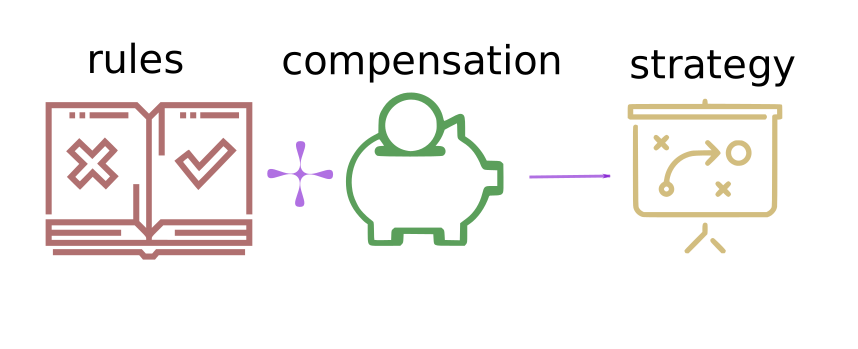
game theory sketch
We need to balance between the individual and the company compensation:
- is an agent incentivized to risk his/her compensation with a difficult customer?
- does an agent has a real opportunity to change the success of a call?
- how can the company incentivize an agent to make the effort to save a customer
saving rate compensation
We consider all users equal and the agent
compensation
is based on the
saving rate
.
We consider a probability of saving rate of 73% +/- 22%:
- it is convenient for the agent to spend time trying to save the user?
- would the agent complain for unbiased distribution of users (i.e. homemovers)?
saving risk compensation
Each pair user/agent has a different success probability, what if the compensation would be based on the success probability increase
- the agent will feel like an high stakes at poker
- the agent won't be penalized for his/her effort with a difficult case but incentivized to play
customer value compensation
Users have a different value depending on their records, the value is weighted by the previous bill and the tenure:
- the agent is more motivated to spend more effort to save more valuable users
- the company retains important users
compensation model
We have a list of users , each defined by the tenure, the bill amount, the product selection and the queue of the call
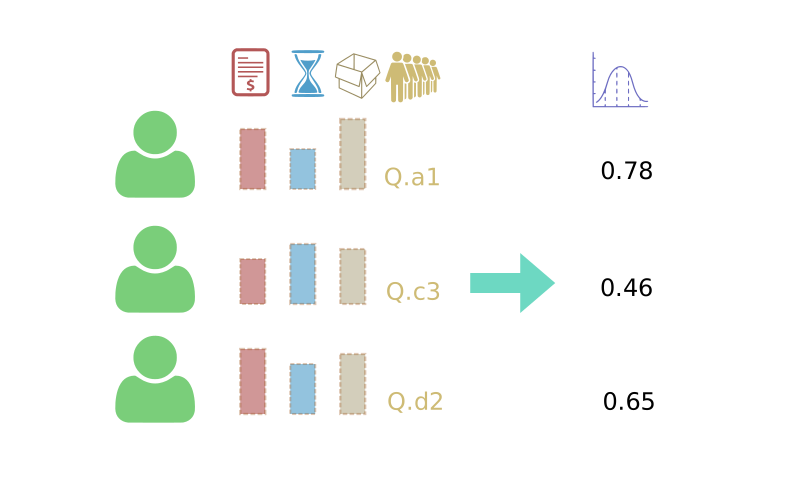
definition of users based on tenure, bill value, product selection and queue
We have a list of agents defined by the certifications, the tenure, the knowledge of the product and the queue they work in
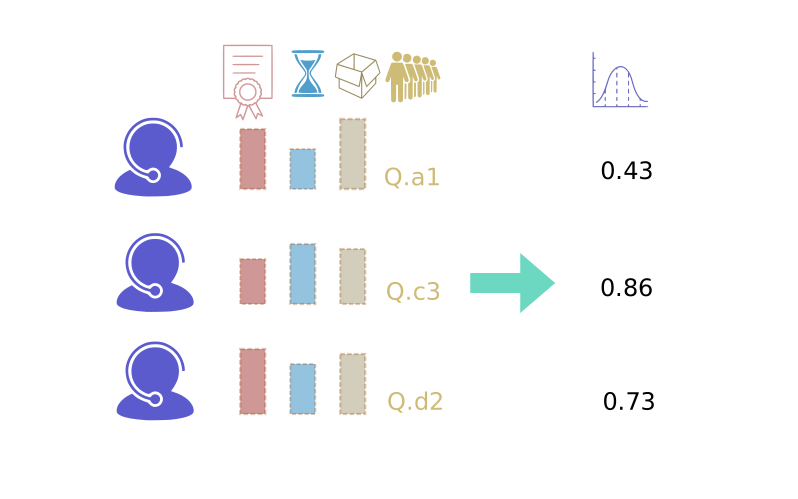
specification of agents
We can estimate the probability of success of the call based on few information, we actually see that the retention of the customer is easier for high value customers

the success of the call depends on few features
Once a user calls the success probability depends on the type of agent joining the call
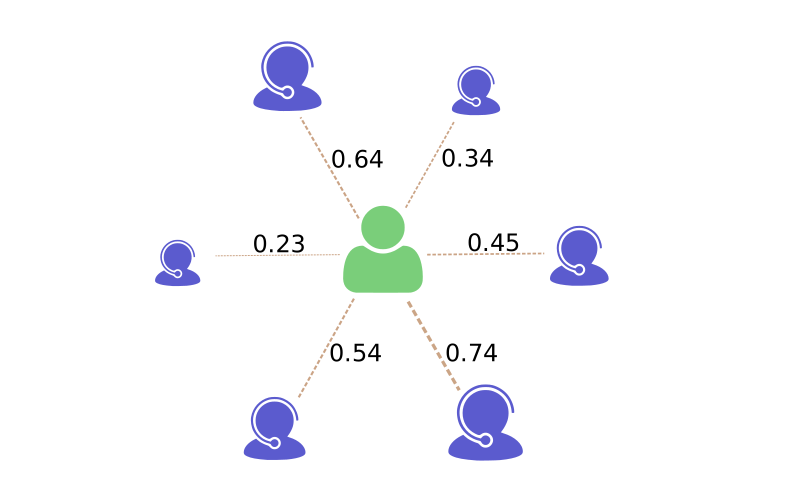
user/agent success probability
We predict the value of the customer in case of a successful call based on historical data
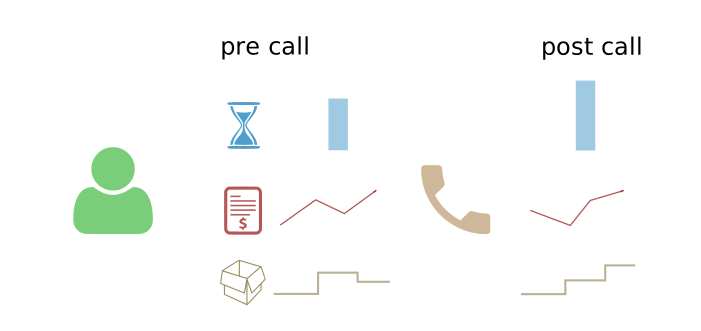
estimated customer value after retention
objective
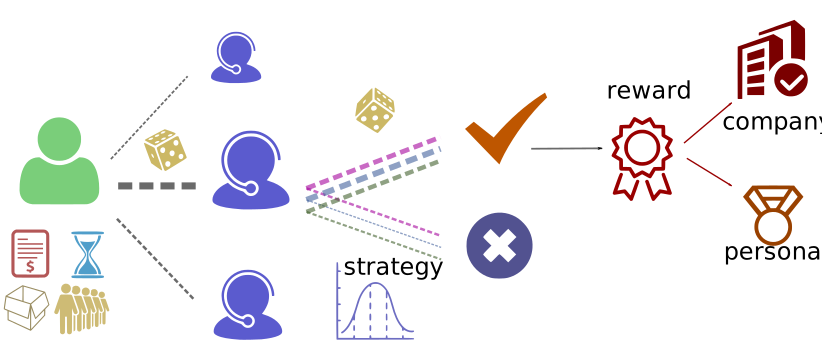
We propose parallel simulations where the agent is incentivised on different compensations which will imply different strategies and different achivements of company and personal goals
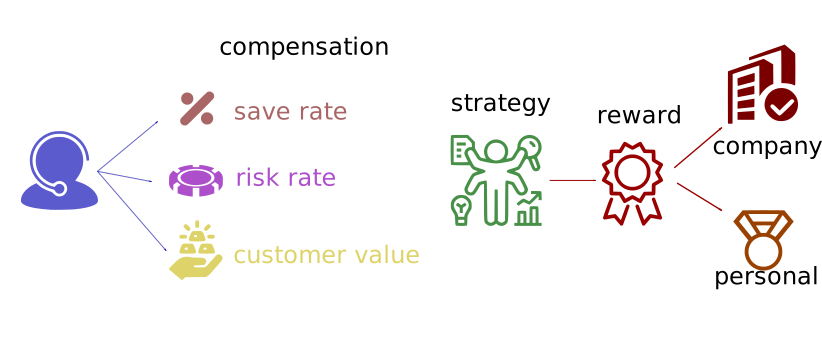
agent strategey based on compensation
simulation
code: sim_compensation.py
We create a simulation where we:
- pick a random user (defined by similar attributes of the customer base)
- pick a random low number of available agents
- simulate afiniti engine on or off
- pick a call success based on prior probability
- add a reward depending on the user value outlook
simulation details
The compensations are:
- save rate , all users are equal
- risk rate , effort on the most hard cases
- user value , effort on the most valuable customer
Plus we simulate the effect of the afiniti engine on pairing users and agents:
- off: FIFO logic
- on: the most probable outcome interaction is chosen
rules of the game
We suppose each agent has persuasive skills which can influence the outcome of the call. We give to the agent the same persuasive strength independent on the compensation but proportional to the compensation
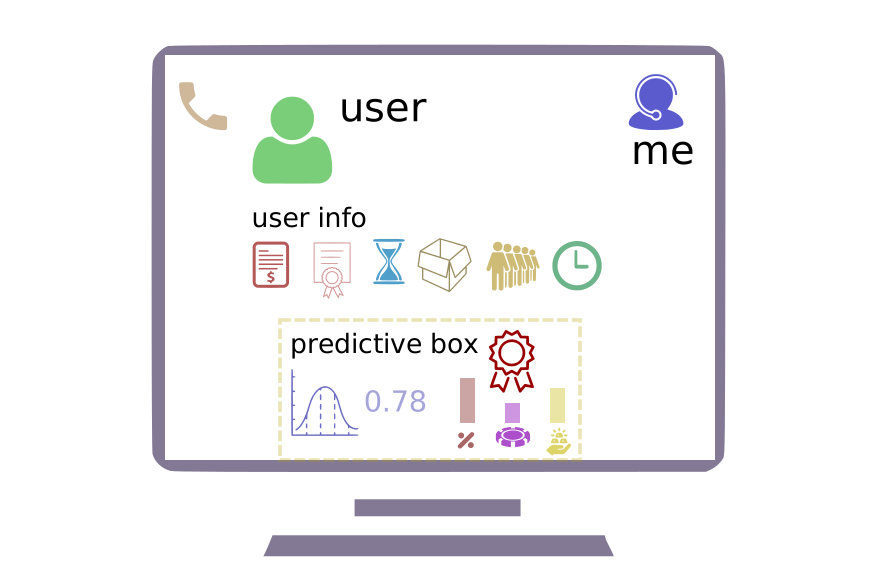
Display during the call with prediction box and compensation in case of success
We create a set of users and agents following empirical distributions:
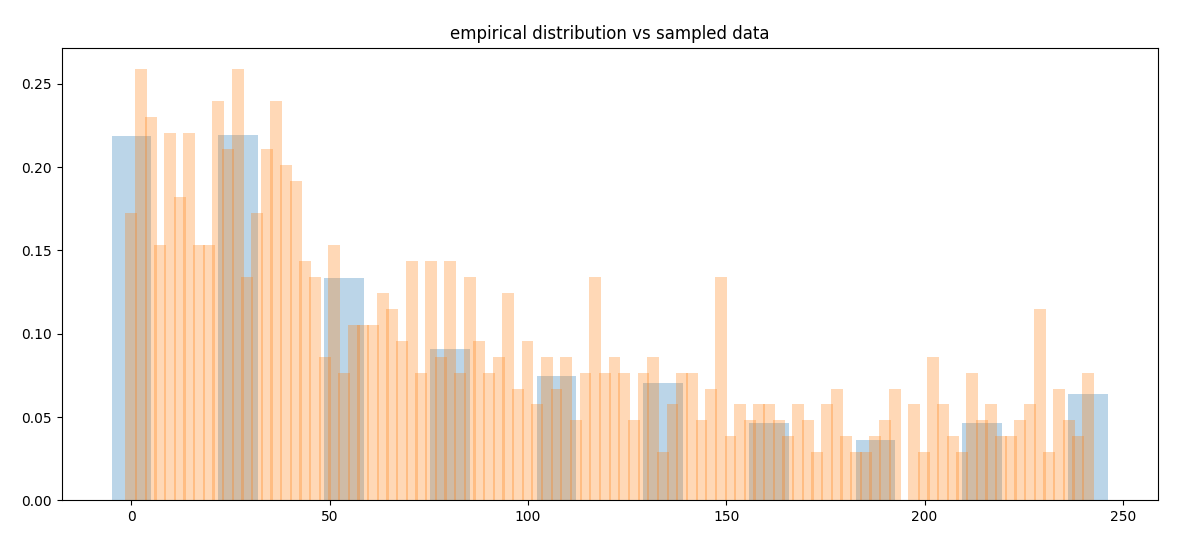
empirical and simulated distribution of last bill
For last bill, tenure, and save rate
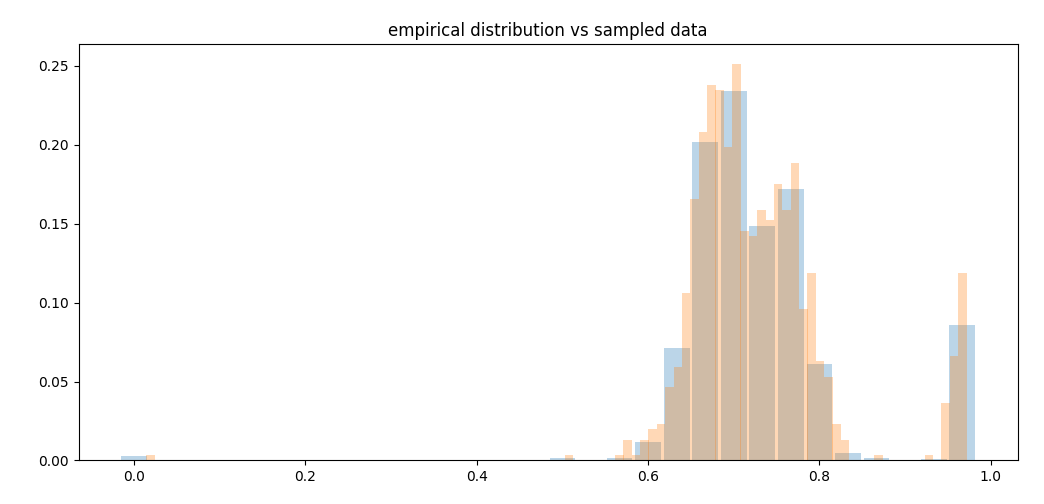
empirical and simulated distribution of save rate
simulation results
We see comparing to different strategies how the company revenue increases
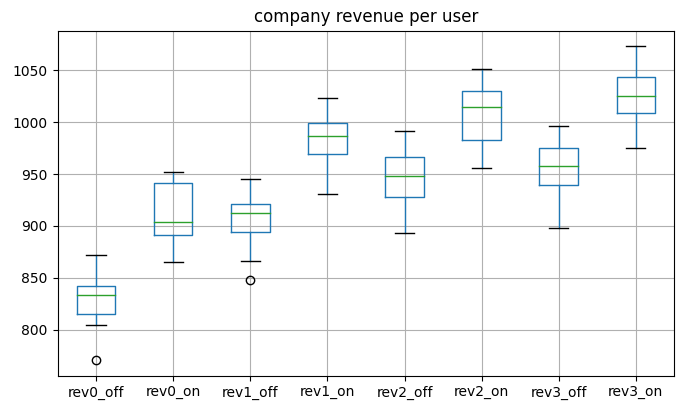
revenue company in different scenarios
We have a close up on the revenue uplift for the average across all simulations
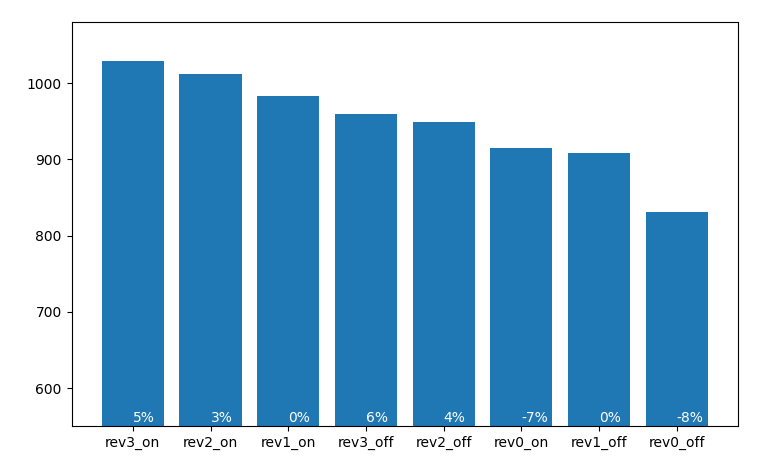
uplift due to the different strategies
We want to make sure that the agent compensation is fairly distributed across all agents, and we see a clear increase in agent compensation depending on the strategy
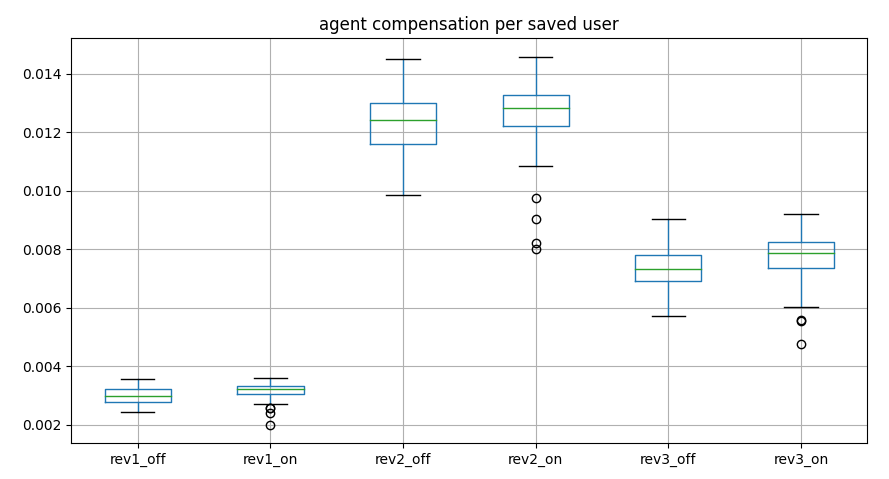
compensation distribution across all agents
We see that the company uplift is fairly distributed
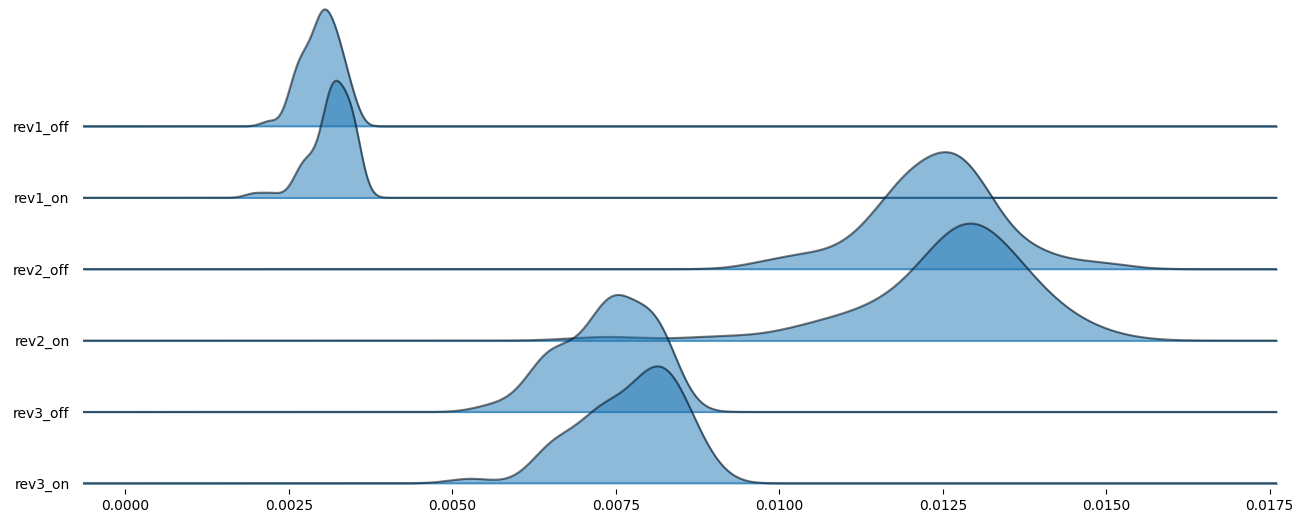
distributions are not broader
Finally we can show that the proposed compensation scheme still incentivize the individual ability
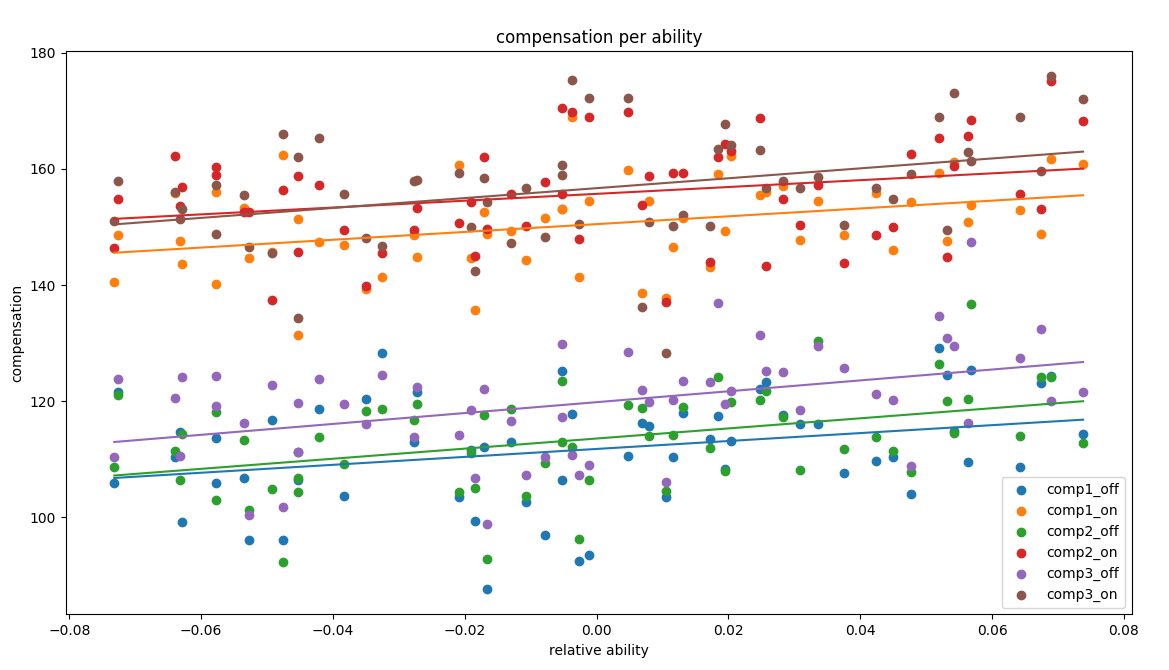
all the proposed methods increase the compensation together with the agent ability
We show that the rank correlation on save rate is good across the different compensation, the pairing eingine is increasing the shuffling between agents. The compensation scheme increases shuffling between agents ranking
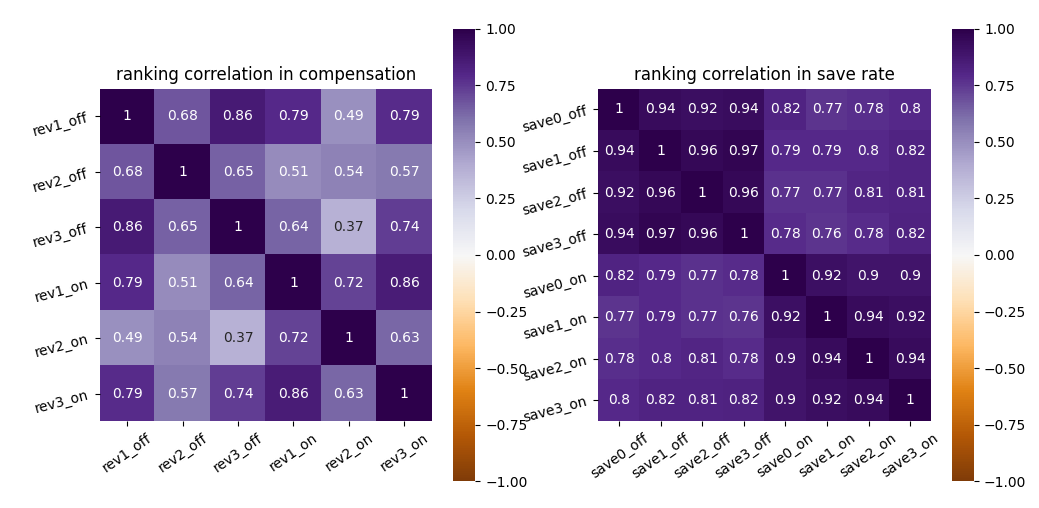
rank correlation across different compensation models
tuning
We have few parameters to tune:
- agent commission
- engine influence
What is a
boost
and how can we quantify the
influenceability
vs
motivation
of an agent?
We can set a benchmark with completely unmotivated agents and use it as a baseline for modelling the commission scheme.
We see that the agent compensation delta compared to save rate steadly increases
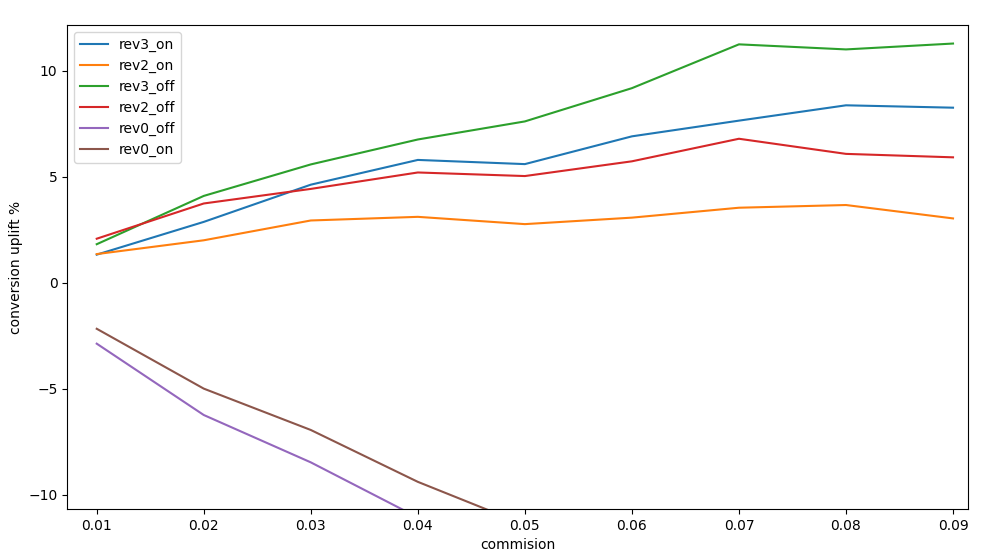
uplift in commission compared from the current scheme
targets
Using different methods we can define the targets modifying the save rate by the weighted save rate and maintain a similar reward process
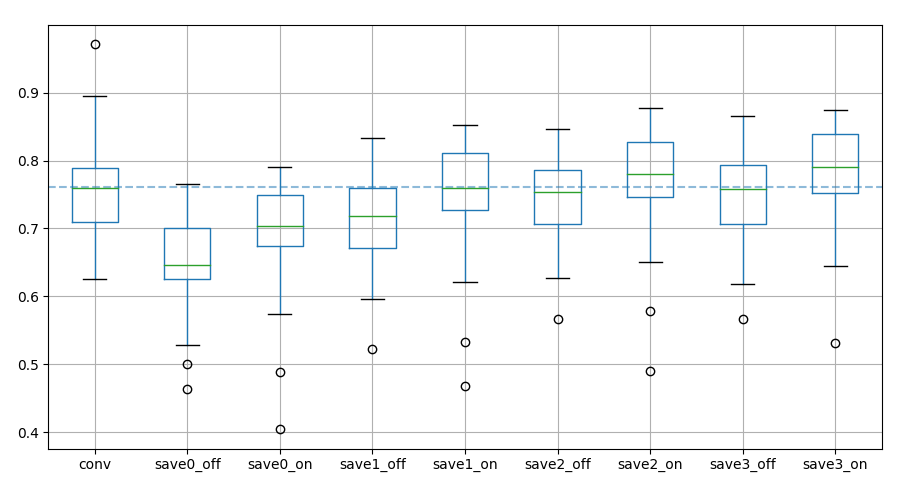
save rate across differente compensation schemes
summary
We can predict the outcome of a call with a certain accuracy and use our predictive capabilities to shape different simulations.
The current compensation model is not motivating a win-win strategy for the company and the agent the current targets induce the agent to be as good as the others and don't consider the risk of loosing an high valuable customer
We have simulated different scenarios and fine tune a compensation model to increase the customer retention, the company revenues and the agent personal reward .
We have shown that compensating an agent proportionally to the risk of the call or the customer value increases both company and personal goals.
We have shown as well that the increased revenue is fairly distributed and even less perfomant agent profit from a change in call distribution and strategy.